


Sometimes the most profound lessons come from the most unexpected teachers.
I was visiting my elderly aunt at her home in the countryside outside Ocala, Florida, sipping a refreshing mint julep on her back porch while she sat quietly in the shade nearby. My aunt is an devoted birdwatcher and gardener, and her backyard is a testament to both passions—carefully manicured topiaries, vibrant flowers, citrus trees heavy with fruit, and dozens of bird feeders that transform her garden into a bustling avian community.
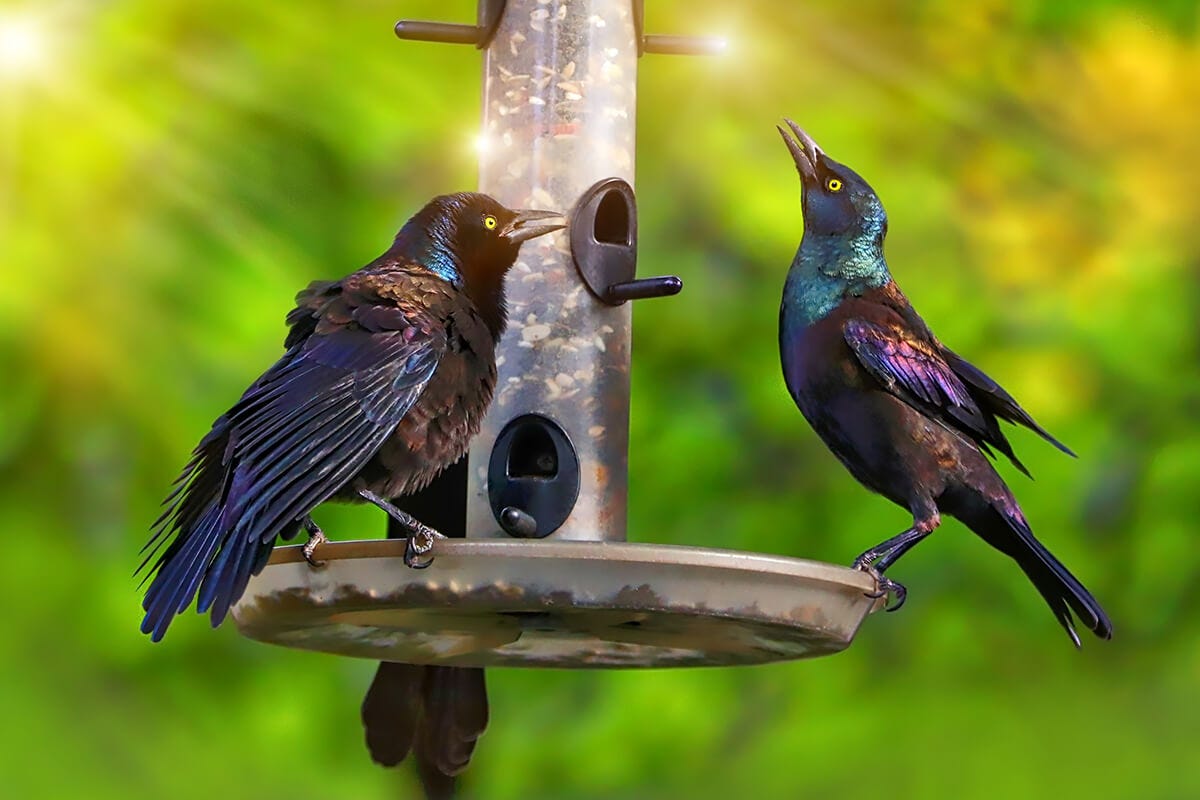
As I settled into the comfortable rhythm of the cedar rocking chair, I watched the daily drama unfold at the feeders. A large black bird I couldn't identify had arrived, and immediately the smaller birds scattered. It was a familiar scene—the bigger, more aggressive birds claiming territory while the gentler ones waited their turn or went without.
But then something extraordinary happened.
The large bird filled its beak with seeds and flew not to its own perch, but to a group of tiny chicks from an entirely different species. One by one, it began feeding them. At first, I thought it was some kind of mistake or accident. But the bird returned to the feeder again and again, each time carrying food to hungry chicks that weren't its own. For nearly an hour, I watched this remarkable display while other large birds squawked in apparent frustration, yet didn't interfere—perhaps because their leader was setting this unexpected example.
When the birds finally dispersed, my aunt broke the contemplative silence we'd shared. She told me about her youth in the 1960s, when she became a civil rights activist despite growing up in a household where her preacher father held very different views. She spoke quietly about the pain of seeing people treat others with cruelty, and how watching these "simple" creatures reminded her that kindness across difference isn't complicated—it's a choice.
"Even the birds understand something we sometimes forget," she said. "Taking care of each other isn't about who looks like us or sounds like us. It's about recognizing when someone is hungry and knowing you have something to share."
Her words stayed with me long after I left her peaceful garden sanctuary. In our current moment, when divisions seem to multiply daily and social media amplifies every disagreement, that image of the large bird feeding tiny chicks from another species offers a different way forward.
The bird didn't stop to consider whether those chicks deserved help, or whether helping them might somehow diminish its own status. It simply saw need and responded with abundance. There was no committee meeting, no cost-benefit analysis, no checking of credentials. Just recognition and action.
What if we approached our human community with that same straightforward generosity? Not ignoring our differences, but not letting them prevent us from seeing shared needs and responding with whatever abundance we have to offer—whether that's time, skills, resources, or simply the willingness to listen.
The beautiful thing about my aunt's garden is that all those different species of birds coexist because there's enough for everyone. The feeders are kept full, the space is welcoming, and occasionally, remarkably, the birds themselves demonstrate that caring for others enriches the whole community.
Perhaps that's the lesson hiding in plain sight in backyards and neighborhoods everywhere: unity doesn't require uniformity. It just requires the recognition that we're all trying to find nourishment in this world, and sometimes the most powerful thing we can do is help fill someone else's need when we have the means to do so.
The next time you see someone who seems different from you—whether in appearance, belief, or circumstance—maybe remember that large bird. Ask yourself not what divides you, but what simple act of kindness might bridge that gap. Sometimes the most profound change begins with the smallest gesture of care.
After all, if birds can figure this out, surely we can too.