


You don’t need a nuclear weapon to bring a nation to its knees. You just need patience, a basic understanding of agriculture, and the knowledge that we’ve built the world’s most efficient food system on the world’s most fragile foundation.
The Kill Switch We Built Ourselves
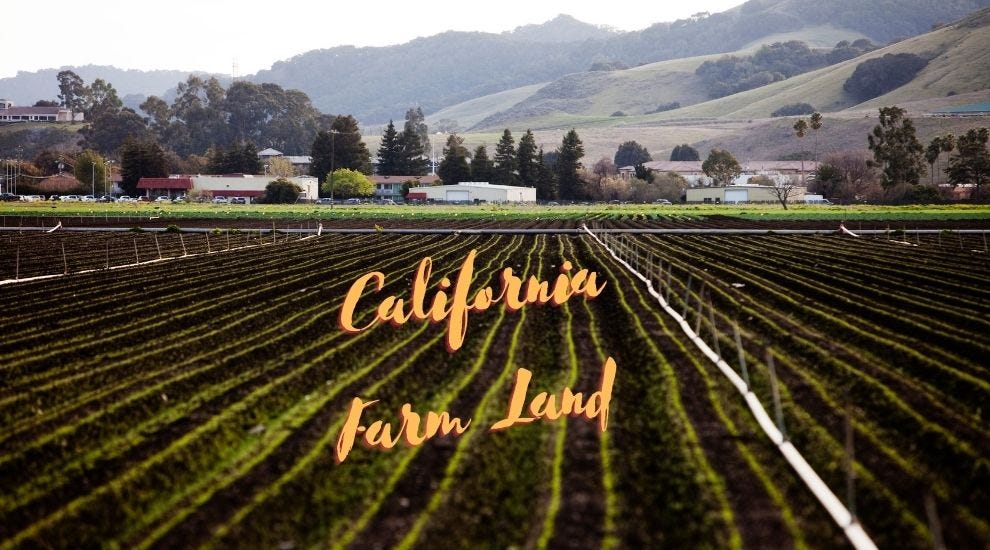
California’s Central Valley stretches 450 miles through the heart of the state. Drive down Interstate 5 and you’ll pass endless fields of lettuce, tomatoes, carrots, broccoli. This isn’t farmland. It’s a single point of failure disguised as pastoral abundance.
Ninety-two percent of America’s broccoli grows here. Over half our vegetables. Three-quarters of our fruits and nuts. When you open your refrigerator on the East Coast, you’re looking at California’s dirt, California’s water, California’s vulnerability.
The FBI knows it. Al Qaeda’s training manuals mentioned it. Federal reports spell it out in bureaucratic prose that somehow makes it worse: “U.S. agriculture is vulnerable to agroterrorism because of the relative ease with which highly contagious diseases can be introduced.”
But here’s what keeps security analysts awake at night. You don’t even need to be sophisticated.
The Pathogens Are Already Here
Remember that Chinese couple caught at Detroit Metro Airport with Fusarium graminearum hidden in a wad of tissues? The one they’re calling a “potential agroterrorism weapon”? That fungus causes billions in losses annually. It rots wheat, barley, corn, and rice from the inside. The toxins damage livers and cause reproductive defects.
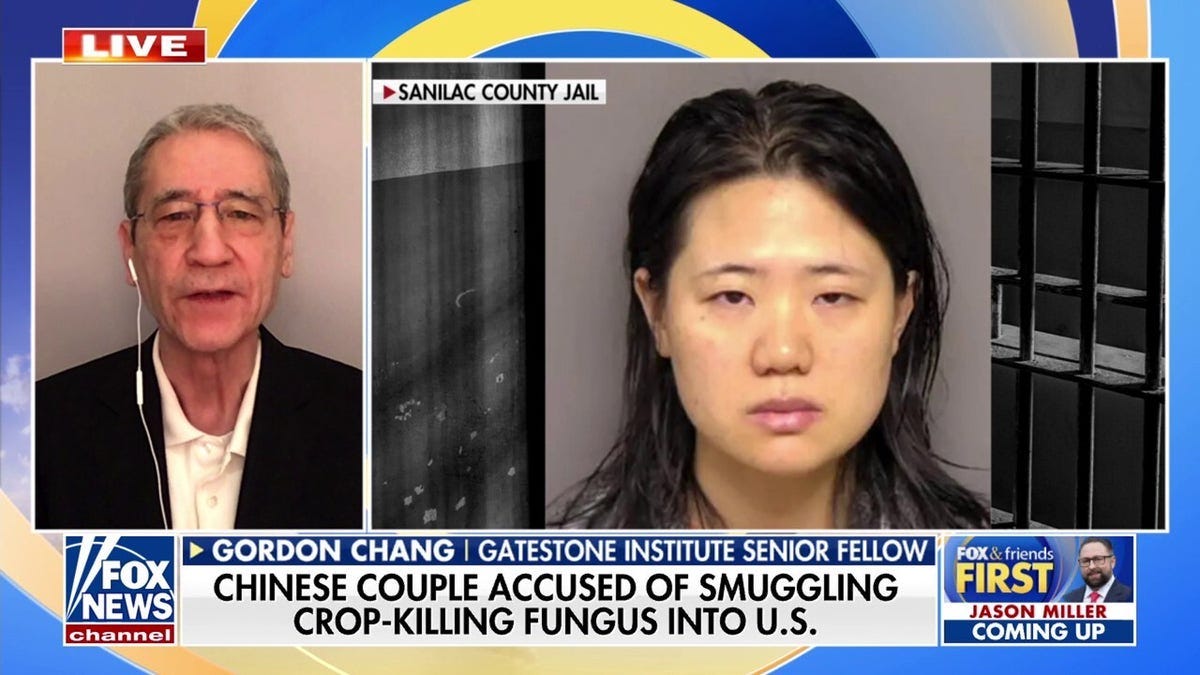
They just walked it through international screening in a backpack.
Now scale that up. The concentrated nature of California agriculture means a pathogen introduced in Monterey County doesn’t have to travel far. One county produces over 50% of the nation’s lettuce. The Salinas Valley calls itself the Salad Bowl of the World. More accurate: it’s the world’s largest agricultural chokepoint.
Farms share equipment. Trucks roll from field to field. Workers move between operations. A contagious crop disease doesn’t need help spreading. We built an expressway for it.
The Livestock Powder Keg
Then there’s the meat. Cattle feedlots cram thousands of animals shoulder to shoulder. Most dairies now house 1,500 cows minimum. The biggest hold 10,000. Remember foot-and-mouth disease in the UK? Cost them £5 billion and required slaughtering 4 million animals.
That was 2001. We learned nothing.
American feedlots are bigger now. More concentrated. Animals born in one state, transported to another for fattening, shipped to a third for slaughter. Security? Laughable. Biosurveillance? Spotty at best. The RAND Corporation spelled it out: “Farms seldom incorporate vigorous means to prevent unauthorized access.”
Walk into a field with contaminated shoes. Wipe a cow’s nose with an infected handkerchief. Hire a crop duster. The technical challenges are minimal. The impact would be catastrophic.
The Corporate Stranglehold Makes It Worse
Here’s where it gets truly sinister. Five companies control more than half the world’s genetically engineered seeds. Monsanto alone owns 90% of U.S. soy, 85% of corn, 95% of sugar beets.
Monoculture on an industrial scale. The same genetic profile planted across millions of acres. When a pathogen cracks the code, it doesn’t just take down one field. It takes down entire states.
Ask farmers about the “superweeds” now covering 70 million acres, resistant to everything we throw at them. That’s natural evolution. Now imagine intentional genetic targeting. A pathogen designed for a specific seed company’s product line.
We handed them the blueprint.
The Walmart Effect: Centralization as Vulnerability
When Walmart built its milk processing plant in Indiana, 100 dairy farmers lost contracts overnight. Now 30 mega-dairies supply 600 stores. Efficient? Absolutely. Resilient? Not remotely.
Hit those 30 operations and you’ve crippled dairy supply across five states. The consolidation that makes corporations rich makes the system brittle.
This isn’t theoretical. In 1997, America had 125,000 dairy farms. By 2017, just 54,000 farms produced the same milk volume. Same output, half the locations. Half the redundancy. Half the chance of surviving a coordinated attack.
The Nightmare Scenario
You want the playbook? Here it is.

Fusarium in wheat fields across the Midwest. Foot-and-mouth at three mega-feedlots. Something nasty targeting tomatoes in California’s Central Valley. Pick your poison. The USDA’s own research shows dozens of options.
Two weeks later, grocery stores face shortages. Lettuce disappears first. Then milk. Then everything that requires the now-contaminated crops as feed. Panic buying starts. Prices spike. The poor starve first.
The government responds with quarantines. Movements restricted. Civil liberties suspended. Martial law in agricultural regions. Millions of animals slaughtered preventatively. Cropland burned.
The economy buckles. Food comprises 13% of GDP. International trade halts. Nobody wants contaminated American exports. China and Russia offer “humanitarian aid” with strings attached.
And the beautiful part? If you’re the one who did it, nobody can prove a thing. Natural outbreaks happen constantly. The UK foot-and-mouth epidemic started from a single farm. The origin was never conclusively determined.
Plausible deniability is built into agriculture.
The Warning Signs Were Everywhere
We’ve been told for decades. The Government Accountability Office issued report after report: “Bioterrorism: A Threat to Agriculture and the Food Supply.” The USDA admitted U.S. livestock protection has “significant gaps.”
Federal inspectors aren’t trained on security. Processing plants operate with minimal oversight. The borders? That Chinese researcher proved their effectiveness.
Meanwhile we keep doubling down. Bigger farms. More concentration. Walmart’s building another processing plant in Georgia. Same model. Fewer suppliers. Greater efficiency. More vulnerability.
We’re not stupid. We’re optimized. And optimization is the enemy of resilience.
Who Controls the Food Controls the World
This isn’t paranoia. It’s supply chain analysis. Every empire in history understood it. The Romans built an entire infrastructure around grain shipments. When Alaric cut off food supplies in 408 AD, Rome sued for peace.
We’ve gone the opposite direction. We’ve made ourselves dependent on a system that prioritizes profit over redundancy, efficiency over security.
Bill Gates owns 275,000 acres. Institutional investors own 30% of all farmland. Chinese entities are buying more every year. Foreign investment isn’t inherently sinister. But when ownership concentrates, so does power.
Ask yourself: if you wanted to control America without firing a shot, wouldn’t you start with the food supply?
The Punch Line
None of this requires a conspiracy. The system created this vulnerability through pure market forces. Get big or get out. Consolidate or die. Maximize efficiency quarter by quarter.
We built the perfect target and painted a bullseye on it.
The question isn’t whether the U.S. food system could be weaponized. Federal agencies already confirmed that. The question is why nobody seems to care until after something happens.
The FBI found Al Qaeda had studied our agricultural system. That was 2002. We’re more concentrated now. More vulnerable. More dependent on California’s dirt and Walmart’s supply chains.
Sleep tight, America. Your salad traveled 3,000 miles and your milk comes from one of 30 corporate mega-dairies.
What could possibly go wrong?