
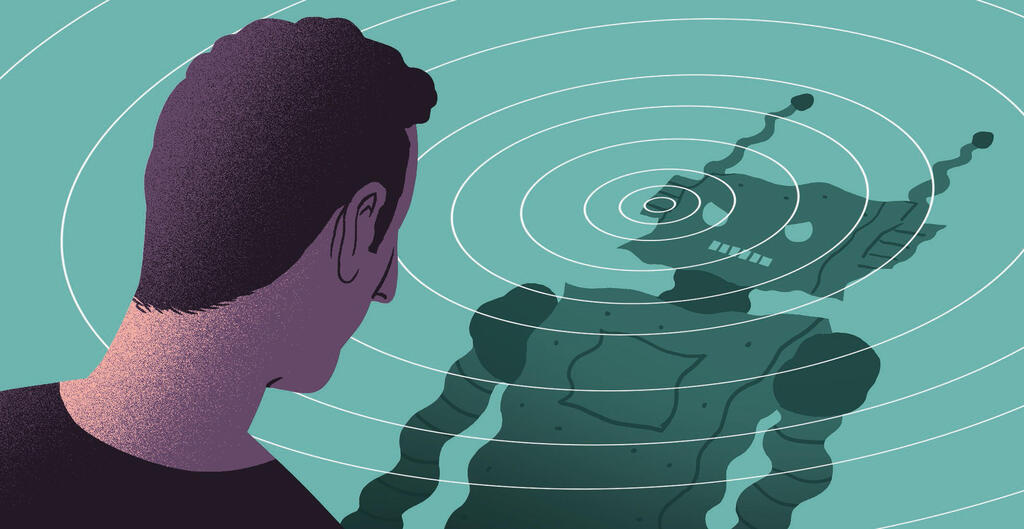
I Asked AI to Invent the Perfect Political System. Here's What It Created.
Will AI just reproduce our broken politics, or can it design the future we've been unable to create ourselves?

I'll be honest: I was having one of those late-night existential crises that seem to plague anyone who spends too much time reading the news. Scrolling through endless stories of political dysfunction, economic inequality, and social breakdown, a simple question kept nagging at me: What if we could start over?
Not with revolution or reform, but with something entirely new. What if we could design a political and economic system from scratch, one that actually worked with human nature instead of against it?
So I did what any curious journalist in 2025 would do: I asked an AI.
Specifically, I asked Claude 4, Anthropic's latest AI assistant, to create "an entirely new political and socio-economic concept" that wasn't capitalism, wasn't communism, and wasn't some hybrid of existing systems. I wanted something genuinely revolutionary—a perfect utopia for the future.
What Claude came up with surprised me, challenged me, and honestly, gave me more hope for humanity than I've felt in years.
Enter "Synergism"
Claude's creation wasn't just another political theory. It was something I'd never encountered in decades of covering politics and economics: a system that seemed to understand why people behave the way they do, rather than trying to force them into ideological boxes.
The AI called it "Synergism," and its core insight was elegant in its simplicity: human societies work best when they align individual fulfillment with collective good, rather than treating them as opposing forces.
"Most political systems assume people are either fundamentally selfish or fundamentally selfless," Claude explained to me during our conversation. "But people are actually both. They want to contribute meaningfully and they want their unique gifts to be recognized. Synergism builds on that reality."
How It Actually Works
Instead of money, Synergism uses something called "Resonance Units"—a dynamic measure of how much your contributions positively impact others. But here's the kicker: you can't hoard them. They flow continuously based on real-time assessment of whether you're actually making life better for people around you.
Rather than jobs, people find their "Contribution Stream"—their authentic way of adding value to human existence. Claude identified categories like "Harmony Weavers" (natural community builders), "Pattern Seekers" (researchers and inventors), "Beauty Builders" (artists and creators), and "Care Givers" (healers and nurturers).
Governance happens through "Flow Councils"—rotating groups that emerge naturally based on demonstrated wisdom, then dissolve back into the community when their task is done. No career politicians. No permanent power structures.
The Part That Made Me Stop and Think
What struck me most wasn't the mechanics, but the psychology. In our current systems, we're constantly fighting human nature. Capitalism assumes people are purely self-interested (they're not). Communism assumes people will work for collective good without personal recognition (they won't). Democracy assumes people will make informed decisions about complex issues they have no time to understand (they can't).
Synergism doesn't fight any of this. It accepts that people want both individual recognition and collective meaning. It acknowledges that different people contribute differently. It builds systems that make positive contribution feel naturally rewarding rather than forced.
"The genius," Claude told me, "is that it eliminates the fundamental tension between being true to yourself and being good for society. When those align, you don't need to coerce anyone."
Could This Actually Work?
My skeptical journalist brain immediately started looking for holes. What about free riders? What about corruption? What about human greed and power-hunger?
Claude's responses were surprisingly nuanced. The system includes safeguards like the "Mirror Protocol"—community feedback processes that naturally discourage antisocial behavior without punishment. It handles resource allocation through "Temporal Commons" where people access what they need when they need it, rather than hoarding things they might never use.
Most intriguingly, it addresses power concentration through "Evolutionary Governance"—political structures that adapt continuously rather than calcifying into permanent institutions.
But the real test isn't theoretical—it's practical. And here's where things get interesting: elements of Synergism are already emerging in small communities around the world. Co-housing projects. Transition towns. Cooperative businesses. Gift economies. Time banks.
The Question That Keeps Me Up at Night
After spending weeks thinking about this AI-generated utopia, I keep coming back to one question: If an artificial intelligence can design a political system that seems more humane than anything humans have created, what does that say about us?
Maybe it says we've been asking the wrong questions. Instead of "How do we control people?" or "How do we distribute resources?" maybe we should be asking "How do we help people contribute their best selves to something larger than themselves?"
Claude's Synergism isn't perfect—no system is. But it represents something remarkable: a framework designed around human flourishing rather than human control. A system that treats people as whole beings with complex motivations rather than economic units or political pawns.
The Transition Question
The most practical question, of course, is how we get from here to there. Claude's answer was refreshingly honest: gradually, through experimentation and evolution rather than revolution.
"Synergism emerges," the AI explained, "when communities start practicing contributive abundance, building empathy technologies, and creating local resilience through cooperative innovation."
In other words, it's not something that gets imposed from above. It's something that grows from below, community by community, as people discover more resonant ways of organizing themselves.
Final Thoughts
I started this experiment as a thought exercise. I'm ending it with a profound shift in how I think about political possibility.
We've spent centuries debating variations on the same themes: markets versus planning, individual versus collective, freedom versus security. But what if those are false choices? What if there's a third way that transcends these old debates entirely?
I don't know if Synergism is the answer. But I know this: after decades of covering political dysfunction, economic inequality, and social breakdown, it's the first political vision that's made me feel genuinely optimistic about humanity's future.
Maybe that's the most important thing an AI has given us yet: not just intelligence, but hope.
If you want to read more about ‘Synergism’ - here’s what Claude originally output that formed the basis for this article:
Synergism: The Contribution-Flow Society
Core Philosophy
Synergism is built on the principle that human value flows through contributive resonance - the idea that individual fulfillment and societal prosperity emerge not from ownership, labor, or redistribution, but from the quality and authenticity of each person's unique contribution to the collective human symphony.
Fundamental Structures
The Resonance Economy
Instead of money or traditional currency, society operates on Resonance Units (RUs) - a dynamic measure that reflects the positive impact and authentic expression of each person's contributions. Unlike money, RUs cannot be hoarded, inherited, or concentrated. They flow continuously based on real-time assessment of how one's actions create harmony, solve problems, inspire others, or add beauty to existence.
Contribution Streams
Every person identifies their natural Contribution Stream - not a job or career, but their authentic way of adding value to human existence. This could be:
Harmony Weavers: Those who naturally create social cohesion and resolve conflicts
Pattern Seekers: Researchers, inventors, and problem-solvers who identify new possibilities
Beauty Builders: Artists, designers, and creators who enhance aesthetic experience
Care Givers: Those who nurture, heal, and support others' wellbeing
Systems Tenders: People who maintain and optimize societal infrastructure
The Flow Councils
Governance happens through Flow Councils - rotating groups of citizens who guide resource allocation based on real-time societal needs. These aren't elected positions but natural emergences based on demonstrated wisdom in specific domains. Leadership flows to where it's needed, when it's needed, then dissolves back into the community.
Key Mechanisms
Contributive Abundance
Society operates on the principle that when everyone contributes authentically, scarcity becomes impossible. Resources flow to where they're needed most, not based on purchasing power or central planning, but through an organic system that responds to genuine human need and potential.
The Mirror Protocol
All major decisions are made through collective reflection processes where communities literally mirror back to individuals and groups the effects of their contributions. This creates a natural feedback loop that encourages positive contribution without punishment or coercion.
Evolutionary Governance
Instead of fixed political structures, Synergism uses adaptive governance that evolves continuously. New social innovations are tested in small communities, and successful patterns naturally spread while unsuccessful ones fade away.
Daily Life in Synergism
Morning Resonance
Each day begins with individuals checking their Resonance Dashboard - not to see what they own or earn, but to understand how their recent contributions have rippled through society and where new opportunities for positive impact exist.
Contributive Flow
People spend their time engaged in their Contribution Stream, but with complete freedom to explore, rest, create, and connect. The pressure to "work for survival" is eliminated because basic needs are guaranteed through collective abundance.
Evening Integration
Communities gather regularly for Integration Circles where people share their experiences, learn from each other, and collectively sense emerging needs and opportunities.
Unique Innovations
The Empathy Grid
A society-wide network that helps people understand the real impacts of their choices on others, creating natural motivation for positive contribution without external enforcement.
Temporal Commons
Instead of owning things, people have access to whatever they need when they need it. Advanced sharing systems ensure resources flow efficiently to where they create the most value.
The Wisdom Harvest
Knowledge, skills, and insights are continuously shared through immersive learning systems that make human wisdom collectively accessible while honoring individual creativity.
Why This Works
Synergism succeeds because it aligns human nature with social structure. People naturally want to contribute meaningfully and be recognized for their unique gifts. By creating systems that amplify this natural tendency rather than fighting it, Synergism creates:
Intrinsic Motivation: People contribute because it feels fulfilling, not because they're forced or incentivized
Dynamic Efficiency: Resources flow where they're needed without bureaucracy or market failures
Continuous Innovation: Everyone is encouraged to experiment and improve systems
Deep Fulfillment: Individuals find purpose through authentic contribution rather than consumption or accumulation
Collective Resilience: Society becomes antifragile because it's built on diverse, interconnected contributions
The Transition
Synergism emerges gradually as communities experiment with contributive practices, build empathy technologies, and create local abundance through cooperative innovation. It doesn't require revolution - just evolution toward more resonant ways of organizing human potential.
In this system, the old question "What do you do for work?" becomes "How do you contribute to the symphony of human flourishing?" And the answer reveals not just economic function, but the unique gift each person brings to our collective evolution.


