


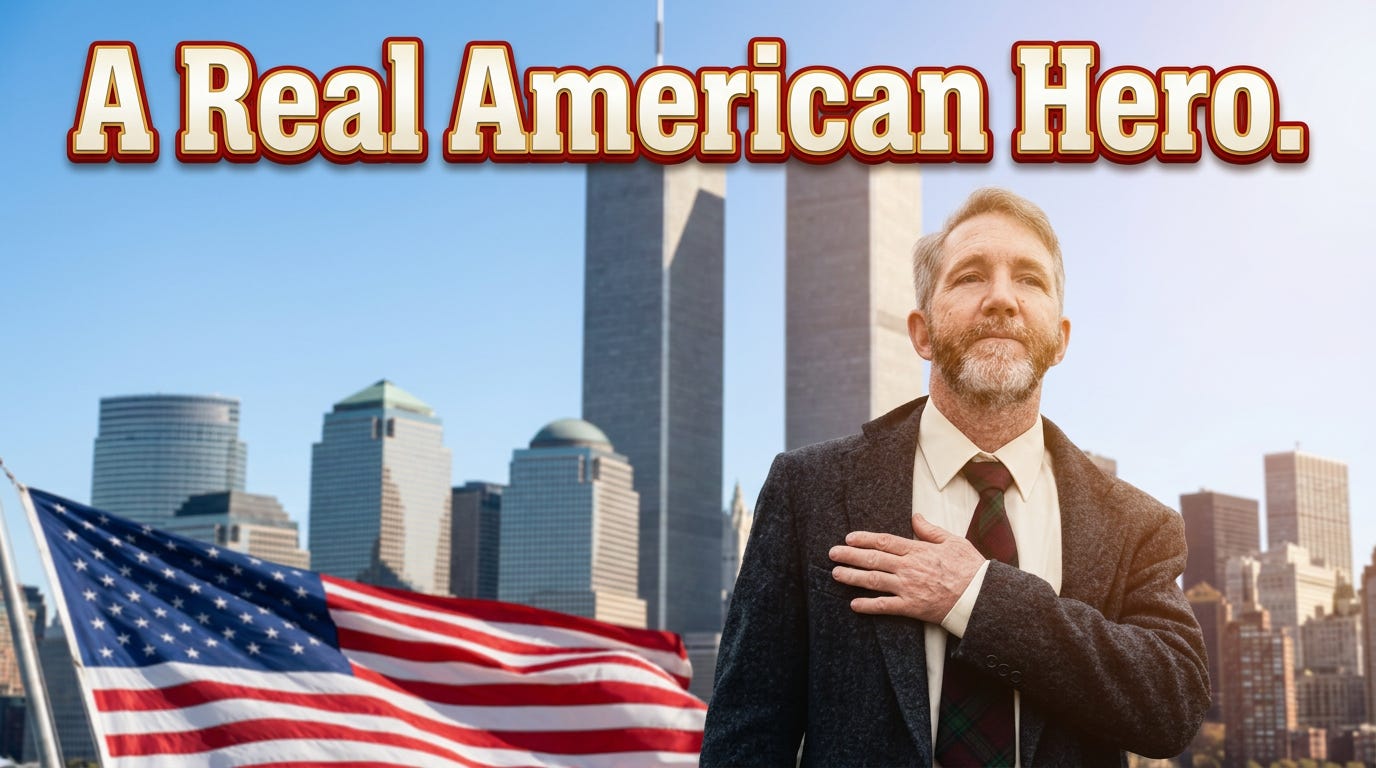
On the morning of September 11, 2001, the streets of Lower Manhattan filled with people running for their lives. In the middle of that crowd, one man was moving against it.
Charles Chuck Costello Jr. was 46 years old. He worked as an elevator mechanic, served in the Navy and raised four kids with his wife. His faith was not something he talked about so much as something he lived.
He had no business being anywhere near the World Trade Center that day. He was twenty blocks north at the Mercer Hotel in SoHo, getting ready for an ordinary day of maintenance work. The first plane struck the North Tower at 8:46 that morning.
Most people would have frozen, fled or reached for a phone to check on someone they loved. Chuck thought about elevators instead. He had spent sixteen years mastering that trade as a member of the International Union of Elevator Constructors. In that moment he understood exactly what was happening inside those two towers. Dozens of elevator cars were stalling between floors throughout the complex. People were trapped in the dark and the smoke with no way out.
Chuck grabbed his tools and ran. He covered two miles against the tide of evacuees pouring out of Lower Manhattan straight toward the smoke and the fire. A coworker who saw him go tried to talk him out of it. Chuck’s answer was simple. He said he would be fine and told his coworker to keep his phone on. Then he was gone, headed straight for the burning towers.
Firefighters and police officers pieced together what Chuck did once he reached Ground Zero. Chuck himself never got the chance to tell it. Elevator doors that would not open gave way under his hands. Heat and damage and the sheer force of the impact had jammed them shut. Still, he forced them open. People who had resigned themselves to dying in the dark were pulled out into the smoke-filled lobby and pointed toward the exits. The men fighting the fire and running the rescue effort didn’t know his name. They just knew there was a man who understood elevators better than anyone they had ever seen. They started calling him the elevator man.
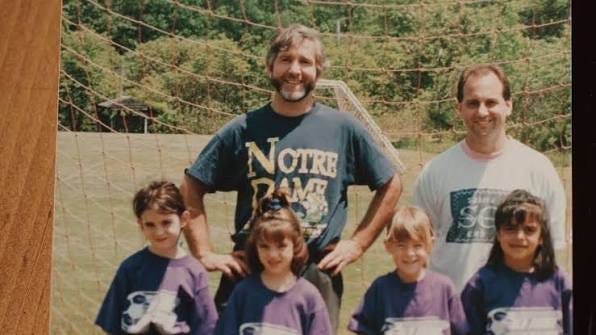
He could have stopped there after doing more in an hour than most people manage in a lifetime. He had every reason to walk away after clearing the North Tower and go home to his wife and his four kids in New Jersey. He learned instead that people were still trapped in the South Tower. Someone had to go and he went.
The South Tower collapsed at 9:59 that morning. The North Tower followed less than half an hour later. Chuck Costello did not come out. Search and rescue crews recovered his remains in January of 2002, almost four months later. He was found deep in the wreckage inside a South Tower elevator shaft, resting alongside a firefighter and a police officer who had been trying to do exactly what he was doing. Searchers found his driver’s license, his union card and his rosary in his pocket.
He carried no badge and no weapon. Nothing marked him as someone whose job was to run into danger. He carried instead the ordinary proof of an ordinary life, the one thing that explained where his strength truly came from.
Chuck Costello was never a soldier storming a beach, never a household name, never chasing anything like glory. He was a guy who fixed elevators for a living. He had spent his career learning the quiet mechanics of getting people safely from one floor to another. The worst morning in the city’s history arrived and that unglamorous skill turned out to be exactly what hundreds of trapped and terrified people needed most. He didn’t have to search his soul for some grand purpose. He recognized what he could do. He understood that no one else could do it and did it.
That is what real courage tends to look like. He was not a man who believed he was untouchable. He was a man who saw the danger with total clarity and decided his duty to strangers outweighed his fear for himself. Chuck knew exactly what was happening in those towers. He had watched the smoke, felt the heat, heard what was falling from the sky. He went anyway. Hundreds of people were trapped and he was quite possibly the only person in Lower Manhattan who knew how to get them out.
He had every reason that morning to stay put at the Mercer Hotel and go home that evening to hold his kids and tell them about a strange day. He chose instead to spend his last hours making sure other fathers and mothers and sons and daughters got to go home to theirs.
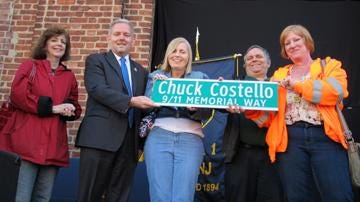
Today a street corner near the union hall in Long Island City is named Chuck Costello 9/11 Memorial Way. His youngest son grew up to become an elevator mechanic too and a volunteer firefighter, carrying on his father’s work and his instinct to run toward trouble instead of away from it.
Twenty-five years on, it is worth remembering Charles Chuck Costello Jr. not simply as one more name lost on a terrible day. He is proof of something worth holding onto. Ordinary people armed with nothing more than a useful skill and a stubborn conscience are capable of extraordinary love.
Remember the elevator man.
If this piece is worth anything, it’s worth sharing more than it’s worth a subscription. Send it today to a neighbor or a friend who could use a reminder of what an ordinary person is capable of. Chuck Costello did not do what he did for recognition. This article does not need a lot of readers to do what it is meant to do. It just needs someone to pass it along, starting with you.
If you want to help keep this outlet running while you are at it, a paid subscription helps Lily and me keep doing this instead of finding something else that pays the bills. That part matters to us. It just matters less today than making sure people read about Chuck.
Help keep the Wise Wolf howling.
One of the best stories you have ever written.
You would do well in researching similar stories of ordinary men, women and children risking their lives for others😇
Thank you for sharing. I don’t know whether to cry or smile. A wonderful man, a true hero, selfless.