


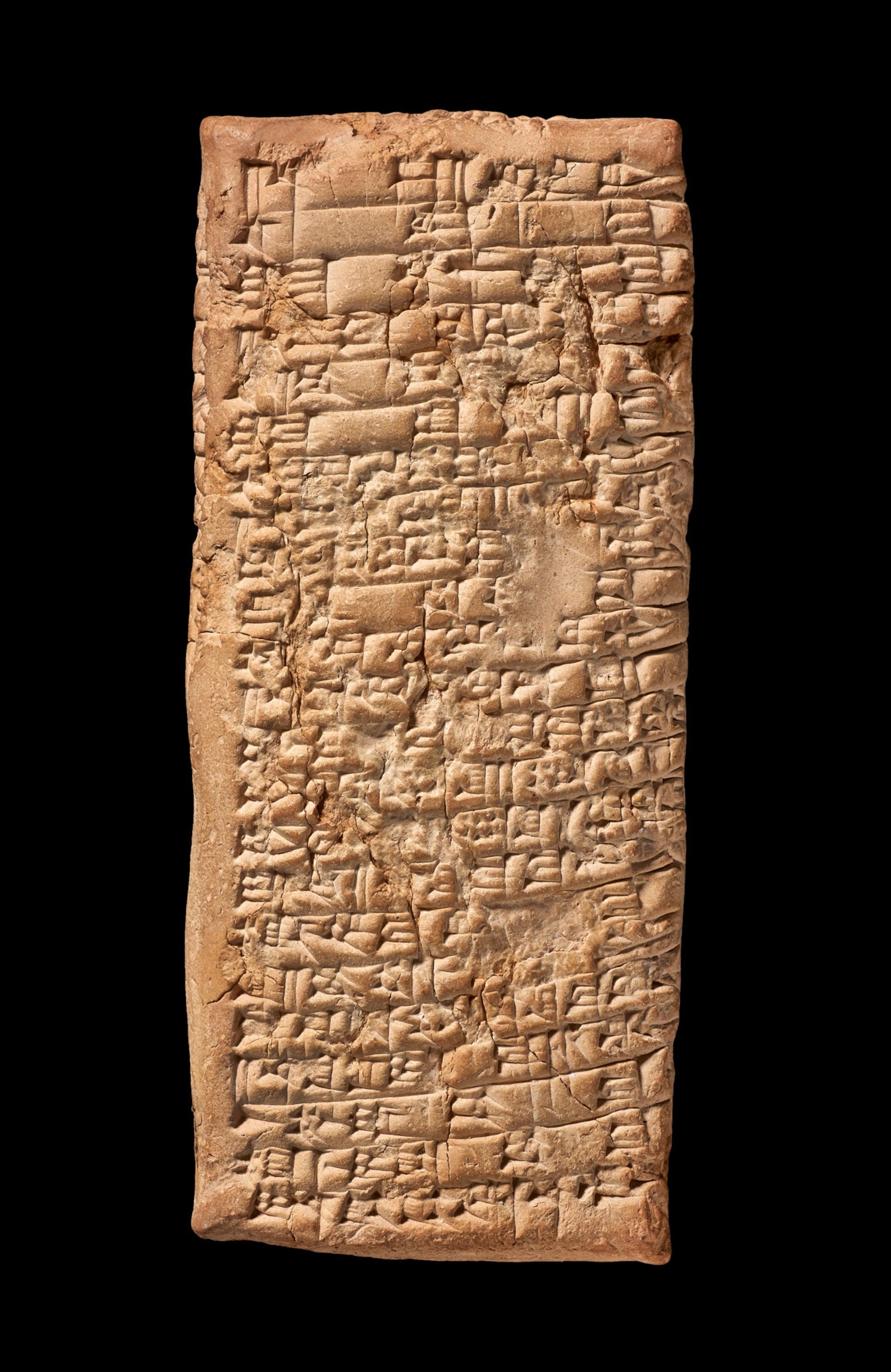
He sold, in advance, a quantity of substandard copper ingots to a man named Nanni. Nanni complained. He complained on a clay tablet, in Akkadian cuneiform, both sides, and that tablet now sits in the British Museum, where it holds the Guinness World Record for oldest known written customer grievance, and where it has spent the last decade being made into approximately ten million internet memes.
What the memes generally miss, because they are busy being memes, is that Ea-Nasir does not appear to have been a sleazy individual operator who got away with one big scam. He was, by all available evidence, a Tony Soprano figure who got away with all of his scams, repeatedly, for decades, and kept the receipts.
Ur was a major trading hub on the Persian Gulf, the only structural problem being that the city had no metal of its own. To buy copper, an Ur merchant had to dispatch a representative six hundred miles down the gulf to Dilmun (which is now Bahrain), where the only people authorized to sell copper were the alik Tilmun, or “Dilmun travelers,” a guild that functioned as a cartel. Ea-Nasir was a senior member. He also, according to surviving tax records, supplied copper directly to the royal palace at Ur, which means the king of Sumer was personally dependent on Ea-Nasir to keep the metal flowing. So when Ea-Nasir’s name surfaces in somebody’s complaint letter, you are not looking at an aggrieved customer slamming a small-time fraud. You are looking at a guy with the king upstairs, the cartel around him, and presumably a few large gentlemen at home.
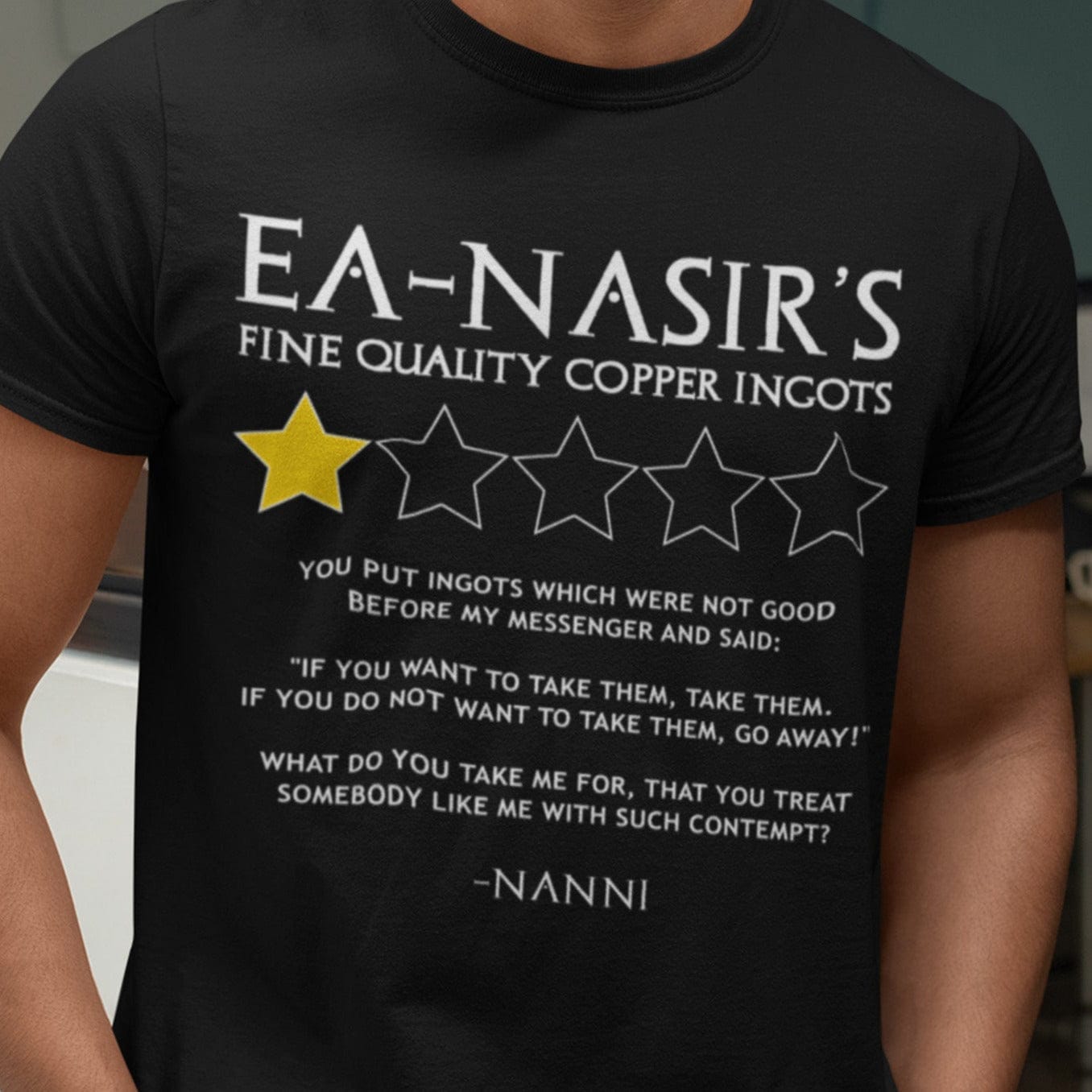
Nanni’s letter, being the famous one, gets quoted in full all over the internet, but the relevant beats are these. Nanni had paid in advance for “fine quality copper ingots” and received what we may charitably describe as some-quality copper ingots, possibly two-quality, definitely not fine-quality. He sent his messenger, an entirely innocent gentleman named Sit-Sin, over to Ea-Nasir’s place to discuss the matter, and Ea-Nasir told Sit-Sin, paraphrasing only mildly, “take it or leave it, get out of my face.” Sit-Sin then walked home through hostile territory, empty-handed, several times. Sit-Sin and I have something in common, which is that we have both bled for other people’s bad copper. He deserved better than he got, and frankly, so did I.
The detail that gives the whole game away, though, is buried later in the same letter. Nanni mentions that he has paid 1,080 pounds of copper directly to the royal palace, as a tax, on Ea-Nasir’s behalf, plus another 1,080 pounds paid by his business partner Sumi-abum. Over a ton of metal that Nanni was personally responsible for delivering to the Sumerian government to cover Ea-Nasir’s tax bill, at the same time that Ea-Nasir was actively scamming him. The modern equivalent is paying your slumlord’s water bill so the building doesn’t get condemned, while the slumlord declines to fix the toilet that has been broken since you moved in, and continues to steal your mail.
Nanni was also not alone. When Sir Leonard Woolley excavated what is believed to have been Ea-Nasir’s house in the 1920s, he found Nanni’s tablet. He also found more. There was an angry letter from a customer named Arbituram, who was tired of waiting for his copper. There was one from a guy named Imgur-Sin, who actually wrote, on a clay tablet, “do you not know how tired I am,” which makes Imgur-Sin technically the original Imgur user, with a support ticket that has been open for 3,800 years. There was one from Appa, who needed his copper “in order that my heart shall not be troubled,” which I think we can all agree is the most Sumerian thing anyone has ever said. And there was one from a guy named Ili-idinnam, who told Ea-Nasir, on the official Akkadian record, that the work he had done was soooooooo good. Yes. With drawn-out vowels. Sarcasm. Scholars have verified the multiple repeated vowels appear on the actual tablet, which means the first recorded use of sarcasm in human history was directed at Ea-Nasir, by a customer trying to get him to deliver some copper.
The natural question is why none of these aggrieved gentlemen ever did anything more substantial than write angry letters. Why Nanni, a wealthy merchant with employees and resources and access to large men with clubs, did not simply send some of those large men over to retrieve his copper and possibly Ea-Nasir’s teeth. Why Sit-Sin kept walking through enemy territory alone, with a clay tablet, instead of with six armed friends and a wagon. Why anyone, ever, took “no” for an answer from this man.
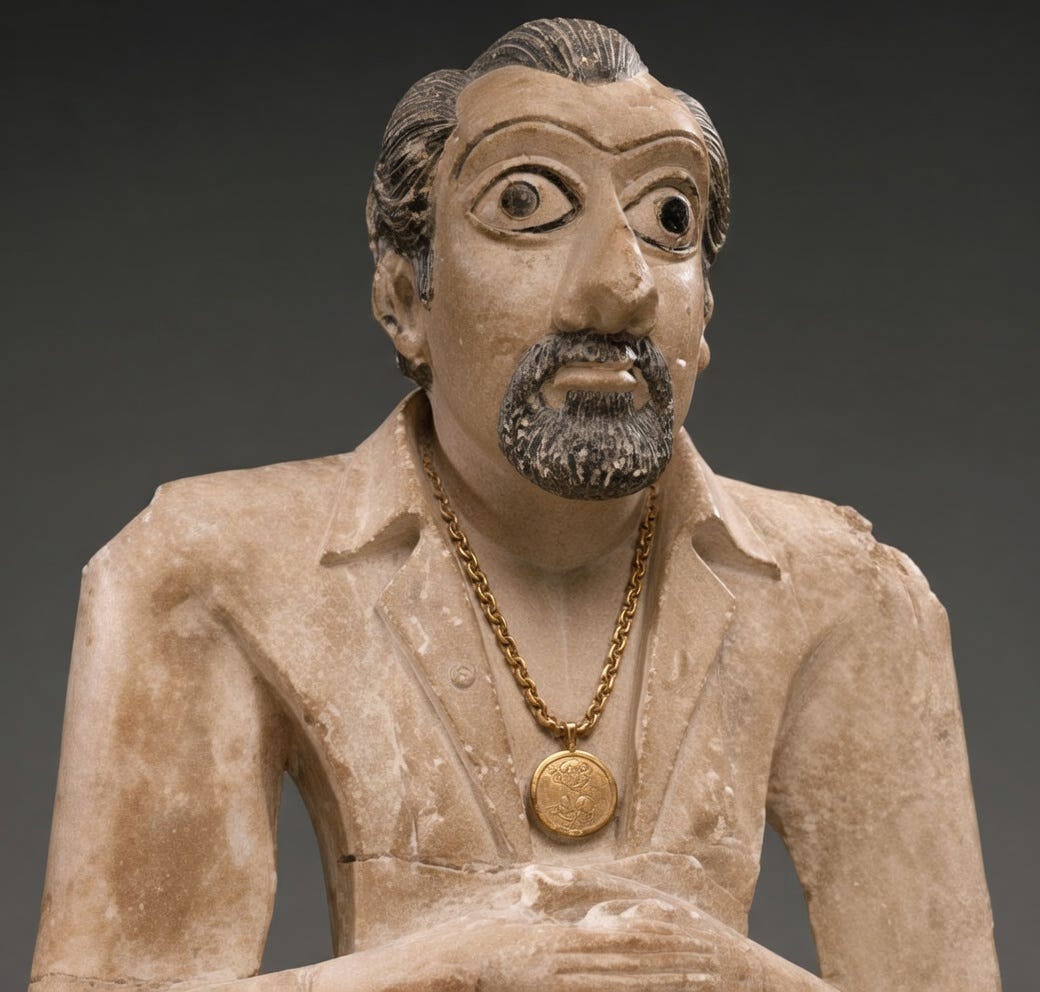
If you crossed Ea-Nasir specifically, the palace lost its supplier, which became your problem and not his. Whatever muscle he kept on retainer at home, and the evidence is that he kept some, was reinforced by all of that institutional weight. You did not start a war with this guy over bad ingots. You wrote a letter. You hoped, on some basic foundational level, that being right would matter. It did not. It rarely does.
Which is why the kept letters are not the records of a fastidious archivist. They were trophies. Every furious tablet from Nanni and Imgur-Sin and Appa and Arbituram and Ili-idinnam that ended up on Ea-Nasir’s shelf was, in effect, a Polaroid of someone he had successfully scammed and faced zero consequences for scamming, and he liked having them where he could see them. The Bronze Age’s first known organized crime archive sat in a mud brick house at the address now catalogued by Woolley’s team as Number One Old Street, Ur, where it remained while the Sumerians fell to the Babylonians, the Babylonians fell to the Assyrians, the Assyrians fell to the Persians, the Persians fell to Alexander the Great, who died at thirty-two of probably typhoid, and on through Romans and Caliphates and Crusades and the entire collapse and reconstruction of human civilization several times over, until in the 1920s a British guy in a pith helmet dug Ea-Nasir’s trophy collection out of the sand.
Things did not, in the end, go well for Ea-Nasir, professionally. Woolley’s notes record that the next-door neighbor literally absorbed part of his house into theirs over the course of his career, which means his home physically shrank as his business declined, the way your security deposit shrinks every time the slumlord finds a new reason to keep it. He pivoted. First into textiles. Then into real estate. Then into land speculation. Finally, in what may be the most poetically just career arc in all of recorded human commerce, Ea-Nasir ended his career selling used clothes, which makes the world’s first known commercial fraudster also, posthumously, the world’s first known thrift store proprietor, a noble line of work whose modern descendants include the guy at the flea market who insists the broken Rolex is vintage. Oh and One last thing…
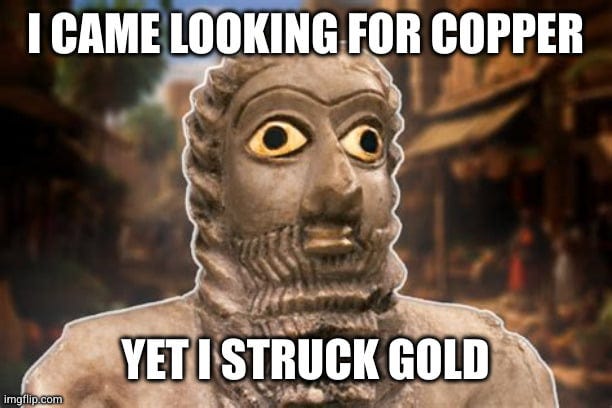
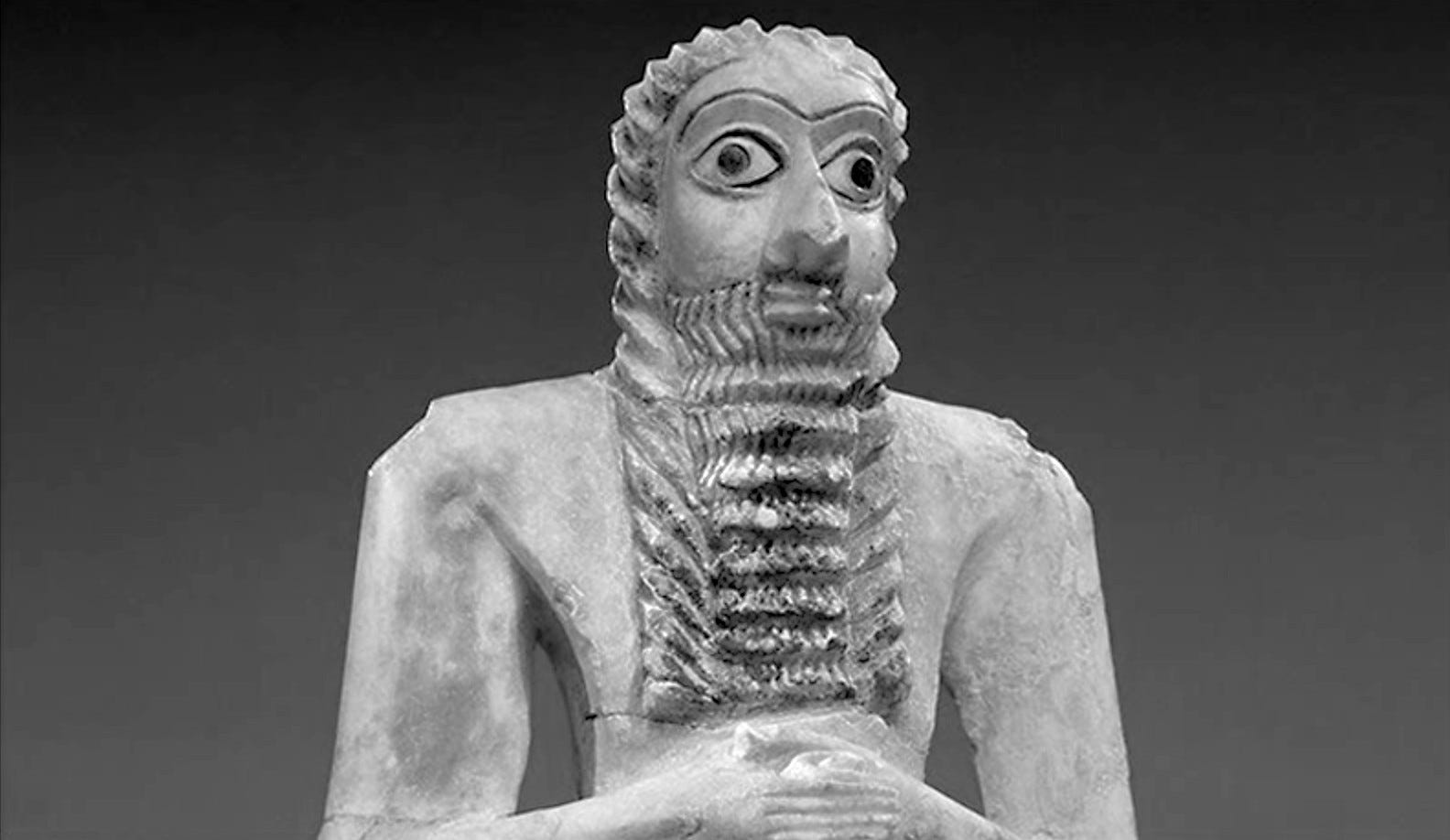
That statue is not Ea-Nasir. It is from a completely different archaeological dig site called Tell Asmar. It depicts an unknown Sumerian worshipper. It was made approximately a thousand years before Ea-Nasir was born. The internet has spent the last decade publicly humiliating an entirely innocent praying guy who is not Ea-Nasir, has never been Ea-Nasir, and has had no opportunity whatsoever to defend himself.
Somewhere in the afterlife, the actual praying guy is composing his complaint.
He should send it to Ea-Nasir’s house.
I hear they keep excellent records.
Help keep the Wise Wolf howling.
Ea-Nasir will be my new code name for Dumpus Maximus any time I want to insult him to a MAGA. They won't have a clue. 😂
Great story! Can you imagine what “tablets” and statues someone will find in four millennia from now ? Ones about trump & the files trump stole from white house from trump 01? And never forget the Epstein files, assuming they find those files aka ”tablets” 🤣