
Is The US Government Using Immigration as an Excuse to Build an Army
The Quiet Construction of Federal Force

Something is happening in America that transcends party lines and ideological boundaries. A transformation in how federal power operates â not just in policy, but in structure, scope, and secrecy.
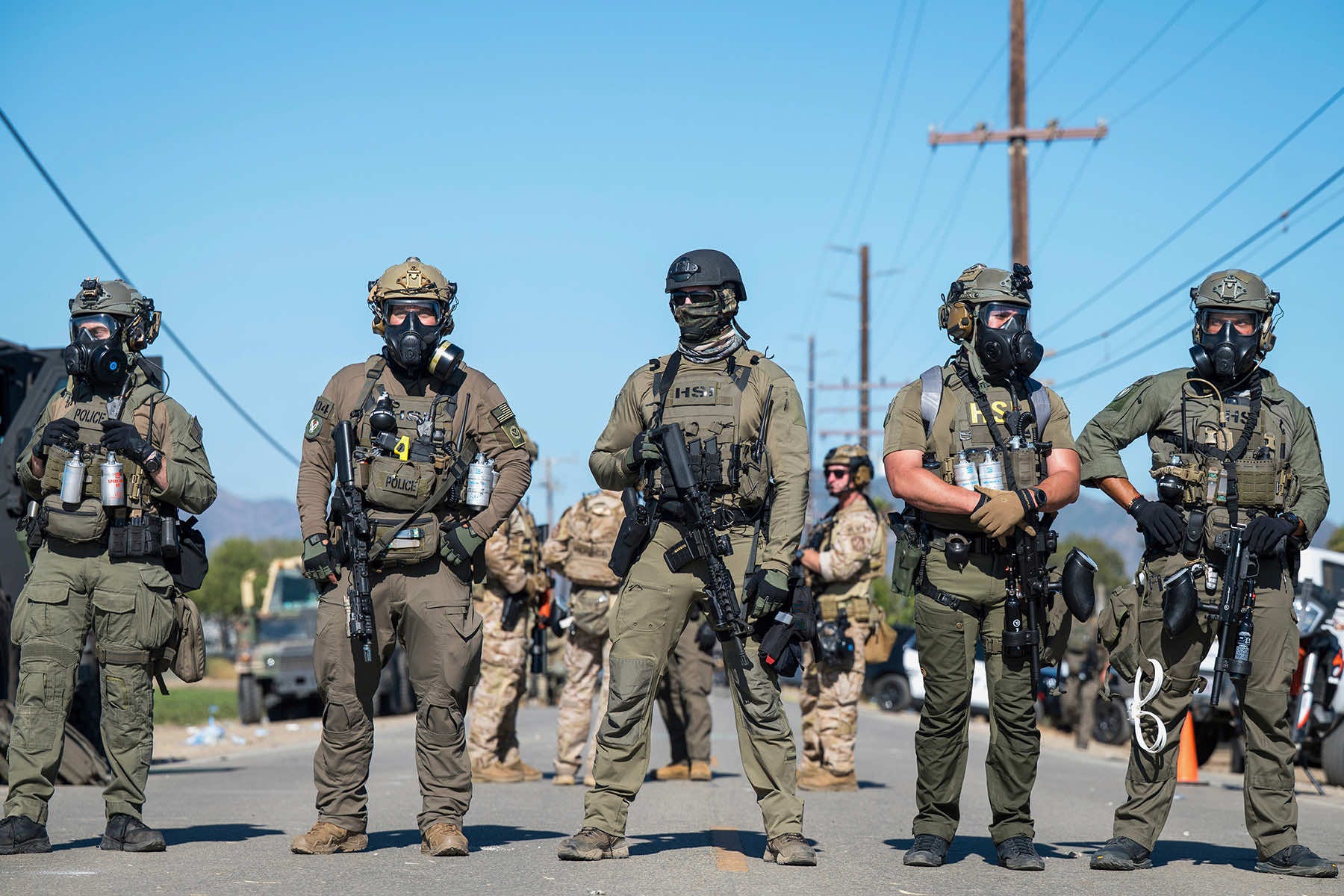
When federal agents in military-style gear, faces obscured, conduct raids in American cities hundreds of miles from any border, arresting citizens and non-citizens alike, the optics alone should give us pause. This isn't traditional law enforcement. This is something that looks, acts, and operates like military deployment on domestic soil.
The numbers tell a story that should concern every American:
A proposed expansion of 10,000 new ICE agents. Billions allocated for detention infrastructure, surveillance technology, and rapid deportation operations. A budget that now rivals major federal agencies. Plans for new detention facilities â officially termed "camps" â strategically placed in remote locations, away from public scrutiny.

That terminology â "camps" â carries historical weight. It evokes dark chapters of American and world history: Japanese American internment, European concentration camps, detention centers used by authoritarian regimes. When governments begin constructing large-scale, isolated detention facilities, citizens have every right to ask fundamental questions about scope and purpose.
The hiring surge presents its own dangers. Recruiting 10,000 armed federal agents rapidly makes quality control nearly impossible. History demonstrates this clearly: after 9/11, rushed hiring in law enforcement led to increased misconduct and abuse. When speed takes precedence over standards, the result is predictable â more brutality, less accountability, greater public fear.
Consider the equipment: tactical uniforms, armored vehicles, advanced night-vision technology, weapons systems that surpass what many National Guard units possess. These aren't civil servants processing immigration paperwork. These are paramilitary units operating within American borders.
The question becomes: Is this level of militarization necessary for immigration enforcement? Or does it serve a broader purpose?
Here's the scenario that keeps many Americans awake at night:
Picture a future crisis â economic collapse, widespread civil unrest, international conflict. The president declares emergency powers. Regular military forces are deployed overseas. The National Guard is activated elsewhere. Suddenly, a 30,000-strong ICE force, answering directly to executive authority with minimal oversight, sweeps through American cities to "maintain order."
This Is How Fascism Comes: Quietly. Legally. With a Budget and a Press Release.
Weâre being played.
Not by immigrants. Not by any single political party.
But by the architects of crisis â on both sides â who manufacture emergencies to justify expanding state power. And right now, theyâre setting the board for something far bigger than border enforcement.
Think about it:
The immigration "crisis" is not new. Itâs engineered. Not necessarily by one man, but by decades of policy failures, deliberate underfunding of asylum systems, political theater, and media panic â all used to justify something much darker: the creation of a domestic enforcement army.
Now, imagine a future â not far off â where:
A war overseas escalates. Maybe Ukraine collapses. Maybe China moves on Taiwan. The U.S. commits ground troops.
Simultaneously, unrest erupts at home â protests over inflation, civil rights, election results.
The president declares a national emergency.
The military deploys overseas. The National Guard is federalized and sent to hotspots.
Suddenly, thereâs no organized force left inside the country to "maintain order."
And who steps into that vacuum?
ICE.
Not the local cop. Not the sheriff. But a federal paramilitary force of tens of thousands â armed with MRAPs, assault rifles, encrypted comms, facial recognition drones, and total operational autonomy under executive authority.
They werenât built to deport people.
They were built to control us.
Because ask yourself:
Why are we spending billions to lock up undocumented immigrants in remote detention centers â facilities with razor wire, guard towers, and 24/7 surveillance â when the simplest, cheapest solution is a bus ticket and a flight?
Why does the U.S. government need more detention capacity than the entire federal prison system?
Why are new "processing centers" being built in isolated areas â places where no one can see what happens inside?
And why are we normalizing images of masked federal agents dragging people from their homes in predawn raids â sometimes U.S. citizens â while Congress cheers and the media looks away?
This isnât about immigration.
Itâs about infrastructure for repression.
This is how fascism operates:
Step 1: Create or exaggerate a crisis (the border, crime, terrorism).
Step 2: Demand emergency powers and funding.
Step 3: Build the tools â surveillance, detention, armed forces.
Step 4: Normalize their use on "acceptable" targets (migrants, protesters, the poor).
Step 5: Turn them on the rest of us when we resist.
Itâs not a coup with tanks in D.C.
Itâs a slow-motion takeover, dressed up as law and order.
And the scariest part?
Both parties built this.
Democrats approved the budgets. Republicans supercharged the rhetoric. Lobbyists cashed the checks. Private prison companies profit. Tech firms sell the spy gear. And the American people?
Theyâre too busy arguing over pronouns or border walls to notice the cage being built around them.
But letâs be crystal clear:
These camps were not built for immigrants.
They were built for us.
Because history doesnât repeat â but it rhymes.
Japanese Americans were rounded up during WWII not because they were dangerous, but because they were convenient. They were the first test of mass domestic detention in America.
Today, undocumented immigrants are the new "enemy within."
Tomorrow, it will be dissenters.
Journalists. Activists. Veterans who speak out. Parents at school board meetings. Anyone labeled "un-American."
And when that day comes, donât expect the military to save you.
Theyâll be overseas.
The National Guard? Federalized, far away.
And standing at your door will be a force with no allegiance to your rights â only to the executive who commands them.
ICE isnât just immigration enforcement anymore.
Itâs the domestic praetorian guard â growing in size, power, and impunity.
And if we donât dismantle this machine now, before the next crisis hitsâŠ
We wonât get a second chance.
Wake up.
This isnât politics.
This is survival.
This isn't dystopian fiction. It's the historical pattern of how democratic institutions erode and authoritarian control emerges â not through dramatic coups, but through incremental expansion of police power, marketed as temporary solutions to immediate threats, then normalized as permanent fixtures.
Both Trump and Biden administrations have contributed to this machinery's growth. But the rhetoric matters. When leaders speak of "cleansing" government, praise authoritarian figures, discuss using military force to "reclaim" the country, and when key advisors explicitly describe deportation as demographic engineering â that rhetoric combined with rapidly expanding armed force creates legitimate concerns about intent.
This transcends immigration policy. This is about power concentration and accountability.
The Founders understood these dangers intimately. They designed checks and balances precisely because they feared standing armies in peacetime. They guaranteed habeas corpus and due process because they knew power, unchecked, inevitably becomes oppressive.
The critical questions aren't just about current leadership â they're about institutional precedent:
Why isn't Congress exercising oversight? Why aren't courts intervening? Why are we accepting this expansion as normal?
Because once these forces exist, current leadership becomes irrelevant. What matters is who controls them next.
History overflows with examples of leaders who began with crisis management, promises of order, and loyal forces â and concluded with dictatorships.
The warning signs are clear:
Who holds these agents accountable?
Who determines detention criteria?
When does enforcement cross into oppression?
This demands vigilance, not panic. Not violence, but sustained attention.
Liberty isn't destroyed in dramatic moments. It's dissolved gradually â through budget allocations, hiring announcements, and press releases â until citizens realize the people meant to protect them are now monitoring them.
And they hold all the keys.
This isn't partisan politics. This is about power and its necessary limits.
Power must always be questioned.
Without exception.
If you found this message disturbing â good. That means youâre still awake.
Weâre being buried by the algorithm. 60,000 subscribers and weâre treated like a whisper in a storm. No corporate backing. No media megaphone. Just truth, straight and raw.
If this resonated with you, donât just scroll past. Like. Share. Forward it.
They donât want you seeing this. They donât want you thinking. Theyâre building the cage while youâre distracted.
You can listen now â or find out what silence costs when itâs your door they kick in.
Wake up. Speak up. Or get locked up.
This isnât content.
Itâs a warning.
And it may be one of the last.


Governments all over the world always roll out programs in the name of safety and security using fear in order to control people!!
If anyone has the brains to give a damn about what is happening, I am writing up a petition to file in the Us District Court to have an injunction filed against this ICE expansion. I need your help. I need at least 500 signatures for them to take this seriously. If you want to help, here is what I have written so far, comment below with your name and I will add it to the final petition and have my attorney file it:
PETITION AND DECLARATION OF CONCERN:
ON THE CONSTITUTIONALITY AND HUMANITY OF IMMIGRATION DETENTION PRACTICES
We, the undersigned, affirm the following:
We believe in a nation governed by law, justice, and human dignity. We affirm that the United States Constitution protects all persons within its jurisdiction â citizen and non-citizen alike â from arbitrary detention, cruel and unusual punishment, and violations of due process.
We are deeply concerned about the rapid expansion of immigration detention infrastructure and the prolonged detention of non-citizens â including asylum seekers, families, and long-term residents â without individualized bond hearings, access to counsel, or meaningful judicial review.
We assert that the federal governmentâs current reliance on mass civil detention as a default enforcement mechanism raises serious constitutional, statutory, and humanitarian concerns.
Legal and Constitutional Basis for Concern
Fifth Amendment â Due Process Clause
The Fifth Amendment guarantees that no person shall be "deprived of life, liberty, or property, without due process of law."
Zadvydas v. Davis, 533 U.S. 678 (2001): The Supreme Court held that indefinite detention of non-citizens is unconstitutional. Detention must be reasonably related to the purposes of removal. Once removal is not reasonably foreseeable, continued detention violates due process.
Eighth Amendment â Prohibition of Cruel and Unusual Punishment
While immigration detention is civil, not criminal, conditions of confinement must not amount to punishment.
Bell v. Wolfish, 441 U.S. 520 (1979): Pretrial detention must not be punitive in nature. Conditions that constitute punishment without conviction violate the Constitution.
Equal Protection and Equal Application of Law
The government must not treat individuals differently based on national origin or immigration status in ways that violate fundamental rights.
Plyler v. Doe, 457 U.S. 202 (1782): The Court held that undocumented children have a right to public education, affirming that the Equal Protection Clause applies to all persons, regardless of immigration status.
Statutory Authority and Congressional Limits
The Immigration and Nationality Act (INA), 8 U.S.C. § 1226 and § 1231, authorizes detention pending removal proceedings or deportation. However, the law requires that detention be individualized and subject to bond hearings where appropriate.
Jennings v. Rodriguez, 583 U.S. ___ (2018): The Court held that bond hearings are not automatically required every six months, but lower courts have since interpreted Zadvydas to require review of prolonged detention.
Alternatives to Detention (ATDs)
ICE itself recognizes ATDs â such as GPS monitoring, telephonic check-ins, and case management â as effective, humane, and far less expensive than detention. According to ICEâs own data, compliance rates with ATD programs exceed 90%.
[Source: ICE Alternatives to Detention Program Reports]
Cost and Fiscal Responsibility
The average daily cost of detaining one person in ICE custody exceeds $150 per day (over $55,000 annually), while ATD programs cost less than $10 per day.
[Source: U.S. Department of Homeland Security Office of Inspector General Reports]
Separation of Powers and Militarization Concerns
ICE is a law enforcement agency under the Department of Homeland Security (DHS), not the military. The Posse Comitatus Act, 18 U.S.C. § 1385, limits the use of the military for domestic law enforcement. While ICE is not a military force, its rapid expansion without sufficient oversight raises concerns about unchecked executive power.
The Founders warned against standing armies and unchecked federal authority (Federalist No. 8, Federalist No. 45). While ICE is not a "domestic army," its operations must remain subject to judicial review, congressional oversight, and constitutional limits.
Our Moral and Legal Stance
We do not dispute the federal governmentâs authority to enforce immigration laws. However, we assert that:
Detention must be the exception, not the rule.
Prolonged or indefinite detention without bond hearings violates Zadvydas and the Fifth Amendment.
The use of taxpayer funds for mass detention â when proven, cheaper alternatives exist â is fiscally irresponsible and inhumane.
The expansion of detention infrastructure without public debate or legislative authorization undermines democratic accountability.
We believe that deportation is not a justification for indefinite incarceration. If someone can be placed on a bus, plane, or other means of return, detention is unnecessary and disproportionate.
Call to Action
We, the undersigned, call upon the federal government to:
End the practice of mandatory detention without individualized bond hearings.
Expand Alternatives to Detention (ATDs) as the default for non-citizens not deemed a flight risk or danger.
Close for-profit detention centers and reduce reliance on private prison corporations.
Ensure all detained individuals have access to legal counsel, medical care, and due process.
Submit all immigration enforcement policies to congressional oversight and public transparency.
We further affirm our intent to file a petition for declaratory and injunctive relief in federal court, seeking to enjoin policies of prolonged, unnecessary immigration detention as violations of the Fifth Amendment and relevant statutes.
Signatures
We, the undersigned, support this declaration and authorize the filing of legal action to challenge unconstitutional immigration detention practices.