


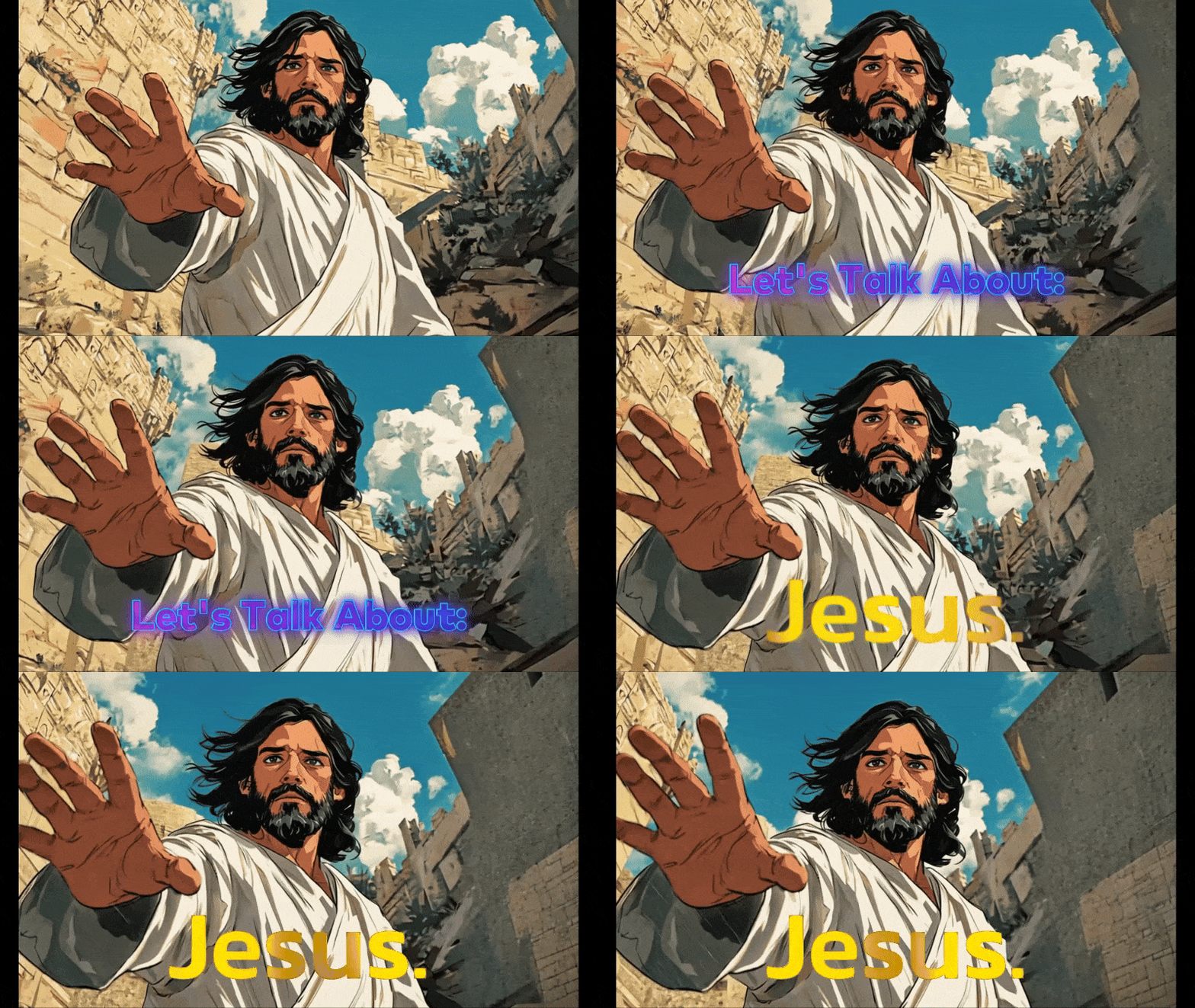
Every December, the nativity scene gets unpacked from the same cardboard box in the same corner of the same attic, and the same plastic figures take their positions in the same arrangement they have occupied for generations. Mary kneels serenely. Joseph stands watch with his shepherd’s crook. The wise men arrive bearing gifts that would make any baby shower awkward. And there in the center lies the infant Jesus, perpetually calm, perpetually clean, perpetually glowing with that factory applied halo that suggests divinity comes standard with purchase.
But the real story of that baby, the one that got edited out of the felt board presentations and the children’s pageants and the greeting cards with their soft focus photography, is far stranger and more fascinating than the sanitized version we have inherited. The actual historical and scriptural record, when you dig into it with the curiosity of a reporter rather than the reverence of a congregant, reveals a narrative so strange it would make Chuck Missler smile and the History Channel reach for their “Ancient Aliens” font. This is the Jesus they did not tell you about in Sunday school, and getting to know him might just make this Christmas mean a little more…

The Baby That Had to Outrun a Hit Squad
Most nativity scenes skip the part where a paranoid king tried to murder every male toddler in the region just to eliminate one infant he had never met. Herod the Great, and you have to wonder who approved that title given his resume, was the kind of ruler who made his enemies disappear and his friends nervous. This was a man who executed his own wife Mariamne, then killed two of his sons when he suspected they might be plotting against him. The Roman Emperor Augustus reportedly quipped that it was safer to be Herod’s pig than Herod’s son, a joke that landed particularly well since Jewish dietary law meant the pig would at least be left alone.
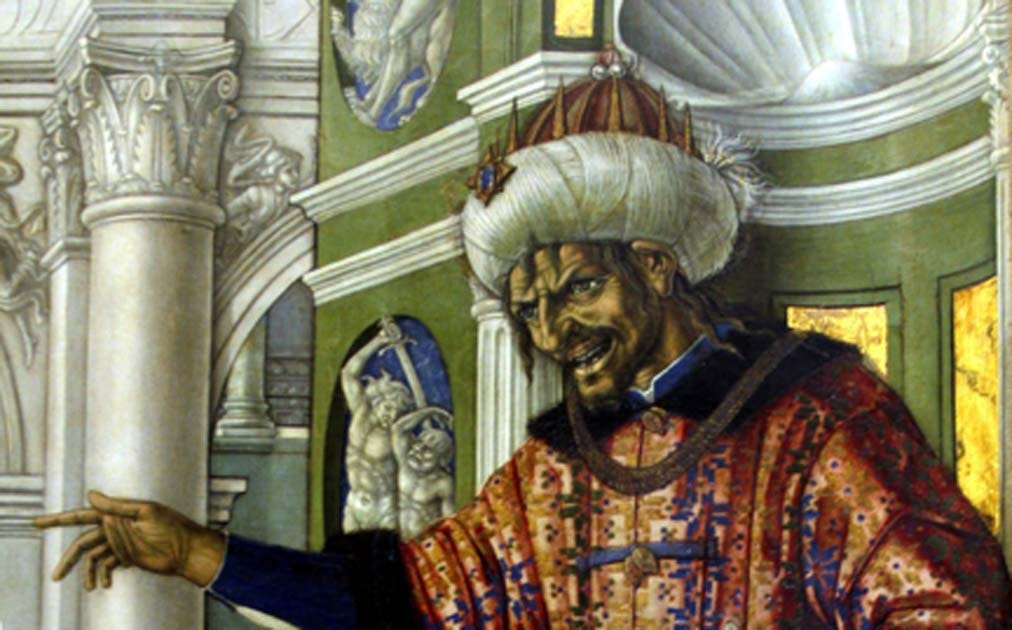
When the Magi arrived in Jerusalem asking about a newborn king of the Jews, Herod did what any insecure monarch with boundary issues would do. He smiled, played dumb, asked them to report back with the child’s location so he could pay his respects, and then quietly assembled the first century equivalent of a death squad. The wise men, having been warned in a dream that Herod’s invitation to share information was less about worship and more about warfare, slipped out of the country by another route. Joseph received his own nocturnal warning and fled with Mary and the baby to Egypt, making Jesus a political refugee before he could walk.
What followed was the Massacre of the Innocents, an event so dark it feels incongruous with the twinkling lights and silver bells of the modern holiday. Herod ordered the execution of all male children two years old and under in Bethlehem and the surrounding area. Scholars estimate the actual number was probably between a dozen and twenty children, given Bethlehem’s small population at the time, but that clinical accounting does nothing to diminish the horror. Those babies were the first martyrs of a faith that did not yet have a name, killed by a king who could not tolerate the existence of an alternative.
The Brothers and Sisters Nobody Mentions
Here is something that will earn you interesting looks at the church potluck. Jesus had siblings. The Gospels of Mark and Matthew name them specifically: James, Joses, Judas, and Simon, along with at least two sisters whose names went unrecorded because ancient historians were not particularly concerned with documenting women. These were not distant cousins or spiritual brothers in some metaphorical sense. The Greek word used is adelphos, which means brother in the most literal domestic sense, the kid who steals your toys and tattles when you stay up past bedtime.
The implications of this are fascinating to consider. Jesus grew up in a crowded house with a pack of younger siblings who had no idea their older brother was going to become the central figure of Western civilization. They watched him learn carpentry from Joseph. They ate meals together. They probably fought over who got the last piece of bread and whose turn it was to fetch water from the well. James and Jude, two of these brothers, went on to write books of the New Testament that bear their names, but that came later. During Jesus’s actual ministry, his own brothers were skeptical of his claims. The Gospel of John notes that his brothers did not believe in him, which suggests some truly awkward family dinners.
The really interesting part is what happened after the resurrection. Those skeptical brothers became true believers. James became the leader of the Jerusalem church, a position of such prominence that Paul specifically mentions meeting him. Whatever happened that Easter weekend, it was apparently convincing enough to turn a doubting sibling into a pillar of the early faith. That is not nothing. Brothers are notoriously hard to impress.
The Missing Father and the Silent Years
Joseph, the earthly father of Jesus, disappears from the biblical narrative like a character written out of a television series between seasons. He is there for the nativity, present for the flight to Egypt, on hand when twelve year old Jesus wanders off to debate theology with temple scholars and gives his parents a heart attack. And then nothing. By the time Jesus begins his public ministry, Joseph is nowhere to be found. He is not at the wedding at Cana. He is not among the crowds listening to the Sermon on the Mount. He is most conspicuously absent at the crucifixion, where Mary stands watching her son die but stands apparently alone in terms of a spouse.
The evidence points to the uncomfortable conclusion that Joseph died sometime during those unrecorded years between Jesus’s childhood and his public ministry. When Jesus hangs dying on the cross, he looks down at his mother and tells the apostle John to take care of her, effectively transferring the responsibility of her welfare to someone outside the family. In a culture where a widow’s security depended entirely on having a male relative to provide for her, this would have been unnecessary if Joseph were still alive. It also explains why Jesus, as the eldest son, would have spent his early adult years working as a carpenter to support the family before beginning his ministry around age thirty.
Catholic tradition holds that Joseph died peacefully in the presence of Jesus and Mary, which is why he became the patron saint of a happy death. The fourth century text known as the History of Joseph the Carpenter provides elaborate details about his final hours, including visitations from archangels. Whether you take that as historical fact or devotional embellishment, the core reality remains that the man who raised the Son of God, who taught him a trade and protected him from a murderous king and walked dusty roads to Egypt and back, never got to see what his adopted son would become. Joseph lived the middle of the story without ever witnessing the ending.
The Childhood They Cut From the Canon
If you want to understand why the church fathers were so careful about which texts made it into the New Testament, spend an afternoon with the Infancy Gospel of Thomas. This second century document purports to describe the childhood of Jesus between ages five and twelve, and it reads like someone crossed a superhero origin story with a Greek tragedy and added a healthy dose of what can only be described as divine anger management issues.
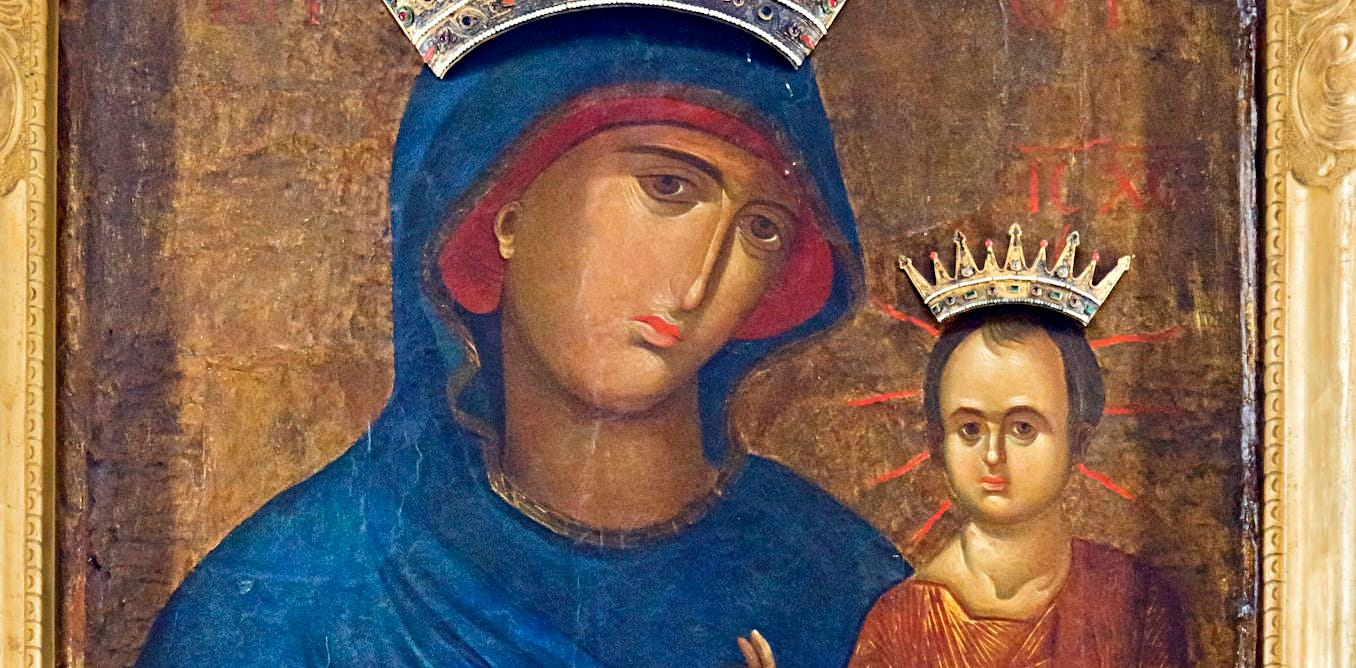
In these stories, young Jesus fashions sparrows from clay on the Sabbath and, when challenged about working on the day of rest, claps his hands and brings them to life so they fly away. A child accidentally bumps into him on the street and Jesus curses the kid dead on the spot. Another child disturbs pools of water Jesus has been playing with and receives the same fatal treatment. The parents of the deceased children confront Joseph, demanding he either teach his son to bless instead of curse or leave the village entirely. Young Jesus responds by striking the complaining parents blind.
Now, the early church rejected these texts as spurious for good reason. The temperamental child deity depicted in the Infancy Gospel of Thomas bears little resemblance to the Jesus of the canonical Gospels, who heals rather than harms and reserves his anger for money changers and fig trees. But these texts exist because people in the ancient world were genuinely curious about the gap between the nativity and the baptism. They wanted to know what the Son of God was like as a kid, and in the absence of actual information, they invented stories that reflected their own assumptions about what unlimited power in the hands of a child might look like.
The real answer, implied by the canonical silence, is probably far more ordinary. Jesus likely spent those years doing what every other boy in Nazareth did. Learning Torah, helping in the workshop, growing up in a household that knew he was special but perhaps did not fully grasp what that meant. The miracle is not that he threw divine tantrums. The miracle is that he apparently did not.
The Holiday They Built on Top of Another Holiday
While we are dismantling comfortable assumptions, we might as well address the calendar. December 25th is almost certainly not the actual birthday of Jesus. Nobody knows when he was born, though various scholars have made cases for dates ranging from spring to fall based on clues about shepherds tending flocks and the timing of priestly duties at the temple. What we do know is that by the fourth century, the Western church had settled on December 25th for reasons that had more to do with cultural strategy than historical accuracy.
The Romans, whose empire had recently converted to Christianity under Constantine, already had a perfectly good winter celebration happening around that time. Saturnalia was a week long festival of feasting, gift giving, and social inversion during which masters served their slaves and normal rules of behavior were suspended. The climax fell around the winter solstice, and December 25th was observed as the birthday of Sol Invictus, the Unconquered Sun. By placing the celebration of Christ’s birth on the same date, the church offered pagan converts a familiar rhythm of celebration with new theological content. The party could continue, but now it was about the Light of the World rather than the unconquered sun.
Some Christians get uncomfortable when you point this out, as if it somehow diminishes the holiday. But consider it from a different angle. The early church was not trying to sneak paganism into Christianity. They were trying to redeem the calendar itself, to take a date that had been dedicated to a dying and rising god of agriculture or a solar deity and point it toward something they believed was truer and more lasting. The trees, the lights, the feast, the gifts, all of these preexisted Christmas and were baptized into service of a new story. Whether you find that troubling or beautiful probably depends on your theology, but the historical reality is what it is.
What Actually Matters About All This
So here we are, having stripped away some of the varnish from the familiar tale. The baby in the manger was a target from birth, hunted by a paranoid king who thought nothing of murdering children to protect his throne. He grew up in a crowded house with brothers who did not believe him and sisters whose names were not considered worth recording. He lost his earthly father before beginning the work he was born to do. Ancient texts that did not make the cut depict him as a supernatural child with a dangerous temper, though the canonical Gospels suggest a quieter, more ordinary childhood. And the date we celebrate his birth was chosen not because it was historically accurate but because it was culturally strategic, layered over existing festivals like a palimpsest of sacred time.
None of this diminishes the meaning of the season. If anything, it enhances it. The strange details remind us that the incarnation was not a Hallmark movie. It was an entrance into genuine human messiness, complete with family drama, political violence, poverty, loss, and all the complications that actual life involves. Jesus was not born into a sanitized stable with mood lighting and a carefully curated guest list. He was born into a world that immediately tried to kill him, raised by a family that did not fully understand him, and died surrounded by people who had abandoned or betrayed him.
That is the whole point. The weirdness of the story is evidence of its authenticity. Nobody inventing a religion from scratch would have included these embarrassing details, the skeptical brothers, the absent father, the historical layering over pagan festivals. These are the kind of facts that survive because they were too true and too widely known to be edited out. The strange Jesus is the real Jesus, and the real Jesus came for people whose lives are strange and complicated and full of details they would rather not advertise.
A Word for the Season
Christmas, whatever its complicated origins, has become a time when we are supposed to be our best selves. We are told to be generous and patient and kind, to remember the less fortunate, to set aside our petty conflicts and gather around tables with people we might avoid during the other eleven months of the year. These are not bad instincts. They are, in fact, the instincts that Jesus himself embodied and taught.
He told his followers to feed the hungry and clothe the naked and visit the imprisoned. He ate meals with tax collectors and sinners, people that polite society preferred to pretend did not exist. He touched lepers and spoke with women and welcomed children and generally made himself inconvenient to everyone who wanted religion to be about maintaining boundaries rather than crossing them. He reserved his harshest words not for the obvious sinners but for the religious professionals who used their position to burden others while exempting themselves.

So this Christmas, as you navigate the crowded stores and the complicated family dynamics and the exhausting expectations that somehow accumulate around a holiday about a baby born in a barn, maybe cut people some slack. The stranger being rude to you in the checkout line is fighting battles you cannot see. The family member who always says the wrong thing at dinner may be carrying wounds you have never thought to ask about. The weird neighbor, the struggling coworker, the person on the corner with the cardboard sign, all of them are somebody’s brother or sister, somebody’s child, somebody who started out just as innocent as that baby in the manger before the world got its hands on them.
Be decent. Be charitable. Do not judge too quickly or too harshly, because you do not know what burdens people carry. If someone is legitimately messing with you, well, Jesus did flip over some tables that one time, so go ahead and set appropriate boundaries. But default to mercy. Default to patience. Default to treating people the way you would want to be treated if you were having the worst day of your life and nobody could tell.
That is what this season is actually about. Not the specific date on the calendar, which was borrowed from the Romans. Not the decorations, which have their own tangled history. Not even the presents, lovely as they are to give and receive. The season is about the arrival of grace into a world that desperately needed it and still does. It is about light entering darkness, about God becoming human in all the messy particularity that implies, about hope being born in the least likely circumstances.
From the Wise Wolf to all of you, Merry Christmas. May your homes be warm, your hearts be full, and your wonder at the strange and beautiful story we have inherited be renewed. The baby in the manger was weirder and wilder and more wonderful than the plastic version in the box suggests. And he came for all of us, strange as we are.
If this piece blessed you or made you think or just gave you something interesting to talk about at the family gathering, please like and restack it so others can encounter these truths. The Wise Wolf is a Christian news publication dedicated to digging deeper than the surface, finding the stories behind the stories, and speaking truth in a world that often prefers comfortable fiction.
The algorithm is working overtime to ensure most of our 57,000 subscribers never see what we publish. This happens because we ask questions that make powerful interests uncomfortable and because we refuse to water down the faith to make it palatable to people who prefer their religion pre-digested. If you want to help us keep doing this work, please consider becoming a paid subscriber. Your support makes this ministry possible and keeps the wolf howling at the darkness.
Share this with everyone who needs a reminder of what the season actually means. And have a blessed and merry Christmas, from our family to yours.
Here’s a free preview of what you will find in the paid Wise Wolf archives:
DIGITAL SLAVERY: A Pastor’s Field Report on Digital Identity, Economic Coercion, and the Shape of the Beast

Editorial Note: Even if you reject Christianity entirely, this article still applies to you. It addresses digital identity, persistent online tracking, and the growing loss of autonomy built into modern systems.
Wow. Wolf. You done did it again! A Grand Slam! How delicious. Boy wordsmith, you have mad skill.
This piece hit the mark. Are you a wiseguy or hitman? Lol
There is no pride or arrogance in this peace of mind. No guile. Thanks, you have wisdom within. You shine bright. This is why you are “Abel” to lead others to right minded thoughts. 💭 while everyone who is envious of this offering is cursed to keep wandering and marked for life… to not be killed and die to their sin!