
My Pee is Neon Blue (And Why I'm Not Worried)
Understanding Methylene Blue's Hidden Medical Potential
In the age of social media health trends, where compounds like DMSO and Ivermectin dominate online discussions, there's a remarkable therapeutic agent that deserves attention but rarely gets it: methylene blue. While internet communities debate the merits of these more controversial substances, methylene blue quietly maintains a century-plus track record of documented medical applications backed by substantial research.
A Brief History of Blue Medicine
Methylene blue holds the distinction of being one of humanity's first fully synthetic medicines. Developed in the 1890s as a textile dye, it quickly found medical applications when researchers discovered its antimicrobial properties. By 1891, it was being used to treat malaria, making it one of the earliest chemotherapeutic medications tested in humans.
Unlike many modern "miracle compounds" that gain popularity through anecdotal reports, methylene blue has been the subject of rigorous scientific study for over 130 years. Its safety profile and therapeutic mechanisms are well-documented in peer-reviewed literature.
Current Medical Applications
Established Uses
Methylene blue's primary FDA-approved uses include treating methemoglobinemia (a blood disorder where oxygen transport is impaired) and serving as a diagnostic aid during surgical procedures. These applications alone demonstrate its safety when used appropriately.
Emerging Research Areas
Recent studies have explored methylene blue's potential in several areas that could be particularly relevant for those seeking alternative health solutions:
Alzheimer's Disease and Dementia: Research suggests methylene blue may benefit conditions like mild cognitive impairment, vascular dementia, and Alzheimer's disease, with improvements in cognitive functions reported in phase II clinical trials after 6 months of administration. Studies show it may inhibit the formation and promote the disassembly of beta-amyloid plaques and tau tangles, two hallmark pathological features of Alzheimer's disease.
Urinary Tract Infections: Methylene blue combined with methenamine has been used in prospective clinical studies for treating recurrent urinary tract infections, with its bactericidal properties effective against both Gram-positive and Gram-negative bacteria. As a weak antiseptic, it kills bacteria in the urinary tract, though it's noted that the product alone is not a cure for acute bladder infections.
Let's address the elephant in the room - or should I say the blue in the bathroom. Ever since I started my daily methylene blue routine, my pee looks like I've been chugging blue Gatorade mixed with antifreeze. I'm talking electric, neon, "did I accidentally drink window cleaner?" blue. But here's the thing - this is totally normal! This compound is so intensely blue that it literally colors everything it touches as it moves through your system. So when you see what looks like blue toilet bowl cleaner coming out of you, don't panic. You're not broken, you're just blue.
Antimicrobial Applications: Various methylene blue formulations allow specific delivery to infected areas while sparing healthy tissue, with economical light sources making it financially accessible. Research shows antimicrobial photodynamic therapy using methylene blue with potassium iodide can be effective against bacterial infections.
Mood and Mental Health: Studies indicate methylene blue may have mood-stabilizing effects that could aid those with depression or anxiety, with its ability to influence brain chemistry, particularly serotonin, being noted in research. Animal and human studies have found antidepressant, anxiolytic, and neuroprotective properties.
Cancer Detection and Treatment: Healthcare providers use methylene blue to identify abnormal cells, as the dye is absorbed in larger amounts by rapidly-dividing cancer cells. Research suggests it can help identify cancer cells for early diagnosis and be used as part of treatment plans to target and inhibit tumor growth. Surgeons use it as a dye to identify sentinel lymph nodes during cancer surgeries like lumpectomies or mastectomies.
Malaria Treatment: Methylene blue was one of the first chemotherapeutic medications tested in humans for malaria treatment in 1891, making it the first synthetic antiseptic compound used clinically.
Wound Healing and Skin Conditions: It has been used for treating nail fungus (onychomycosis) that hasn't responded to traditional treatments.
Kidney Stone Management: Research suggests methylene blue could be promising for managing patients with multiple small renal calculi, especially when there's a need to reduce infection levels without antibiotics.
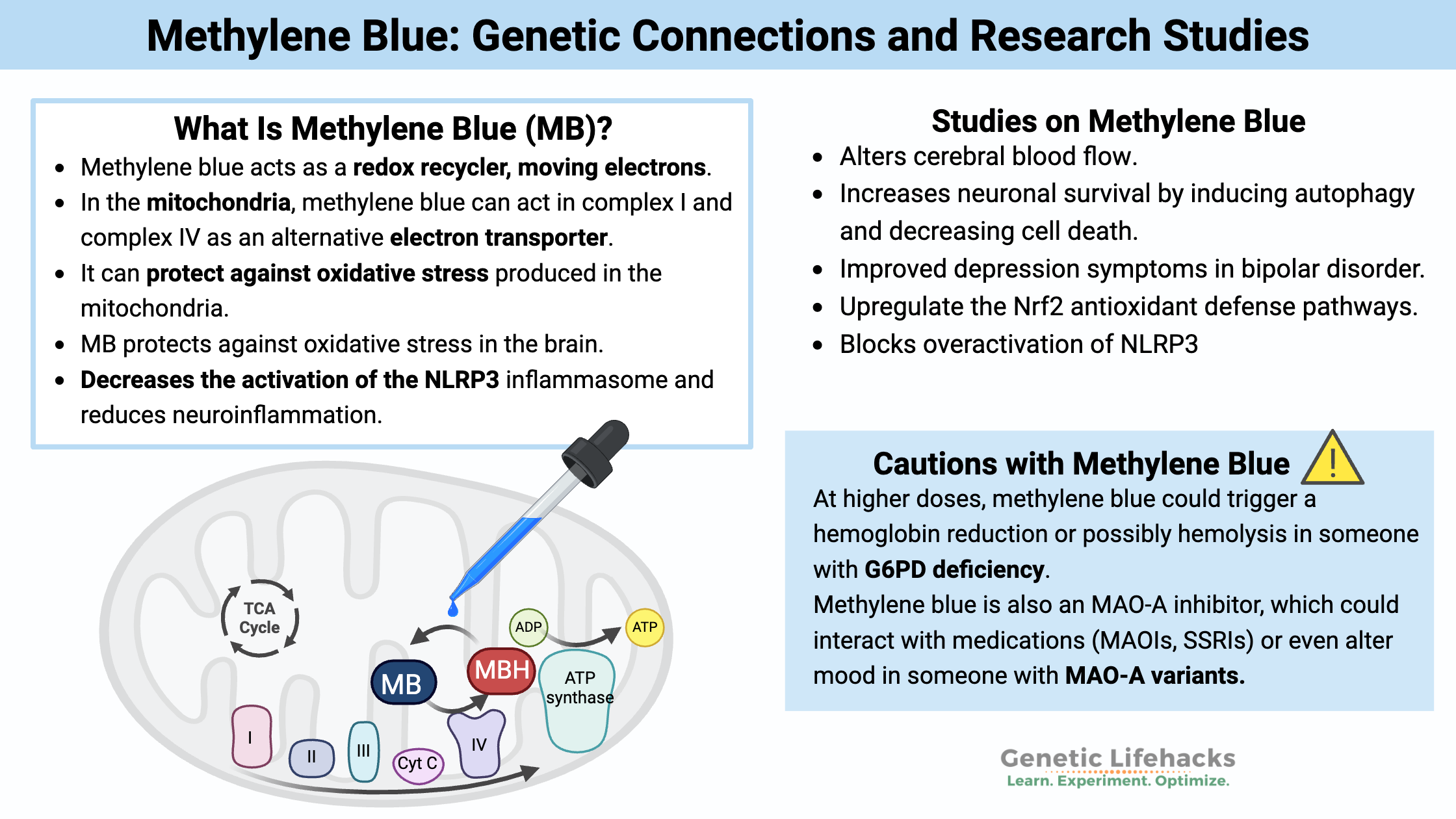
Cellular Health and Energy: Methylene blue benefits individuals with memory problems, poor sleep, and fatigue by boosting cellular oxygen consumption in the brain. The compound appears to support mitochondrial function - the powerhouses of our cells - which may explain some of its diverse therapeutic effects.
Liver Protection: Studies show methylene blue has protective effects against various forms of liver damage, including paraquat-induced hepatic damage, by increasing superoxide dismutase and adenosine triphosphate contents. Research indicates it can protect against fatty liver disease (steatohepatitis) by inhibiting hepatic fat accumulation and enhancing mitochondrial function. Studies demonstrate protection against acetaminophen-induced liver injury, and recent 2024 research suggests it may serve as a therapeutic agent against cisplatin-induced liver toxicity.
Kidney Protection: Research shows methylene blue may have protective renal effects, particularly in septic shock patients, with studies finding beneficial effects on vascular and kidney functions. Studies have investigated its potential to protect kidney tissues from damage induced by immunosuppressant medications like cyclosporin A. However, it should be used cautiously in patients with kidney impairment, as serum concentrations may be increased in those with renal dysfunction.
Critical Care Applications: A 2024 meta-analysis found that methylene blue helped septic shock patients stop needing vasopressor drugs 31.5 hours earlier, leave the ICU 1.6 days sooner, and get off ventilators nearly a day faster. Studies show protective effects on multiple organs including lungs, small bowel, and kidneys after ischemia and reperfusion injury.
Brain and Neurological Protection: There are documented cases where methylene blue has successfully treated drug-induced brain toxicity (encephalopathy), and current research investigates its potential to enhance cognitive function, improve memory, boost focus and reduce brain fog.
Why Isn't Everyone Talking About It?
Several factors may explain why methylene blue doesn't generate the same online buzz as other compounds:
No Patent Potential: As an old, generic compound, there's limited financial incentive for major pharmaceutical companies to fund large-scale marketing campaigns.
Medical Establishment Integration: Unlike controversial compounds, methylene blue is already integrated into conventional medicine, so it doesn't attract the same "alternative medicine" attention.
Complex Dosing Requirements: Proper use requires careful attention to dosing and contraindications, making it less appealing for casual self-medication.
Visual Side Effects: It temporarily turns urine and sometimes skin blue-green, which can be alarming despite being harmless.
Safety Considerations and Important Warnings
While methylene blue has a long safety record, it's not without risks and contraindications:
Critical Contraindications
G6PD Deficiency: People with glucose-6-phosphate dehydrogenase deficiency should never use methylene blue, as it can cause dangerous breakdown of red blood cells.
Serotonergic Medications: The FDA has issued warnings about serious interactions with antidepressants and other psychiatric medications that affect serotonin.
Dosage Considerations
Methylene blue follows a narrow therapeutic window. Research indicates:
Therapeutic doses are typically less than 2 mg/kg of body weight
Doses above 7 mg/kg can cause significant adverse effects
Doses above 5 mg/kg may precipitate serotonin toxicity
Common Side Effects
When used appropriately, side effects are generally mild but can include:
Blue-green discoloration of urine (normal and temporary)
Nausea
Dizziness
Chest discomfort if administered too rapidly
Serious Risks
Higher doses or inappropriate use can cause:
Hemolysis (breakdown of red blood cells)
Methemoglobinemia (ironically, the condition it's used to treat)
High blood pressure
Breathing difficulties
Cardiac arrhythmias and coronary artery vasoconstriction
Decreased cardiac output
Kidney complications in those with renal impairment
Special Organ Considerations: While methylene blue shows protective effects for liver and kidneys in research settings, it should be used cautiously in patients with severe renal impairment as serum concentrations may become dangerously elevated. The compound accumulates in brain and heart tissues, which may explain some adverse cardiac effects observed at higher doses.
For the Preparedness-Minded
For those interested in emergency preparedness or situations where conventional medical care might not be available, methylene blue presents both opportunities and challenges:
Advantages
Long shelf life when stored properly
Multiple potential applications
Established safety profile when used correctly
Available in pharmaceutical-grade preparations
Challenges
Requires precise dosing
Serious contraindications that require medical knowledge to identify
Potential for dangerous interactions
Need for proper storage conditions
The Research Continues
Current studies continue to explore methylene blue's potential across multiple health conditions. Recent research includes investigations into its use for Alzheimer's disease, with promising results from phase II clinical trials showing improvements in cognitive functions and studies demonstrating its ability to inhibit beta-amyloid plaques and tau tangles. Research on antimicrobial photodynamic therapy shows strong potential when methylene blue is combined with potassium iodide, and clinical studies have demonstrated effectiveness in treating recurrent urinary tract infections when combined with methenamine. Cancer research suggests it can help identify cancer cells for early diagnosis and be used in comprehensive treatment plans, while mood and mental health studies continue to explore its antidepressant and anxiolytic properties.
A Balanced Perspective
Methylene blue represents what evidence-based alternative medicine could look like: a compound with a long history of safe use, extensive research backing, and clearly understood mechanisms of action. Unlike internet health trends that rely primarily on testimonials and theory, methylene blue's effects have been studied, documented, and replicated in clinical settings.
However, this same scientific scrutiny has also revealed its limitations and risks. The compound's narrow therapeutic window and potential for serious interactions mean that casual use is not advisable.
Conclusion
While online health communities debate the merits of various compounds, methylene blue quietly maintains its position as a well-researched therapeutic agent with genuine medical applications. Its lack of social media buzz doesn't diminish its scientific credentials - if anything, it highlights how our attention to health solutions might be influenced more by novelty and controversy than by evidence.
For those interested in evidence-based approaches to health and preparedness, methylene blue deserves consideration alongside more conventional options. However, like any therapeutic agent, it requires respect, proper education, and ideally, professional guidance.
The blue solution has been hiding in plain sight for over a century. Perhaps it's time we gave it the attention that the science suggests it deserves.
IMPORTANT DISCLAIMER: This article is for informational and educational purposes only and does not constitute medical advice. The information presented here is based on published research and historical medical use, but should not be used to diagnose, treat, cure, or prevent any disease or medical condition. Methylene blue can have serious side effects and dangerous drug interactions, including potentially fatal reactions in people with G6PD deficiency or those taking certain psychiatric medications. Before considering any use of methylene blue, consult with a qualified healthcare professional who can assess your individual medical history, current medications, and health status. Never attempt to self-medicate with methylene blue or any other compound without proper medical supervision. This article presents factual information about published research but does not recommend or endorse any specific medical treatment.


Now the hunt begins to find a naturopathic doc who will acknowledge this with appropriate tests and dosages. Any lists out there? Or is it too dangerous to have their names revealed.