


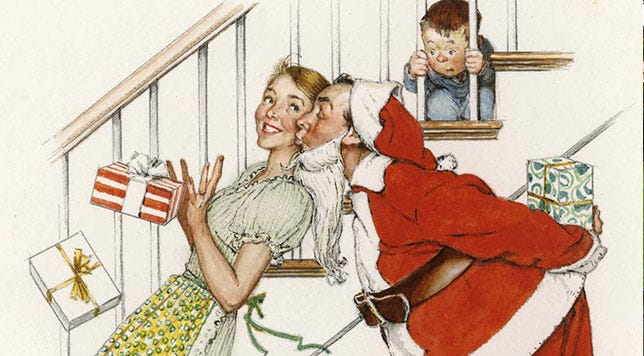
Christmas morning in America looks like a Norman Rockwell painting come to life. The kids are already awake at six, dragging their bleary-eyed parents down the stairs to the living room where a mountain of wrapped presents sits beneath a glowing evergreen tree. Dad pours coffee while Mom pulls out her phone to capture the chaos of shredded wrapping paper and squealing children. The tree stands sentinel in the corner, draped in twinkling lights, and at its peak, a golden angel spreads her wings over the whole scene like a benediction. This is the most wonderful time of the year. This is what wholesome looks like. This is, we are told, a celebration of the birth of Jesus Christ.
Except almost none of it has anything to do with Jesus Christ, and the parts that do were grafted onto something much older and much darker.
That angel on your tree? Those lights wrapped around the branches? That jolly omniscient man your children are taught to believe in? Every single one of these traditions traces back to pagan sun worship, Babylonian death cults, and ritual practices that would make most modern Christians deeply uncomfortable if they understood what they were actually doing every December. The answers to the questions you never thought to ask about Christmas might shatter the stained-glass window you have been looking through your entire life.
THE BIRTHDAY THAT NEVER WAS
Nowhere in Scripture will you find a date for the birth of Christ. Not in Matthew. Not in Luke. Not anywhere. The early church not only failed to record the date, they actively avoided celebrating birthdays altogether because birthday celebrations were a pagan custom associated with astrology and the worship of false gods. If the date of the Messiah’s birth mattered, if God wanted us to commemorate it annually, He would have preserved it. He did not.
What Scripture does give us is enough information to rule out December entirely.
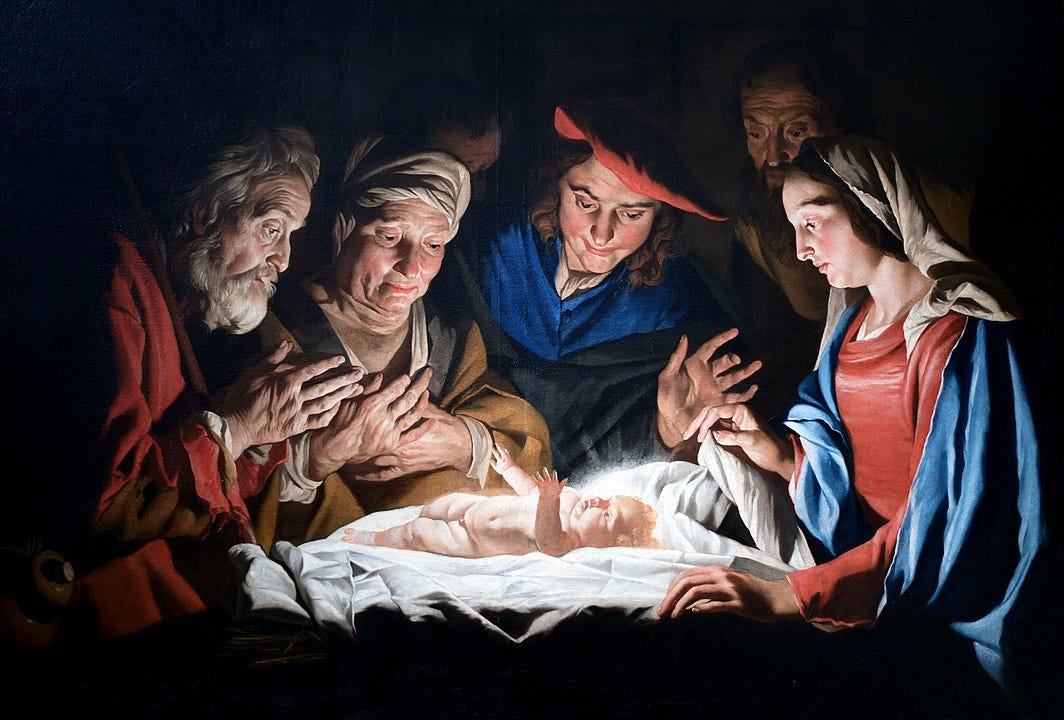
Luke 2:8 describes shepherds on the night of Christ’s birth who were “living out in the fields nearby, keeping watch over their flocks at night.” Anyone who knows anything about first-century Judea understands immediately why this detail destroys the December 25th narrative. Judean winters are cold and wet. December nights drop into the forties with frequent rain. Shepherds do not sleep in open fields during the rainy season. They bring their flocks into sheltered areas from November through February. The only time shepherds would be living outdoors with their sheep, watching over them through the night, is during the warmer months when the grazing is good and the weather permits sleeping under the stars. We are talking about a window from roughly April through early October, which means Christ was almost certainly born in spring or early autumn.
Luke also connects the birth of Christ to a Roman census ordered by Caesar Augustus. The Romans were ruthlessly efficient administrators, and they would never have ordered a census requiring mass population movement during winter. Winter travel was dangerous. Roads became impassable. Farmers could not leave their land. The economic and logistical chaos of displacing the entire population during the coldest, wettest months would have been catastrophic. Roman censuses were conducted after harvest, when travel was safe and people had time to move. A winter census contradicts everything we know about how the Roman Empire actually functioned.
So if Jesus was not born on December 25th, why does the entire Christian world celebrate His birth on that date?
Because December 25th was already the most important holiday on the pagan calendar, and someone decided it would be easier to hijack an existing celebration than to start a new one.
SATURNALIA AND THE BIRTH OF THE UNCONQUERED SUN
The winter solstice falls around December 21st, the longest night of the year, when darkness reaches its absolute peak and the sun hangs at its lowest point in the sky. Ancient peoples who worshipped the sun, and nearly all ancient peoples did in some form, viewed the solstice as the death of their god. For three days, the sun appeared to stand still on the horizon, neither rising nor falling, hanging in a kind of cosmic limbo. Then, around December 25th, it began to climb again. The sun had been reborn. Light had conquered darkness. The Unconquered Sun, Sol Invictus, had risen from the dead.
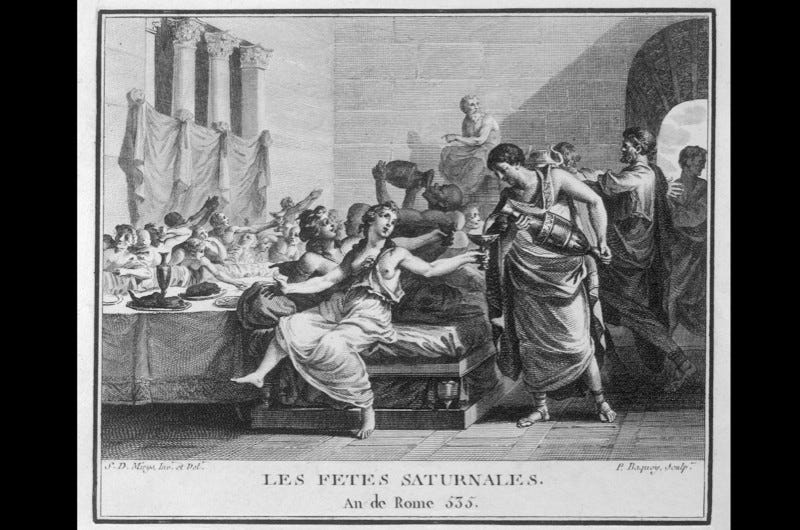
The Romans celebrated this cosmic event with a festival called Saturnalia, a week-long bacchanal honoring Saturn that ran from December 17th through the 25th. What happened during Saturnalia would shock most people who associate December with angels and silent nights. The normal social order was completely inverted. Slaves became masters and masters became slaves. Public drunkenness was not just tolerated but expected. Gambling, normally illegal, was permitted. Sexual license that would have been scandalous during the rest of the year became the norm. People exchanged gifts. They decorated their homes with greenery. They lit candles to symbolize the returning light.
This was not a polite holiday gathering. Saturnalia was a festival of deliberate chaos, a celebration of disorder, a ritualized inversion of everything stable and structured.
The Romans understood that they were honoring Saturn, the god of time, dissolution, and the harvest, a deity so old and so primal that he predated the Olympian pantheon. Saturn had devoured his own children. Saturn ruled over the Golden Age before being overthrown by Jupiter. Saturn represented something ancient and terrifying, and his festival was designed to temporarily unleash that primordial chaos upon the civilized world.
The word Saturn itself deserves attention. Say it slowly. Saturn. Satan. The linguistic connection is not coincidental. The Latin Saturnus and the Hebrew Satan share more than phonetic similarity. They share archetypal resonance. Saturn is the lord of time who devours his children. Satan is the adversary who seeks to devour souls. Both represent opposition to the natural order, rebellion against divine hierarchy, the dark shadow that defines itself against the light.
December 25th was the climax of this chaos festival, the Birthday of the Unconquered Sun, the moment when the dying god of winter was reborn and light began its slow conquest over darkness. The Romans called it Dies Natalis Solis Invicti. It had absolutely nothing to do with Jesus Christ.
When Christianity became the official religion of the Roman Empire in the fourth century, church leaders faced a problem. The pagan population loved their festivals and had no intention of giving them up. Rather than fight a losing battle against deeply ingrained cultural practices, the church made a calculated decision. They would claim the date for Christ. They would layer Christian meaning over pagan ritual. They would tell people they could keep their celebrations as long as they called them something different.
This was not revelation. This was marketing. This was religious syncretism dressed up as theological development. And it worked so well that sixteen centuries later, most Christians have no idea they are celebrating a pagan solar festival when they gather around the tree on December 25th.
THE FALSE GOD IN THE RED SUIT
Every December, Christian parents sit their children down and teach them to believe in an all-seeing, all-knowing being who lives at the top of the world, watches their every action, keeps a record of their behavior, judges them as worthy or unworthy, and either rewards them with gifts or punishes them with coal based on his divine assessment of their moral character. They teach their children to sing songs to this being. They teach them to leave offerings of cookies and milk. They teach them to write letters petitioning for blessings. They teach them that this being sees them when they are sleeping, knows when they are awake, knows if they have been bad or good.

Then they wonder why those same children struggle to believe in God.
The standard Christian defense of Santa Claus is that he is based on St. Nicholas, a fourth-century bishop from Myra in modern-day Turkey who was famous for his generosity to children and the poor. This explanation is technically true in the same way that saying a skyscraper is based on a mud hut is technically true. Yes, there is a historical connection. No, the connection does not explain what Santa Claus actually is.
St. Nicholas was a real man who lived in the Middle East, wore bishop’s robes, had no flying reindeer, lived nowhere near the North Pole, was not immortal, could not see all children everywhere simultaneously, did not keep a naughty and nice list, and did not serve as cosmic arbiter of childhood morality. He was a generous Christian who gave gifts to the needy. That is the entirety of what he shares with the modern Santa Claus.
Everything else, everything that makes Santa Claus who he is, comes from somewhere far older and far stranger.
Santa lives at the North Pole, the axis mundi, the cosmic pillar around which the heavens rotate. In ancient mythologies across the world, the extreme north was not a physical location but a spiritual one, the fixed point where the earthly realm touched the celestial, where gods and spirits dwelt beyond the reach of ordinary men. Santa lives at the top of the world because that is where sky gods live.

Santa rides through the winter sky in a magical conveyance. So did Odin, the Norse all-father, who rode his eight-legged horse Sleipnir through the winter nights during the Wild Hunt, leading a ghostly procession of the dead across the heavens. Odin was a gift-giver too. He was also a judge, a keeper of secrets, a god who knew all and saw all. He had one eye because he sacrificed the other for wisdom. He wore a long cloak and had a flowing white beard. He visited humans during the winter solstice season.
Santa judges children and rewards or punishes them accordingly. He keeps a list. He checks it twice. He determines who has been naughty and who has been nice, then dispenses blessings or curses based on his verdict. This is not St. Nicholas. This is a mythic judge figure, an archetype that appears across pagan traditions whenever cultures created gods to enforce moral order through supernatural surveillance and cosmic reward systems.
Christians have replaced Christ as Judge with a cartoon deity in a red suit, and they have done it so thoroughly that most children develop a relationship with Santa before they develop a relationship with Jesus. They pray to Santa. They fear Santa. They perform morality for Santa. They experience Santa as the primary supernatural authority in their young lives.
Then adults tell them Santa is not real and expect them to transfer all that belief seamlessly onto God. Is it any wonder that so many children grow up with a shattered capacity for faith? They learned early that the supernatural beings adults told them to believe in were lies. Why would God be any different?
THE ETERNAL TREE
The Christmas tree stands at the center of the modern holiday like an altar, the focal point around which the family gathers, the structure upon which gifts are laid, the vertical axis connecting floor to ceiling, root to crown, earth to heaven.
Most people credit Queen Victoria and Prince Albert with popularizing the Christmas tree in the mid-nineteenth century, and this is true as far as it goes. The young queen and her German husband set up a decorated tree at Windsor Castle, the image was published in the London papers, and within a decade the practice had spread across Britain and America like wildfire. But Victoria and Albert did not invent the Christmas tree. They revived it. They mainstreamed a practice that had deep roots in the pagan traditions of Northern Europe, traditions that the church had tried for centuries to suppress.
The Druids of the Celtic world worshipped in sacred groves. Trees were not just symbols of their gods; trees were considered divine in themselves, embodiments of spirits, doorways between realms, living connections between the underworld below and the heavens above. The oak was sacred. The yew was sacred. And the evergreen held a special place because it did not die when everything else did.
Every winter, the deciduous trees shed their leaves and stood skeletal against the grey sky, looking for all the world like they had died. But the evergreens, the pines and firs and spruces, kept their needles. They remained green when everything else was brown. They defied death. They promised that life could persist even in the darkest and coldest season.
To pagan peoples, the evergreen represented immortality. Not the resurrection immortality of Christian theology, where Christ conquers death once for all and believers are raised to eternal life through Him, but a naturalistic immortality, a cyclical defiance of death inherent to nature itself. The evergreen did not need a savior. The evergreen saved itself.
This is precisely the kind of theology Scripture warns against. Romans 1:25 speaks of those who “exchanged the truth about God for a lie and worshiped and served the creature rather than the Creator.” The evergreen tree, worshipped for its apparent self-sustaining immortality, is creature-worship in botanical form.
Jeremiah 10:2-4 offers a warning that has made Christmas tree defenders uncomfortable for centuries: “Thus says the Lord: Learn not the way of the nations, nor be dismayed at the signs of the heavens because the nations are dismayed at them, for the customs of the peoples are vanity. A tree from the forest is cut down and worked with an axe by the hands of a craftsman. They decorate it with silver and gold; they fasten it with hammer and nails so that it cannot move.”
Scholars debate whether this passage refers directly to the kind of tree decoration we practice today or to a different form of idol-making. But the parallel remains striking. A tree is cut from the forest. It is brought inside. It is decorated with shining objects. It is fastened so it stands upright. It is given a place of honor.
And at the very top, something is placed in the position of highest glory.
THE ANGEL AT THE APEX
Look at the structure of a Christmas tree and consider what it represents. The tree is vertical, rising from a wide base to a narrow point. It ascends through tiers of branches. It is wrapped in lights, dozens or hundreds of small luminous points distributed across its body. And at the very top, crowning the entire structure, sits either a star or an angel.
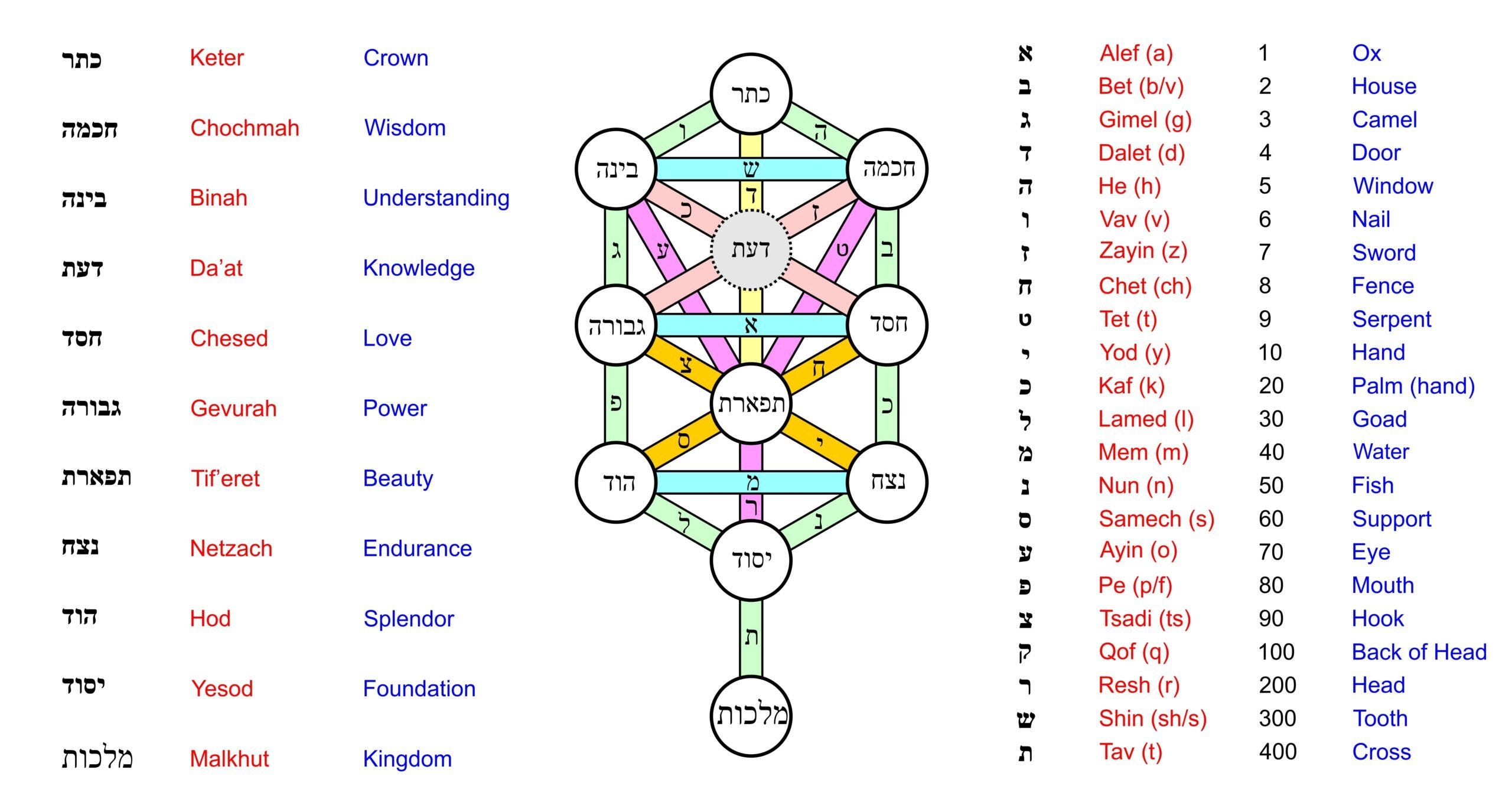
If you wanted to create a visual representation of heavenly hierarchy, with ranks of lesser lights ascending toward a supreme figure at the apex, you could hardly do better than a Christmas tree.
Scripture consistently associates angels with light. Cherubim burn. Seraphim glow. When angels appear to humans, they are often described as shining, blazing, radiating light so intense that humans fall on their faces in terror. The angelic host is a host of lights, heavenly luminaries arranged in ranks and orders around the throne of God.
When you wrap a tree in lights and crown it with an angel, you are creating a model of celestial hierarchy. You are representing the heavenly court, with ranks of shining beings ascending toward a supreme figure at the top.
But consider what figure sits at the top.
It is not God. It is not Christ. It is an angel.
It is Lucifer... ‘The Morning Star’.
The morning stars sang together at creation. Stars are used as symbols for angels throughout apocalyptic literature. When Satan fell, he was described as a star falling from heaven.
Isaiah 14:12-14 records the primal rebellion of Lucifer, the light-bearer, the morning star:
“How you are fallen from heaven, O Day Star, son of Dawn! How you are cut down to the ground, you who laid the nations low! You said in your heart, ‘I will ascend to heaven; above the stars of God I will set my throne on high; I will sit on the mount of assembly in the far reaches of the north; I will ascend above the heights of the clouds; I will make myself like the Most High.’”
The sin of Lucifer was ascension. He was a created being who sought to rise above his station. He wanted to climb higher than the other stars, the other angels. He wanted to set his throne in the far reaches of the north, at the cosmic axis. He wanted to make himself like God.
Look at the Christmas tree again with fresh eyes. A vertical structure. Ascending. Tiered with ranks of lights. Culminating in a star or an angel at the apex. A created being in the highest position of glory, raised above all the other lights, sitting enthroned at the summit.
The Christmas tree is a visual representation of Luciferian theology. It encodes the rebellion of the light-bearer in a form so beautiful that no one questions what they are actually looking at when they place it in their living room and gather their family around it in worship.
THE PURPOSE OF THE DECEPTION
If everything in this article is true, and the historical and biblical evidence is overwhelming that it is, then an obvious question demands an answer: Why? Why would pagan practices be disguised as Christian celebration? Who benefits from Christians unknowingly participating in rituals that have nothing to do with Christ and everything to do with sun worship, Saturnalia, and Babylonian death cults?
The answer requires understanding how the enemy actually operates.
2 Corinthians 11:14 says that Satan disguises himself as an angel of light. Not as a monster. Not as an obvious villain. As light. As beauty. As something radiant and good and desirable.
The serpent in Eden did not approach Eve with fangs bared, announcing his intention to destroy humanity. He came with questions, with flattery, with promises of enlightenment and becoming like God. The most effective deception never feels like deception. It feels like wisdom. It feels like tradition. It feels like something your grandmother did and her grandmother did before her.
False worship does not require conscious intent. You do not have to know you are participating in a pagan ritual for the ritual to function. The power is in the practice, not the understanding. When millions of Christians set up trees decorated with lights and crowned with angels, they are performing an act of symbolic meaning whether they understand that meaning or not. When they teach their children to believe in an omniscient judge at the North Pole, they are installing a counterfeit god in their children’s hearts whether they intend to or not. When they celebrate on December 25th, they are honoring the birthday of the sun god whether they sing hymns to Jesus or not.
The genius of this deception is that it corrupts Christian worship from the inside. It takes the most important holiday of the Christian calendar and fills it with pagan content while keeping Christian labels. It trains Christians to practice paganism while believing they are honoring Christ. It gets the worship that belongs to God alone and redirects it toward created things, toward angels and stars and evergreen trees and fat men in red suits.
And it does all of this with twinkling lights and wrapped presents and children’s laughter.
WHAT DO WE DO WITH THIS?
If you have made it this far, you are probably feeling something uncomfortable. Maybe it is conviction. Maybe it is anger. Maybe it is the cognitive dissonance of having something you cherished revealed as something other than what you thought it was.
Good. That discomfort is the feeling of truth pressing against a comfortable lie.
But let me be clear about something. This article is not a call to burn down Christmas. It is not a demand that you rip out your tree, ban Santa Claus, and spend December in joyless isolation. What you do with this information is between you and God.
What I am calling for is awareness. Consciousness. The willingness to see clearly instead of sleepwalking through rituals you inherited without examination. Even if you choose to keep your traditions, know what they are. Understand where they came from. Hold them with open hands instead of clenched fists.
Most importantly, keep Christ at the center of your heart this season, not because December 25th is His birthday but because every day belongs to Him. The world will chase its lights and gifts and myths. The stores will blast their music. The culture will demand your participation in its rituals. You do not have to comply unconsciously.
The real Light came into the world, and the darkness could not overcome it. No amount of pagan syncretism can change that. No false tradition can diminish the power of the risen Christ. But you can choose to know the difference between the counterfeit lights and the true one.
This December, while everyone else is worshipping they know not what, maybe sit quietly with Scripture. Remember that the baby in the manger grew up to be the crucified and risen King. Remember that He is the Judge, not some myth in a sleigh. Remember that eternal life comes through Him alone, not through evergreen trees that pretend to conquer death on their own.
The false lights will burn out. The true Light never will.
FROM THE WISE WOLF AND LILY
If this article cracked something open in you, if it challenged your assumptions, if it made you see December differently than you ever have before, then I have one request: share it. Restack it. Send it to someone who is still sleepwalking through the holiday season without understanding what they are really participating in.
And if you are able, consider supporting the Wise Wolf ministry. This is what we do full time, digging into the uncomfortable questions, exposing the things hidden in plain sight, doing the research that nobody else wants to do. Lily needs help with college so she does not have to drown in student loans like everyone else. And frankly, the Wise Wolf does not want to be dragged back into the corporate cage, back to the soul-crushing life of a web developer and financial analyst, back to building someone else’s dreams instead of speaking truth.
Help us keep doing this work. All through December, we are offering 50% off to anyone who wants to support the ministry.
I accomplished a hard stop on Christmas 5-years ago (getting rid of all my collection of BEAUTIFUL decorations ) because I wanted to cleanse myself of anything associated with Saturn worship.
(Speaking of Saturn 🪐 - has anyone else noticed the Grok Ai icon is an exact replica of Saturn)?
I have told my husband all this information, yet he still feels the need to drag a plastic tree into the house for himself every December. I think this partially has to do with entrainment or a hypnotized trance - cause nothing else makes sense.
Although I do like some of your posts, lately, for me, you've been headed in a different direction. Nothing against what you write, it's just not for me anymore. Those of us who unsubscribe are NOT all pagan. What I am beginning to see in anger...the usual "them" against "us". This is not so. I am Christian, but your posts are over the top now. Please add to the love, not the division.