



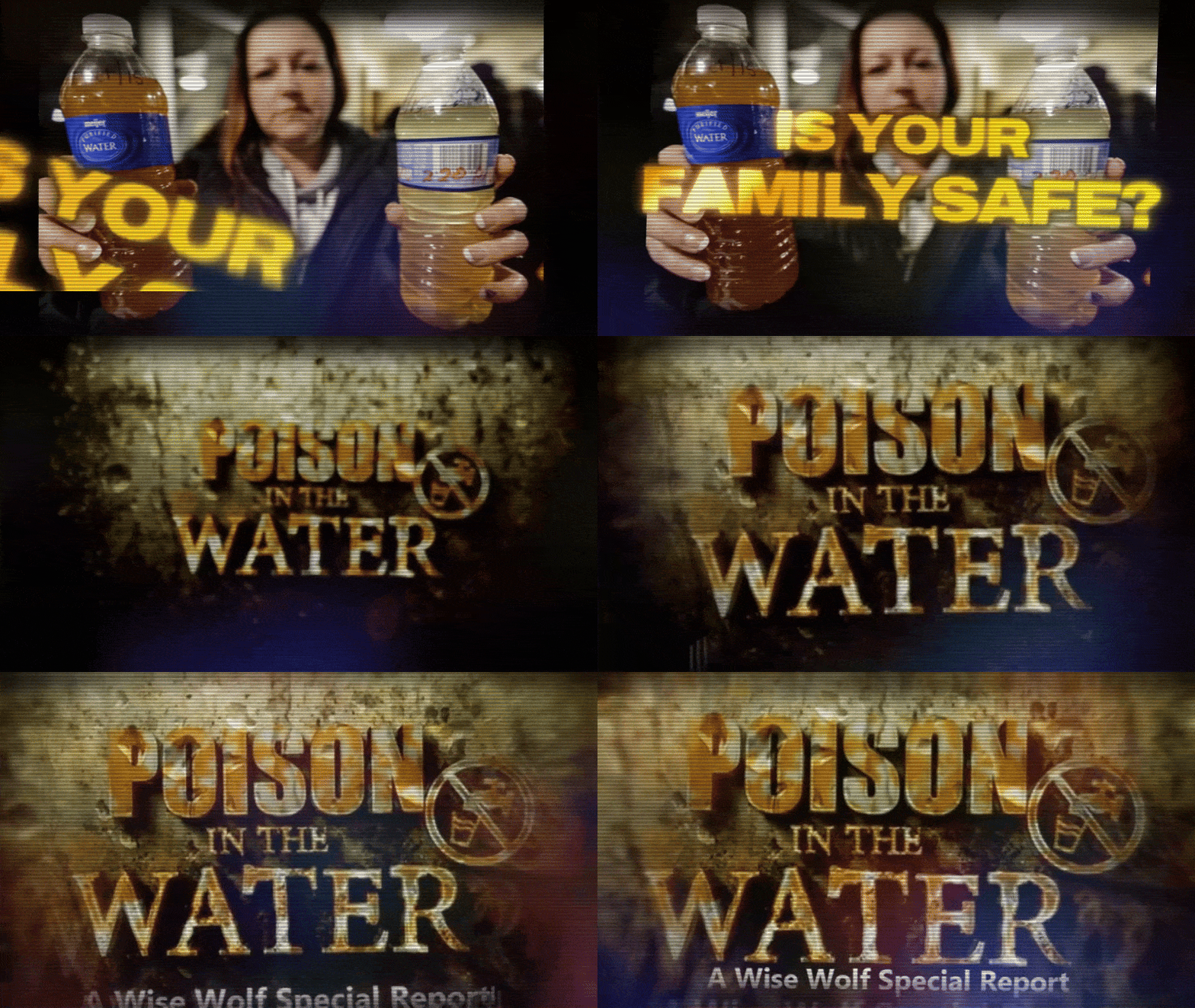
LeeAnne Walters turned on her kitchen faucet one morning in Flint, Michigan and watched the water run brown. Not the faint discoloration you might dismiss as old pipes clearing themselves out, but the color of rust and ruin, the unmistakable shade of something profoundly wrong. She had three children in that house, and for months she had been telling anyone in city government who would listen that something was poisoning her family. They told her the water was fine. They told her she was overreacting. They told her to run the tap for a few minutes before drinking. They told her everything except the truth, which was that her children were being slowly poisoned by the very infrastructure meant to sustain their lives.
The water crisis in Flint has become something of a national symbol, a convenient reference point for politicians and pundits who want to demonstrate their concern for environmental justice. But Flint is not an anomaly. It is not a failure of the system. It is the system working exactly as designed, where cost cutting trumps public health, where corporate convenience outweighs human safety, and where the people who drink the water are the last to know what is swimming in it. What happened in Flint is happening, in slower and more insidious ways, in water supplies across this nation. And the chances are very good that it is happening to you.
The Fluoride Question Nobody Wants to Answer
Since the 1940s, American municipalities have been adding fluoride to public water supplies under the pleasant fiction that it prevents tooth decay. The American Dental Association says it is safe. The Centers for Disease Control have called it one of the great public health achievements of the twentieth century. What they do not tell you is that most of Europe has rejected water fluoridation entirely, and their teeth are doing just fine.
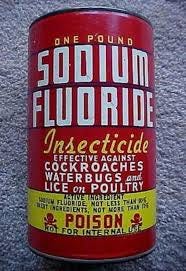
Germany does not fluoridate its water. Neither does France, Sweden, the Netherlands, Belgium, or Austria. Japan has banned the practice. These are not backward nations with crumbling dental infrastructure, but some of the most advanced public health systems on the planet. They looked at the evidence, weighed the risks against the benefits, and decided that mass medicating an entire population through the water supply was not the answer. They use topical fluoride applications for those who need them, the kind you get at the dentist, rather than forcing everyone from newborns to the elderly to ingest the same uncontrolled dose every time they take a drink.
The fluoride added to American water is not the pharmaceutical grade compound you might imagine. Much of it is hexafluorosilicic acid, a waste product captured from the phosphate fertilizer industry. Without water fluoridation programs, this substance would require expensive hazardous waste disposal.
Instead, it gets sold to municipalities and piped directly into your home.
Industrial waste rebranded as public health policy, and the companies that produce it laugh all the way to the bank.
The health concerns are not fringe theories whispered by conspiracy theorists in dark corners of the internet. Peer reviewed studies have linked fluoride exposure to neurodevelopmental impacts in children, including reduced IQ scores in communities with high fluoride levels. Research has documented thyroid disruption, bone density changes, and potential endocrine interference. The National Toxicology Program has conducted systematic reviews raising concerns about developmental neurotoxicity. These are not questions that have been answered and dismissed. They are questions that continue to be studied because the evidence keeps suggesting that something is wrong.
Perhaps the most troubling aspect of water fluoridation is the complete absence of dosage control. A two hundred pound construction worker and a six month old infant receive the same concentration of fluoride in their water. The infant, who may be drinking formula mixed with fluoridated tap water, receives a proportionally massive dose relative to body weight. There is no prescription, no monitoring, no adjustment for individual health conditions or cumulative exposure from other sources. This is not how we administer any other medication, and calling it a medication is generous considering it is delivered without consent to an entire population.

The Forever Chemicals That Will Outlive Your Grandchildren
If fluoride is the devil you know, PFAS chemicals are the devil nobody told you about until it was far too late. Per and polyfluoroalkyl substances are a family of thousands of synthetic chemicals that have been used since the 1940s to make products that resist heat, oil, stains, grease, and water. They are in your nonstick pans, your waterproof jacket, your stain resistant carpet, and increasingly, your drinking water. Scientists call them forever chemicals because they do not break down naturally in the environment. What enters the water supply stays in the water supply, and what enters your body tends to accumulate.
PFAS have been detected in public water systems across the United States, with particularly high concentrations near military bases where firefighting foam was used for decades, near airports, and near industrial facilities. They have been found in rainwater samples from every continent, including Antarctica. A study published in Environmental Science and Technology Letters concluded that rainwater everywhere on Earth now contains PFAS levels that exceed EPA guidelines for drinking water. Think about that for a moment. The rain that falls from the sky is now officially contaminated beyond acceptable limits.
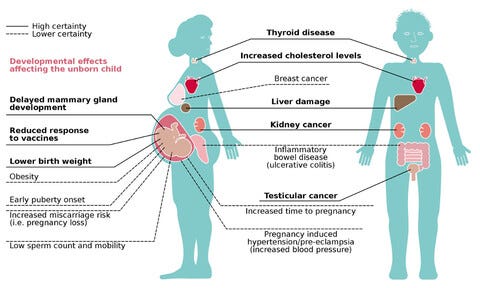
The health impacts are staggering in their scope. PFAS exposure has been linked to increased cancer risk, particularly kidney and testicular cancers. Studies have documented immune system suppression, reduced vaccine response in children, liver damage, hormonal disruption, and fertility issues. These chemicals are found in the blood of virtually every American who has been tested. They pass through the placenta to developing fetuses. They accumulate in breast milk. From before birth to the day we die, we are swimming in a sea of synthetic chemicals that our bodies have no evolutionary mechanism to process or eliminate.
The regulatory response has been a masterclass in too little, too late. The manufacturers of these chemicals knew about their persistence and toxicity for decades before the public became aware. Internal documents from 3M and DuPont, released through litigation, revealed that these companies had evidence of harm dating back to the 1960s and 1970s. They continued production, continued profiting, and continued externalizing the cleanup costs to communities, taxpayers, and the human bodies that serve as unwitting filters for industrial negligence.
Drinking Plastic While Trying to Avoid the Tap
The great irony of the bottled water industry is that it markets itself as the clean alternative while delivering a different kind of contamination. Microplastics, those tiny fragments of polymer that shed from bottles, caps, and the industrial processes that create them, have been found in bottled water at levels often exceeding those in municipal tap water. The plastic bottle you purchased to avoid whatever might be lurking in your pipes is itself shedding microscopic particles into the water you drink.
Researchers have found microplastics in tap water, bottled water, rainwater, human blood, lung tissue, and placentas. We are breathing them, drinking them, eating them, and passing them to our children before they are even born. The long term health effects remain partially unknown simply because widespread plastic production is only about seventy years old, not enough time to fully document what happens when multiple generations accumulate these particles in their tissues. What we do know is that microplastics cause inflammation, cellular damage, and serve as vehicles for chemical leaching of substances like BPA and phthalates, both of which are endocrine disruptors with their own concerning health profiles.
Much of the bottled water sold in America comes from municipal water supplies anyway. It is tap water with better marketing and a plastic wrapper. Aquafina and Dasani, two of the best selling bottled water brands in the country, have both acknowledged that their water comes from public sources. You are paying a premium price for the privilege of drinking tap water filtered through a profit seeking corporation and delivered in a container that is actively contaminating its contents.
The Rural Betrayal: When Your Own Well Turns Against You
I grew up on a farm in rural New York State, where my family drew water from a well that had served the property for two hundred years. My grandfather owned oil wells on his land, the kind of small scale operation that was common in that part of the country. When a drilling company came through and did sloppy work, they contaminated our well with crude oil. For years afterward, oil came out of our household pipes. We could not drink our own water, could not trust the source that had sustained generations of my family on that land.
We did what so many families do in that situation. We turned to Culligan, started buying bottled water by the truckload, tried to solve a systemic problem with individual consumer choices. Only later did we learn about the chemicals that leach from plastic bottles, the BPA and phthalates that migrate into water especially when bottles are stored in warm conditions or sit on shelves for extended periods. We had escaped one form of contamination only to embrace another. The solution we purchased was itself part of the problem.

This story is not unique. Across rural America, families living near fracking operations have reported methane infused water, some demonstrating the phenomenon by holding a lighter to their tap and watching flames erupt from water that should extinguish fire. Heavy metals from mining operations seep into well water over decades, a slow poisoning that receives none of the attention given to dramatic urban crises. Legal recourse is often blocked by mandatory arbitration clauses and nondisclosure agreements that energy companies require before settling contamination claims. The people harmed are silenced as a condition of compensation, preventing the accumulation of public knowledge about how widespread these problems truly are.
Rotting Pipes and Political Cowardice
Beneath the streets of American cities lies infrastructure that predates the automobile, pipes installed in an era when lead was considered a premium building material and nobody imagined they would still be carrying drinking water a century later. The American Society of Civil Engineers gives our nation’s drinking water infrastructure a C minus grade, noting that there is a water main break every two minutes in the United States, resulting in an estimated six billion gallons of treated water lost every day.
The cost of replacing aging water infrastructure runs into the trillions. It is the kind of expense that no politician wants to champion because the benefits are invisible, the project spans multiple election cycles, and the ribbon cutting ceremony for a new underground pipe does not generate the photo opportunities of a new stadium or convention center. So the pipes continue to corrode, lead continues to leach, and the burden falls disproportionately on poor communities and communities of color who lack the political capital to demand action and the resources to install whole house filtration systems as a private solution to a public failure.
From Cradle to Grave: A Lifetime of Exposure
The health impacts of water contamination do not fall equally across the population. Children, whose brains and bodies are still developing, face the highest risks from neurotoxic substances like lead and fluoride. Exposure during critical developmental windows can result in permanent cognitive impairment, behavioral issues, and increased lifelong health risks. A child’s brain poisoned by contaminated water does not recover when the contamination is eventually addressed. The damage is done, the potential diminished, the trajectory of a life altered by infrastructure decisions made by people who will never meet that child.
Adults accumulate their own burden of harm, with increased cancer risks, hormonal disorders, and autoimmune conditions linked to various water contaminants. The elderly face heightened susceptibility, with bone density loss associated with fluoride exposure, cognitive decline potentially exacerbated by accumulated toxins, and immune systems less capable of responding to the constant chemical assault delivered through their taps, showers, and cooking water.
The Uncomfortable Questions
There comes a point in any investigation where you have to step back from the individual facts and ask what they mean collectively. Why is mass chemical exposure treated as acceptable in a nation that prides itself on protecting individual rights? Why are Americans expected to research, filter, and self protect rather than demanding clean water as a basic function of government? Why did we abandon glass bottles for water distribution when plastic was known to leach chemicals? Why do our regulatory agencies set standards based on acceptable levels of harm rather than striving for the absence of harm?
The answer to most of these questions involves money. It is cheaper to dispose of industrial fluoride waste by selling it to water utilities than to treat it as hazardous material. It is cheaper for corporations to settle contamination claims with nondisclosure agreements than to prevent contamination in the first place. It is cheaper for politicians to defer infrastructure maintenance than to raise taxes for pipe replacement. And it is always cheaper to let individual citizens bear the health consequences of public decisions than to make those decisions responsibly.
The regulatory agencies tasked with protecting us have been captured by the industries they are supposed to regulate, their revolving doors spinning executives between corporate boardrooms and government offices. Safe levels are established not by asking what is optimal for human health but by calculating what level of harm is acceptable given economic constraints. We spend billions on symbolic environmental gestures while neglecting the basic infrastructure that delivers water to every home in America.
What You Can Do Right Now
The first step is awareness, and if you have read this far, you have taken it. Know what is in your water by requesting your municipality’s annual water quality report, which they are required by law to provide. Study it. Question it. Understand that compliance with federal standards does not mean your water is safe, only that it meets thresholds established through political compromise rather than pure health science.
Contact your local representatives and demand accountability. Push for independent testing, infrastructure investment, and transparency about what is flowing through your community’s pipes. Support organizations fighting for clean water at the local, state, and national level. Monitor your health and that of your family members, documenting any changes that might be connected to water quality.
Most importantly, share what you have learned. The algorithms that govern our information environment are designed to suppress stories like this one, to keep uncomfortable truths from reaching the audiences that need to hear them. Every share, every conversation, every moment of awareness spread from one person to another is a small act of resistance against the forces that prefer you remain ignorant of what you are drinking.
If this reporting matters to you, please like and restack this article so others can be awakened to the dangers lurking in their taps, wells, and bottled water. The Wise Wolf is a Christian news publication dedicated to hard hitting investigative journalism, and this is our full time mission. The algorithm is actively suppressing our work, ensuring that most of our 57,000 subscribers never see the reporting we publish. This happens because we speak the truth, and the truth is not always convenient for those with power.
If you can afford to do so, please consider becoming a paid subscriber. Your support keeps this publication alive and allows us to continue investigating the stories that matter, the stories that others will not tell, the stories that the algorithm would prefer you never read. Share this with everyone you know. The water that flows from every tap in America connects us all, and the truth about what is in it deserves to flow just as freely.
Here’s a free preview of the sort of articles you can find in our paid archives:
Big Farma: How the American Bread Industry is Knowingly Poisoning Millions

If you have ever traveled to Europe, or if you know someone who has, you have probably heard this story. An American spends two weeks in Italy or France, eating bread and pasta at every meal, drinking wine, consuming more carbohydrates than they would normally allow themselves in a month, and they come home feeling fantastic. No bloating. No inflammation. No brain fog. No cramping. No emergency bathroom visits. They eat like they are training for a competitive eating championship and their bodies handle it like it is nothing.
Thank you for this. I have attempted to warn family and friends of these dangers since 1990s. I knew they were present before, but didn't realize the extent until the internet went public in 1993.
Listening to one of my favorite podcasts today, TrueAnon, I heard Brace Belden and his two panelists opining about how anyone who doesn’t drink tap water is “nuts.”
I’m not nuts. But HERE’S why I don’t drink tap water where I live. I investigated and wrote this for the Nation Institute in 2000. It went nowhere:
https://biffogram.substack.com/p/adventures-in-patakistan