

Raiders of the Occult Reich: How the Nazis Actually Searched for the Holy Grail
Nazi Occultists, Secret Societies, and the Hunt for Ultimate Power

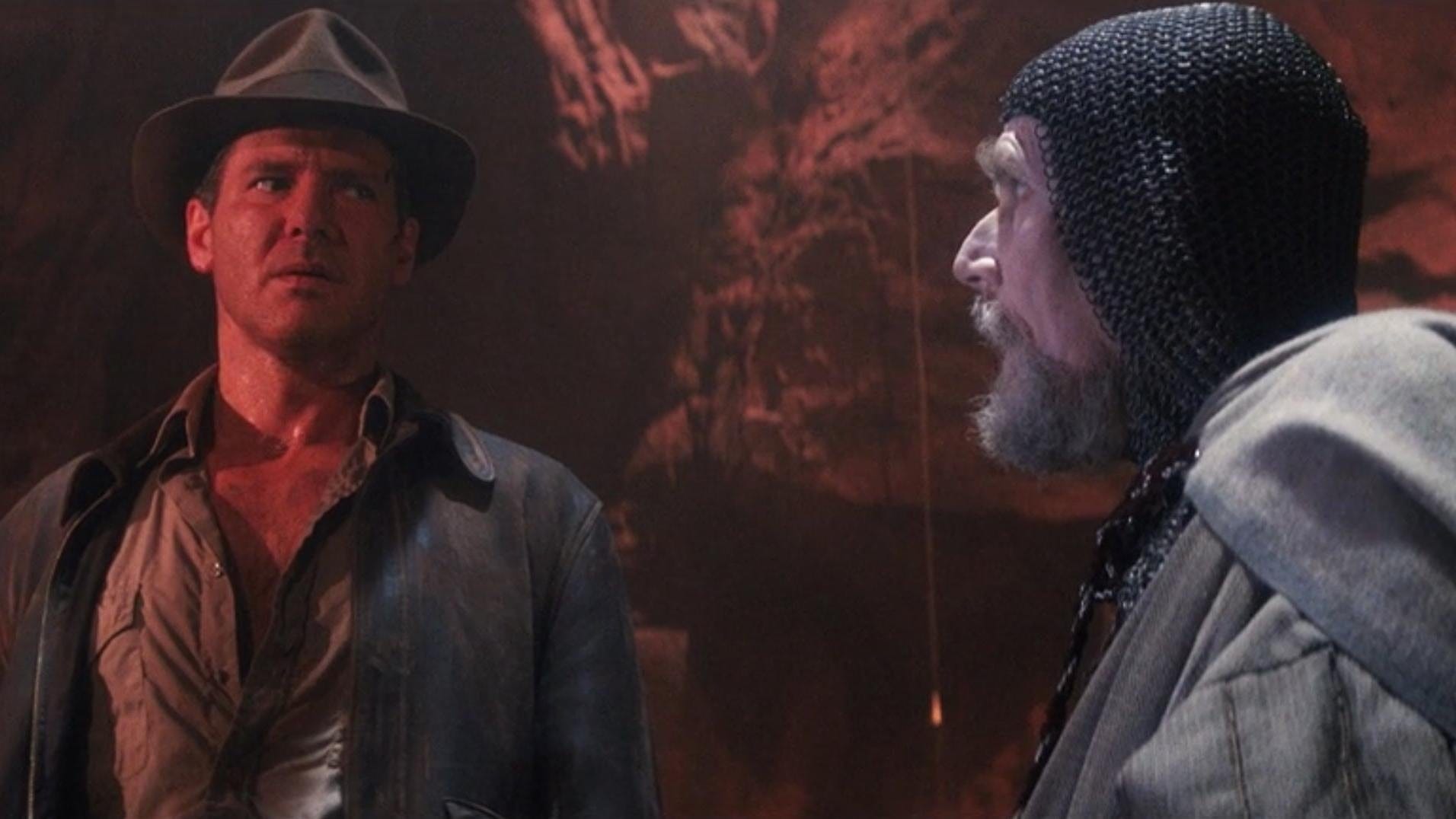
That line, delivered by a centuries-old knight guarding the Holy Grail in a Petra tomb, remains one of cinema’s most memorable moments. Indiana Jones and the Last Crusade gave audiences exactly what they craved: Nazis hunting sacred artifacts, ancient prophecies, death traps, and a father-son duo racing to find the cup of Christ before fascist occultists could weaponize it.
But here’s the thing. The Nazis really did hunt for the Holy Grail. Heinrich Himmler really did send expeditions across Europe searching for sacred relics. The SS really did establish a pseudo-archaeological organization dedicated to finding evidence of Aryan supremacy through ancient artifacts. And the hunt didn’t end in 1945.
Spielberg’s masterpiece wasn’t pure fantasy. It was Hollywood’s sanitized version of something far stranger, darker, and more complex than any two-hour adventure film could contain. The real story involves Soviet psycho-energetic research, Aleister Crowley’s sex magick rituals, Luciferian stones from Heaven, Israeli intelligence operations, and competing theories about whether the Grail is a cup, a stone, a bloodline, or a quantum consciousness interface.
Indiana Jones made it look straightforward: find the map, solve the puzzles, claim the prize. Reality? The Holy Grail has been shape-shifting for centuries, morphing to fit whatever fever dream the searcher brings to the table. And in the 20th century, this medieval MacGuffin became something far more dangerous: a convergence point for ideologies, intelligence agencies, and secret societies who saw in its ambiguity the ultimate prize.
Let’s dig into the real hunt. Fair warning: it gets weird.
The Many Faces of a Phantom Relic
Around 1190, Chrétien de Troyes gave us the first literary appearance of the Grail in his unfinished romance Perceval, the Story of the Grail. Here it was a mysterious dish or cup with healing powers and the ability to provide sustenance. Simple enough. But that simplicity wouldn’t last.
Academic analysis traces the Grail back to Celtic origins. Think ancient cauldrons of regeneration, central to the 13 Treasures of Britain. This pagan provenance immediately established the relic as a reservoir of archaic, non-orthodox magic. The Church saw an opportunity. Soon after Chrétien, Christian writers transformed the vessel into the cup used at the Last Supper, later wielded by Joseph of Arimathea to catch Christ’s blood at the crucifixion.
But wait. There’s another tradition entirely.
Wolfram von Eschenbach, writing in the late 12th and early 13th centuries, said the Grail wasn’t a cup at all. It was a stone. The Lapis Exillis. This sacred stone granted phenomenal sustenance, healing, and temporal immortality. If you possessed it, death couldn’t touch you for a week. The parallels to alchemy’s Philosopher’s Stone are impossible to ignore.
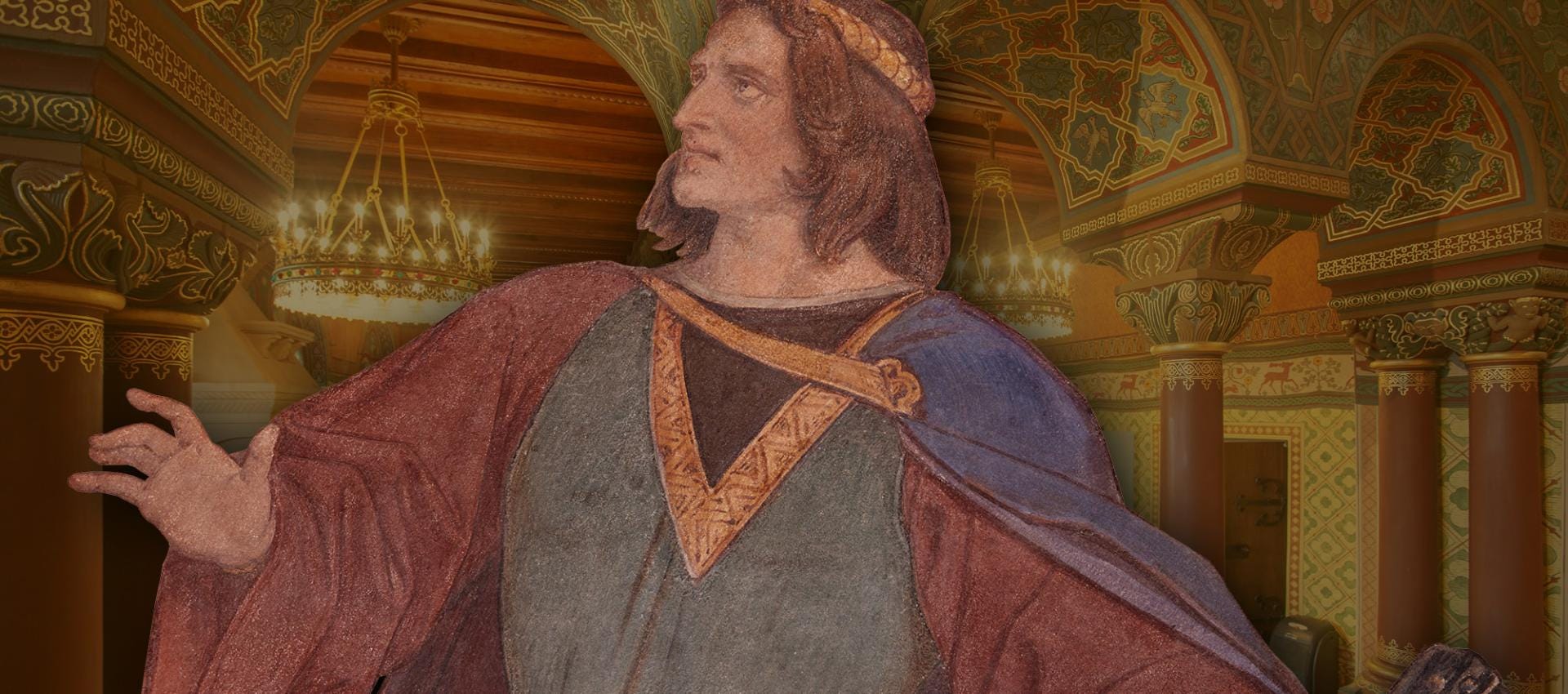
Here’s where it gets properly weird. The stone’s origins were explicitly celestial, discovered through astrological study by a heathen astronomer named Flegetanis. And the high-fringe tradition? It claims the Lapis Exillis is a fragment from Lucifer’s crown, dislodged when the Prince of Light was cast from Heaven. Sometimes called the “Judas Grail,” the stone supposedly serves as sanctuary for the neutral angels who refused to take sides during Lucifer’s rebellion.
This transforms the Grail from a Christian relic into an object of pure, amoral, unconstrained force. Perfect for the ideological quests of 20th-century occultists.
The Esoteric Blueprint
For esoteric traditions, the Grail represents Gnosis. Hidden knowledge. The ultimate quest for meaning made tangible. Medieval intelligentsia encoded Gnostic and pagan beliefs into Arthurian romances, creating a blueprint for seekers of forbidden secrets. The Church considered these beliefs heretical, so they were hidden in plain sight within the legends.
The Grail became a vehicle for truth that couldn’t be spoken openly.
Templars, Treasures, and the Middle Eastern Connection
The foundations of the 20th-century Grail hunt lie in conspiracy lore connecting the relic to the Knights Templar. The Poor Knights of Christ and of the Temple of Solomon established their base on the Temple Mount in Jerusalem between 1119 and 1187. This location birthed theories that the Templars excavated and recovered immense Solomonic treasures. The Grail. The Ark of the Covenant. Take your pick.
When the Order was suppressed in 1312, legend claims the Templars successfully transported their accumulated occult and material wealth out of mainland Europe. Their final major stronghold in coastal Syria was Tartus. Other theories point to the St. Stanislaus chapel in Chwarszczany, Poland, allegedly concealing an underground chamber. Then there’s Rosslyn Chapel in Scotland, associated with Templar refugees.
The Templar conspiracy transforms the Grail into a high-stakes asset linked to immense wealth and an anti-establishment power structure. It became geographically mobile and secretly guarded. Most importantly, it established the Middle East as ground zero for the treasure’s origin.
Sound familiar? Spielberg knew exactly what he was doing when he planted Indy’s Grail in Petra.
Heinrich Himmler’s Obsession: The Nazi Quest for Aryan Validation
The most focused and institutionally supported 20th-century quest for the Holy Grail came from Nazi Germany. Heinrich Himmler, SS leader and occult enthusiast, wanted the Grail as the ultimate tool for racial and ideological validation.
In 1935, Himmler co-founded the Ahnenerbe, or “Ancestral Heritage.” This organization pursued pseudoarchaeological research aimed at discovering evidence for an advanced, superior Aryan ancestry. Himmler viewed the SS as a modern Teutonic Knighthood. He planned to use the Grail as the central, legitimizing icon for his new racial religion.
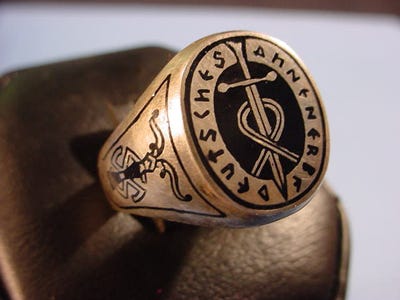
His castle at Wewelsburg was conceived as an SS version of Camelot. A metaphorical Round Table was commissioned. The Grail was intended to sit at its center.
The Last Crusade simplified this into a straightforward race between Indy and the Nazis. The reality was far more complex and disturbing.
Otto Rahn: The Doomed Grail Hunter
The practical search fell to Otto Wilhelm Rahn, a German medievalist obsessed with the Grail’s connection to the Cathars. This heretical sect was exterminated in the 13th century. Rahn joined the SS in 1936, convinced that the Cathar stronghold of Montségur, France, was the historical reality behind Eschenbach’s Grail castle, Munsalvaesche (Mountain of Salvation).
Rahn theorized that the Cathars concealed the Grail before their defeat. He aligned the Cathars with a Gnostic/Luciferian lineage, claiming they were “pure followers of Lucifer, the angel who brought knowledge to mankind.” They descended from a Celtic priesthood, he said. This served the Nazi anti-Christian agenda perfectly, transforming the Grail into a relic of Aryan anti-orthodoxy.
Rahn’s fate illustrates the danger of the SS’s high-stakes pursuit. He died mysteriously in 1939 after a period of forced labor and falling out of favor. The official story said suicide. Nobody believed it.
Vril, Atlantis, and the Technological Grail
The Nazi quest wasn’t just about finding a cup or a stone. It was intrinsically linked to locating and mastering lost Atlantean technology. Himmler believed this would confirm Aryan supremacy once and for all.
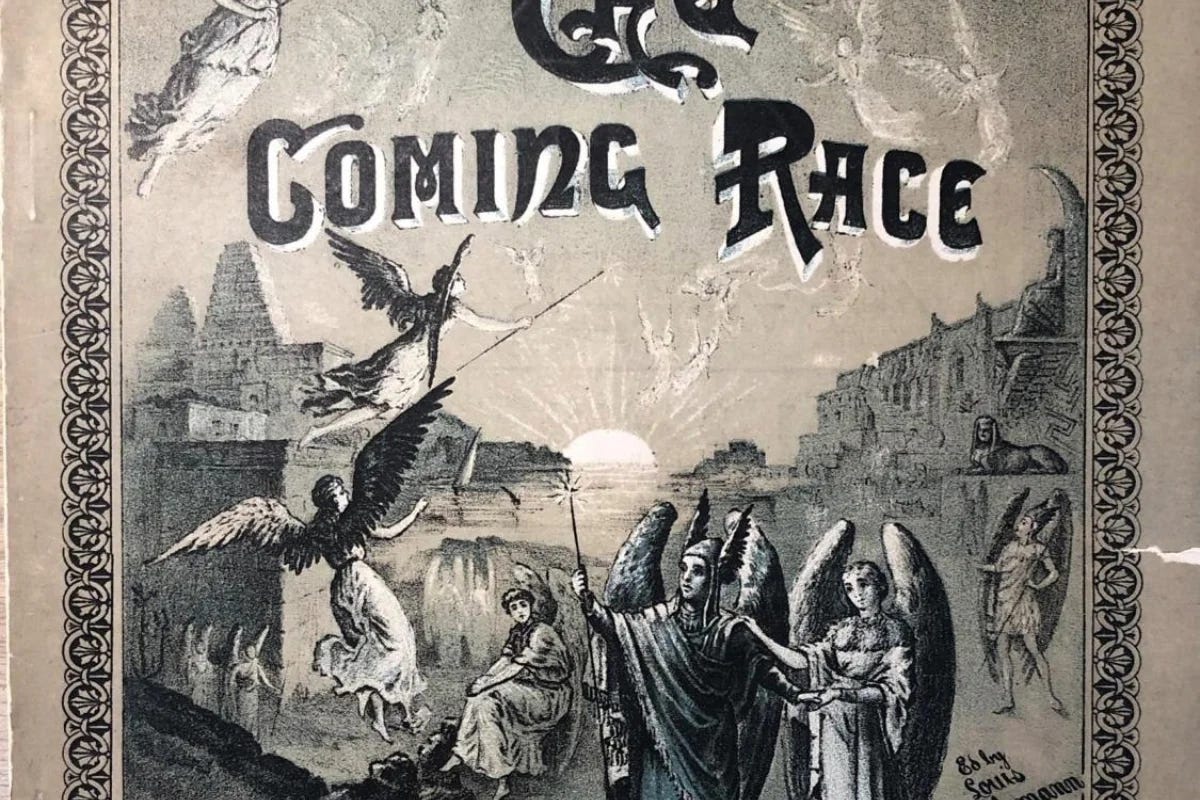
The theoretical energy source they sought was Vril, a powerful vital energy described in Edward Bulwer-Lytton’s 1871 novel The Coming Race. Conspiracy theories claim the fictitious Vril Society attempted to utilize this energy to develop anti-gravity flying machines known as Reichsflugscheiben. Nazi UFOs, in other words.
The Grail, as a physical object of non-terrestrial origin (the Lapis Exillis), was sought as the missing piece of impossible technology. A source of free energy that could secure military dominance. The Nazi pursuit treated the Grail as a physical, functional asset capable of granting the master race both mythological legitimacy and tactical advantage.
Aleister Crowley and the Inner Quest
While the Nazis pursued an external, archaeological artifact, other secret societies defined the Grail as an internal, spiritual achievement. This represented a profound philosophical divergence regarding the nature of occult power.
Aleister Crowley, central figure in 20th-century Western occultism, entered the Hermetic Order of the Golden Dawn in 1898. He believed he’d found and entered the “Hidden Church of the Holy Grail.” But for Crowley, the quest was internal, focused on psychological states. He used techniques like concentration on a topaz gem to enter the Aethyr, recognizing this practice as Astral Travel conducted entirely within his own mind.
The Grail became the ultimate internal spiritual quest. The attainment of personal divinity.
The OTO and Sexual Magick
Crowley later assumed control of the Ordo Templi Orientis (OTO), transforming its guiding philosophy into Thelema: “Do what thou wilt shall be the whole of the Law.” The central aim of Thelemic adepts became the Knowledge and Conversation of the Holy Guardian Angel (K&C HGA). Crowley deemed this the essential work of the Magician.
Within this framework, the Holy Grail is interpreted as the vessel of sacred union used in the OTO’s high degrees to facilitate spiritual ascension. The Ninth Degree focuses on sexual magical practices. This esoteric use of sexuality represents the physical culmination of the quest. The vessel (the Grail) is utilized in ritual to capture and direct magical energy, thereby attaining the K&C HGA.
The OTO’s quest for the Grail stands in stark ideological opposition to the Nazi search. They pursued radical, individualized, internal Gnosis over collectivist, externalized, archaeological validation.
The Shadow War: Intelligence Agencies Enter the Game
The post-war era shifted the Grail hunt. It was no longer about finding the relic itself but capturing the associated occult tradecraft and documentation. US, Soviet, and Israeli intelligence agencies all wanted a piece.
This is where the real story diverges completely from Hollywood’s version. Indiana Jones retired after the war. The intelligence agencies were just getting started.
Operation Paperclip and the Ahnenerbe Archives
The United States executed Operation Paperclip, secretly transporting over 1,600 German specialists to America. This effort was paralleled by a covert hunt for occult and historical archives. US Army intelligence recovered significant material related to the Ahnenerbe, later used in war crimes trials.
The existence and destruction of some Ahnenerbe paperwork created an artifact vacuum. The definitive evidence for any Grail-related find was lost. But the ideological blueprints were retained by the victors.
US interest wasn’t in the magic itself. They wanted to understand the methodologies used by the Nazis to weaponize esoteric belief. This included non-conventional research areas like psycho-energetic studies. Specific, unredacted dossiers detailing a direct “Holy Grail search” remain absent from standard CIA FOIA collections. This fuels speculation that sensitive material remains classified due to its potential ideological or technological application.
The Soviet Counter-Quest: Red Shambhala
The Soviet Union engaged in similar post-war resource seizure through Operation Osoaviakhim, recruiting over 2,500 German specialists. Fringe theories assert that Soviet intelligence agencies, particularly the KGB and GRU, inherited and continued Nazi occult research. They focused on the Grail as a psycho-energetic power source.
Uncorroborated research points to state interest in artifacts capable of influencing consciousness. This is most clearly seen in the quest for the mythical Tibetan kingdom of Shambhala, often mythologically linked to the Grail castle. The Soviets believed it held the key to achieving communist world domination.
Known as “Red Shambhala,” this program involved figures like Gleb Bokii (head of a special section of the Soviet secret police) and Alexander Barchenko. The Soviets sought to leverage apocalyptic prophecies found in the Kalachakra Tantra, adapting them as a political tool or “Bolshevik liberation theology” to influence populations in Central Asia.
The pursuit of objects that grant users mastery over bio-energetic states serves as an analogous illustration. Experimental work on “Wands of Horus” artifacts purportedly demonstrated reproducible changes in cerebral cortex activity. A state actor seeking the functional utility promised by the mythical Grail.
Israeli Intelligence and the Temple Mount
The geopolitical concern regarding the Grail involves Israeli intelligence operations, particularly regarding the Temple Mount. This was the historical base of the Knights Templar. The Templar conspiracy claims the order removed the Grail or Ark of the Covenant from Jerusalem.
Any unearthing of a Solomonic or Templar treasure would create immediate, existential geopolitical instability. Israeli intelligence is inherently tasked with surveillance of archaeological activity in sensitive areas surrounding the Temple Mount. They need to ensure that a powerful symbolic artifact doesn’t fall into the hands of hostile state or non-state actors who could use it to mobilize immense religious and political fervor.
The Modern Quest: From Quantum Physics to Elite Conspiracies
In the 21st century, the quest decentralized into intellectual property wars, fringe archaeological searches, and esoteric philosophy that redefine the Grail as a force far beyond material reality.
The Interdimensional Grail
Modern esotericists have proposed that the Grail’s power lies in its ability to manipulate unified consciousness. They view it as the “Holy Grail of physics,” a unified field theory or ultimate scientific truth.
This fringe theory suggests consciousness is a quantum phenomenon, potentially localized in microtubules within neurons. The Grail is therefore conceptualized as a mechanism to access or “hack” this unified field, granting the user total ontological control.
In contemporary Ufology and Ancient Astronaut theories, the Grail is stripped of its mythological shell and redefined as sophisticated extraterrestrial technology. The Lapis Exillis (a celestial stone) is reinterpreted as the activation key for ancient, physics-defying technology. It’s capable of generating an aetheric field so immense that its transfer between different dimensions or realities is physically impossible without advanced esoteric knowledge.

This theory connects the Grail’s miraculous abilities to sophisticated energy dynamics. The kind that supposedly allow the harnessing of planetary energy fields for interdimensional travel from ancient structures like the Pyramids.
Cryptogeography: Templar Caches Everywhere
The modern hunt includes bizarre, geographically dispersed claims. Two stand out.
The South American Cache: A sensational theory posits that the suppressed Knights Templar utilized their hidden fleet to transport their treasure to the New World following the Order’s dissolution in 1307. This myth establishes a pretext for Grail searches in the Americas, merging the Templar flight narrative with the indigenous legend of El Dorado or the Inca’s Golden Disc.
This theory proposes that European mystery cults achieved Pre-Columbian transoceanic contact. They transferred ancient Old World relics to hidden locations in South America (Chile or Argentina, most likely), far from European ecclesiastical control.
The Eastern Slavic “Grail Mood”: Anthroposophical philosophy, championed by figures like Sergei Prokofieff, dismisses the search for a physical Grail entirely. Instead, they focus on a spiritual, geographically centered mission. Prokofieff asserts that the spiritual identity of Eastern Europe is locked in spiritual warfare against the “materialistic Brotherhoods of the West” and the “occult aspects of the Jesuits and Bolshevism.”
He argues that the future conscience of humanity flowed from hidden mystery centers in Hibernia into the Eastern Slavic peoples. This created the true Grail: a cultivated state of being called the “Grail mood.” It’s characterized by compassion, patience, and willingness for sacrifice.
The Rennes-le-Château Hoax and Mythological Capital
The most commercially successful modern Grail narrative originates from a complex hoax surrounding Rennes-le-Château in southern France. The conspiracy was fabricated by Pierre Plantard, who founded the Prieuré de Sion (Priory of Sion). He falsely claimed it was founded in 1099 to guard the Grail’s true secret.
The thesis, popularized in the book The Holy Blood and the Holy Grail, redefined the Holy Grail as the Sang Réal (Royal Blood). The genealogical line descended from Jesus Christ and Mary Magdalene. The resultant popularity demonstrated that the true modern quest is for mythological capital and revenue.
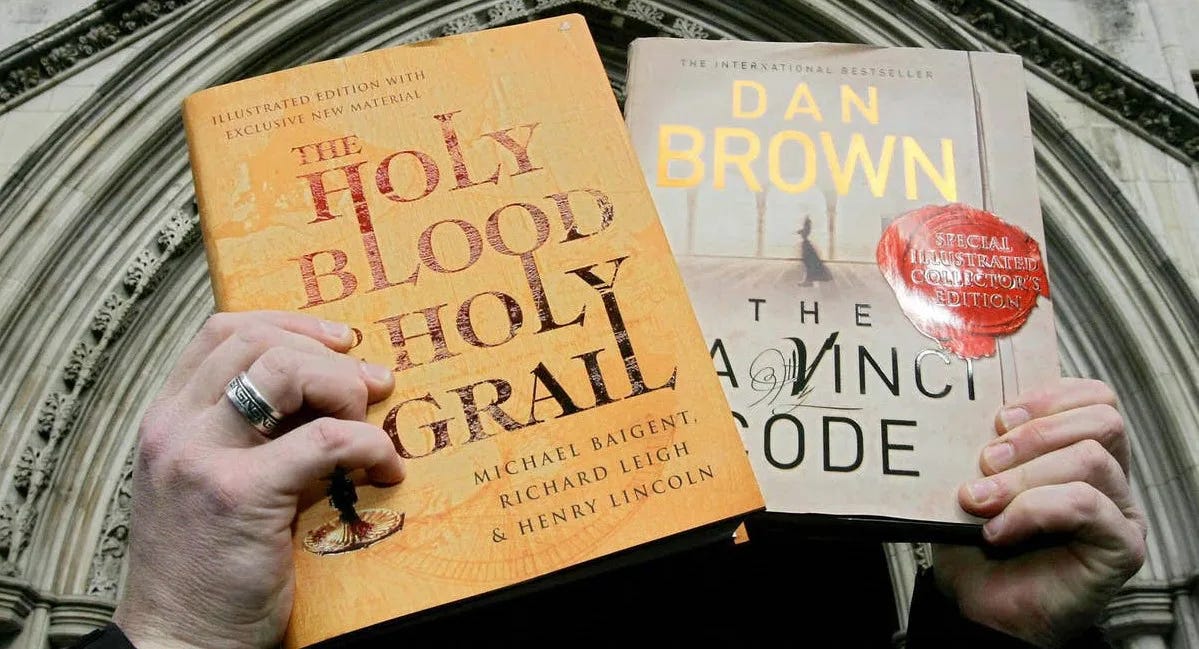
This pursuit is often funded by private patrons and collectors. The enduring commercial fascination with Himmler’s quest for artifacts ensures consistent demand in the market for WWII-related relics. Modern archaeological excavations continue, such as the joint Jordanian/American projects beneath Al-Khazneh in Petra, Jordan. This is the site famously depicted as the Grail’s resting place in the Indiana Jones film.
The Grail Paradox: The Power of Permanent Elusiveness
The Holy Grail endures as the quintessential elusive object because its value is inversely proportional to its provable existence. The lack of definitive discovery, due in part to wartime destruction of records and subsequent classification by intelligence agencies, ensures the Grail remains highly charged with potential.
The 20th-century geopolitical and occult searches illustrate how this medieval archetype was adapted to serve radically disparate ideologies. An esoteric weapon for the Nazis and their Vril obsession. An individualized spiritual attainment for Crowley and the OTO. A classified power source for the USA and KGB.
The object’s lack of a fixed identity allows it to remain the central convergence point for global fringe history. It synthesizes medieval secrets with 21st-century claims of quantum physics and elite global conspiracy.
The pursuit is, therefore, permanent. A continuous quest for unconstrained power, whether that power is physical, spiritual, ideological, or ontological. The Grail doesn’t need to exist to be real. It just needs to be believed in. And that belief has shaped everything from Nazi expeditions to Soviet psycho-energetic research to modern quantum mysticism.
The search continues. It always will. That’s the whole point. The Grail’s greatest trick is making everyone think they’re one discovery away from total power. One excavation. One ritual. One decoded prophecy. One classified document.
But the Grail keeps moving. Shape-shifting. Vanishing into the next theory, the next expedition, the next secret society’s manifesto. It’s the ultimate phantom prize in a game where the rules keep changing and the players never realize they’re chasing their own projections.
Maybe that’s what makes it holy. Or maybe, like Indiana Jones discovered in that Petra temple, the real treasure was always the journey itself. The difference is that while Indy rode off into the sunset, the intelligence agencies, occultists, and fringe archaeologists are still searching.
The game never ends. The Grail never stops calling.
If you enjoyed this deep dive into the real history behind the Holy Grail and its pursuit by Nazis, secret societies, and intelligence agencies, give us a like and share this article with fellow seekers of forbidden knowledge.
‘The players never realise they’re chasing their own projections’ sums it up. A catalyst. Fascinating topic.
San Greal or Sang Real?