
Rothschild Banking Cartel Deploying American Military to Capture Venezuelan Central Bank
Trump's Venezuela Gambit Disguises Banking Control as War on Drugs

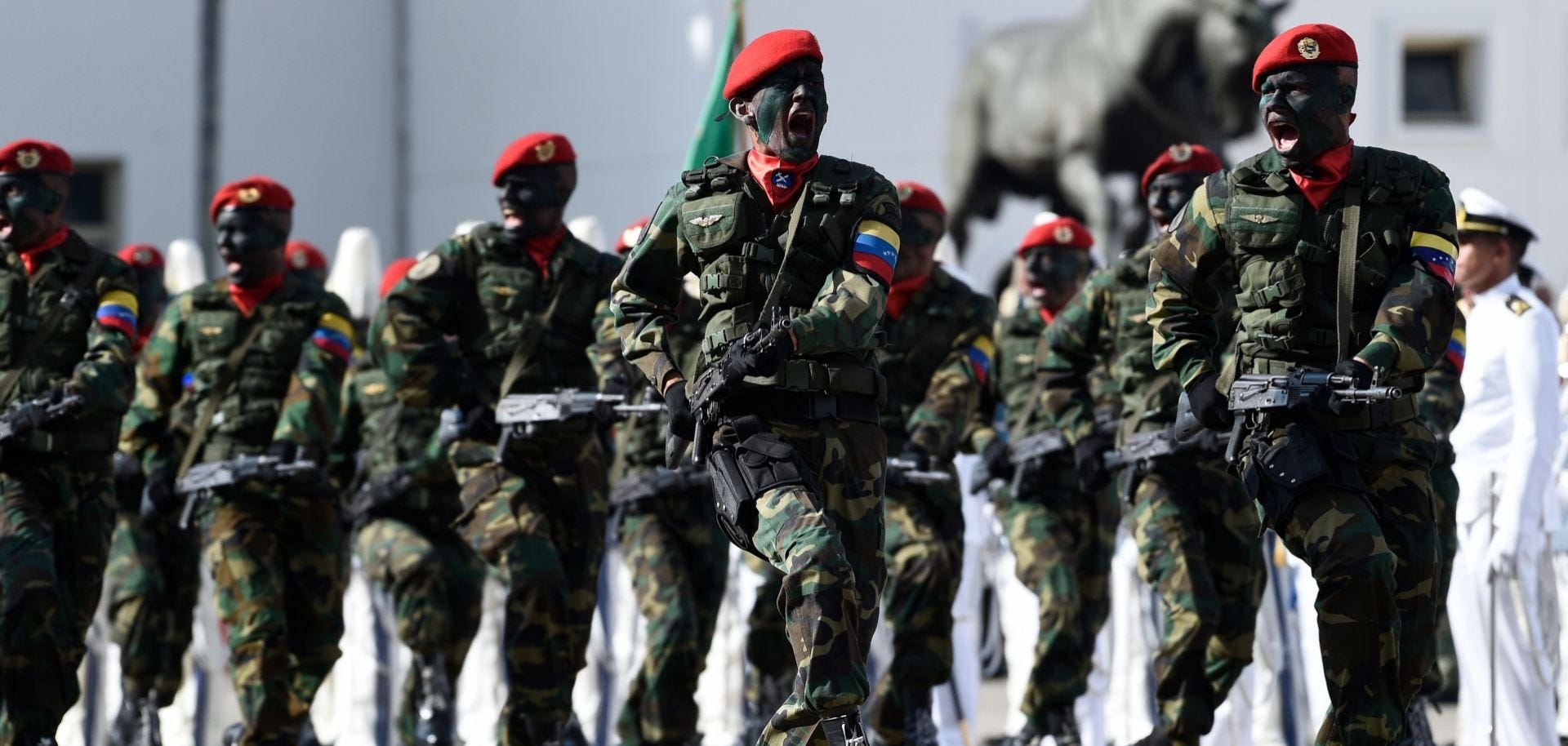
The Caribbean waters off Venezuela are becoming increasingly tense as a massive U.S. naval deployment approaches the South American nation's coastline. In response, Venezuelan President NicolĂĄs Maduro has ordered the deployment of drones, naval vessels, and 15,000 troops to border waters and rivers, while labeling the presence of a U.S. nuclear submarine a "grave threat to regional stability."
The official justification from Washington is straightforward: this is part of President Trump's broader war against drug cartels, specifically aimed at intercepting fentanyl shipments bound for American communities. But a closer examination of the facts raises serious questions about whether this military buildup makes strategic senseâor whether it serves entirely different objectives.
The Fentanyl Fallacy
The Trump administration's stated mission is to clamp down on the drug trade by intercepting cartel shipments of fentanyl heading north. However, organizations such as the Sinaloa Cartel based in Sinaloa, Mexico and Cartel Jalisco Nueva GeneraciĂłn based in Jalisco, Mexico, receive fentanyl precursors and synthetic opioids directly from China or from intermediaries in the United States. The reality is that the vast majority of fentanyl flooding American streets originates from China, not Venezuela.
From at least November 2016 to November 2023, Hubei Aoks sold and imported to the United States 11 kilograms of fentanyl precursors, capable of producing millions of fentanyl pills, along with two kilograms of xylazineâjust one example of Chinese companies directly supplying the American market with the raw materials for this deadly drug.
If the goal is genuinely to stem the flow of fentanyl into the United States, why deploy a massive naval force to Venezuela rather than focus diplomatic and economic pressure on China, the primary source of the crisis? The disconnect between the stated objective and the chosen target suggests alternative motives may be at play.
Venezuela's Military Capabilities: Outgunned but Not Defenseless
While Venezuela is clearly outmatched by U.S. military capabilities, dismissing its defensive potential entirely would be a mistake. The nation holds a PwrIndx score of 0.8882 (a score of 0.0000 is considered 'perfect') according to Global Firepower rankings, indicating significant military limitations compared to major powers.
However, Venezuela has been preparing for asymmetric warfare. The country possesses Iranian Shahed-style drones and Russian Geran-style attack dronesâinexpensive but potentially effective weapons that have proven their worth in conflicts like Yemen and Ukraine. Reports suggest Venezuela has been working to establish domestic production capabilities for these systems, though it remains unclear whether they have achieved operational capacity.
On August 18, 2025, Venezuelan President NicolĂĄs Maduro announced the mobilization of more than 4.5 million militia members in response to what he described as new threats from the United States. This massive mobilization indicates Venezuela's strategy: make any potential invasion prohibitively costly through widespread resistance and guerrilla warfare.
The Nuclear Question
One of the most concerning aspects of this escalation is Venezuela's nuclear status. Venezuela has never possessed biological, chemical, or nuclear weapons. It does not maintain a ballistic missile program but has cooperated closely with Russia and Iran on defense issues. Under former President Chavez, Venezuela expressed interest in developing nuclear energy capabilities.
While Venezuela currently lacks nuclear weapons, its close relationships with Russia and Iran raise troubling possibilities. Both nations have nuclear capabilities and have demonstrated willingness to share military technology with allies. Could Russia have quietly deployed tactical nuclear weapons to Venezuela as a deterrent, similar to what occurred in Cuba during the 1962 missile crisis? The U.S. military's deployment of nuclear-powered submarines suggests American intelligence may have concerns about escalation scenarios.
Venezuela does not currently operate nuclear power plants, which limits its ability to develop fissile material independently. However, its uranium reserves and technical cooperation agreements with nuclear-capable allies could potentially change this calculus in the future.
The Sleeper Cell Concern
Another dimension to consider is Venezuela's potential for asymmetric retaliation on U.S. soil. With millions of Venezuelans having migrated to the United States in recent years due to economic collapse and political persecution, the possibility of sleeper cells or sympathetic networks cannot be entirely dismissed. While the vast majority of Venezuelan immigrants are law-abiding individuals seeking refuge, intelligence agencies must consider whether hostile elements could exploit this diaspora for intelligence gathering or sabotage operations.
Venezuela's intelligence service, SEBIN, has historically maintained ties with Cuban intelligence and other adversarial services. The potential for pre-positioned assets or recruitment of sympathizers within Venezuelan-American communities represents a significant security consideration that military planners must account for.
Trump's Real Motives: Beyond the War on Drugs
Given the disconnect between the stated anti-drug mission and the actual target, what are Trump's likely real objectives in Venezuela?

Financial System Control: Perhaps the most revealing motive involves Venezuela's banking system. While Venezuela does have a central bankâthe Central Bank of Venezuela (Banco Central de Venezuela)âit operates independently of Western financial control. The U.S. Treasury sanctioned Venezuela's central bank in 2019, calling it "a tool of the illegitimate Maduro regime."
This fits a well-documented historical pattern. In the year 2000, there were seven countries without a Rothschild-owned or controlled central bank: Afghanistan, Iraq, Sudan, Libya, Cuba, North Korea, and Iran. Consider what happened next: Afghanistan was invaded in 2001 and now has a Western-aligned central bank; Iraq was invaded in 2003 and now has a Western-aligned central bank; Libya underwent military intervention in 2011, Gaddafi was killed, and it now has a Western-aligned central bank; Sudan underwent regime change and is now integrated into the global banking system.
Venezuela's central bank, while existing, has rejected dollarization, maintained independent monetary policy, refused integration with Western banking systems, and developed alternative payment systems with China, Russia, and Iran.
A regime change operation wouldn't just install a friendly governmentâit would bring Venezuela's massive oil revenues and financial system under Western banking control, potentially worth trillions over the long term.
Resource Control: Venezuela sits atop the world's largest proven oil reserves. Regime change would potentially open these resources to American companies while denying them to China, Russia, and Iranâall of whom have significant investments in Venezuelan energy infrastructure.
Geopolitical Signaling: A successful operation against Maduro would send a clear message to China, Russia, and Iran that their Western Hemisphere proxies are not beyond American reach. It would also demonstrate to Mexico that Trump's threats regarding cartel cooperation are not empty promises.
Domestic Political Theater: Military action abroad often boosts presidential approval ratings and distracts from domestic challenges. Trump may calculate that a "successful" intervention would strengthen his political position.
Regional Hegemony: Removing a hostile government from America's backyard would eliminate a source of regional instability and migration while reasserting U.S. dominance in the Western Hemisphere.
The Dangerous Precedent
The most troubling aspect of the current escalation is the casual assumption that military intervention can achieve complex political objectives quickly and cleanly. Op-eds calling for Venezuelan regime change promise "precise surgical action that encourages a significant change without boots on the ground"âlanguage eerily reminiscent of previous interventions that spiraled into prolonged conflicts.
History suggests that military operations rarely unfold as planned. Libya, Iraq, and Syria all began with promises of limited engagement and quick resolution. Each devolved into protracted conflicts with unintended consequences that persist today.
The Path Forward
As U.S. naval forces approach Venezuelan waters and both sides deploy military assets, the risk of miscalculation grows. A single incidentâwhether deliberate or accidentalâcould trigger a conflict with far-reaching consequences for both nations and the broader region.
The fundamental question remains: If the goal is truly to combat fentanyl trafficking, why not focus resources on the actual sources of the crisis rather than pursuing military adventurism against a peripheral player? The answer may reveal that this confrontation has little to do with drugs and everything to do with broader geopolitical and financial control ambitions that could prove far more costly than advertised.
When viewed through the lens of financial system control, the Venezuela operation begins to look less like a war on drugs and more like the latest chapter in a decades-long campaign to bring independent central banks under Western control. The fentanyl crisis provides convenient political cover for what may ultimately be about integrating Venezuela's oil wealth and financial system into the U.S.-dominated global banking network.
The American people deserve an honest conversation about the real objectives in Venezuela and the potential costs of military intervention. Without that clarity, we risk stumbling into another open-ended conflict based on questionable premises and optimistic assumptions that have failed us repeatedly in the past.


Same shit- Different day. Trump appears to be the deepest of the deep state criminals.
Strong article brotha. As a fellow early semi-retiree, I respect this intel matching our covid audit. I was not aware of the brilliant Central Banking specific country (7) analysis which was helpful aligning to the Rothschild - Federal Reserve Banking conclusions from Covid at #6, #9 & #11 on the scribed work linked below. Thanks!
Here's #6 on the Audit:
https://pubchem.ncbi.nlm.nih.gov/patent/US-2020279585-A1
So what do you think they [will] do with all seized Afgan / Venezuela goods?
Geoff Wexler
Covid Auditor
https://WHOtoSTOP.com