


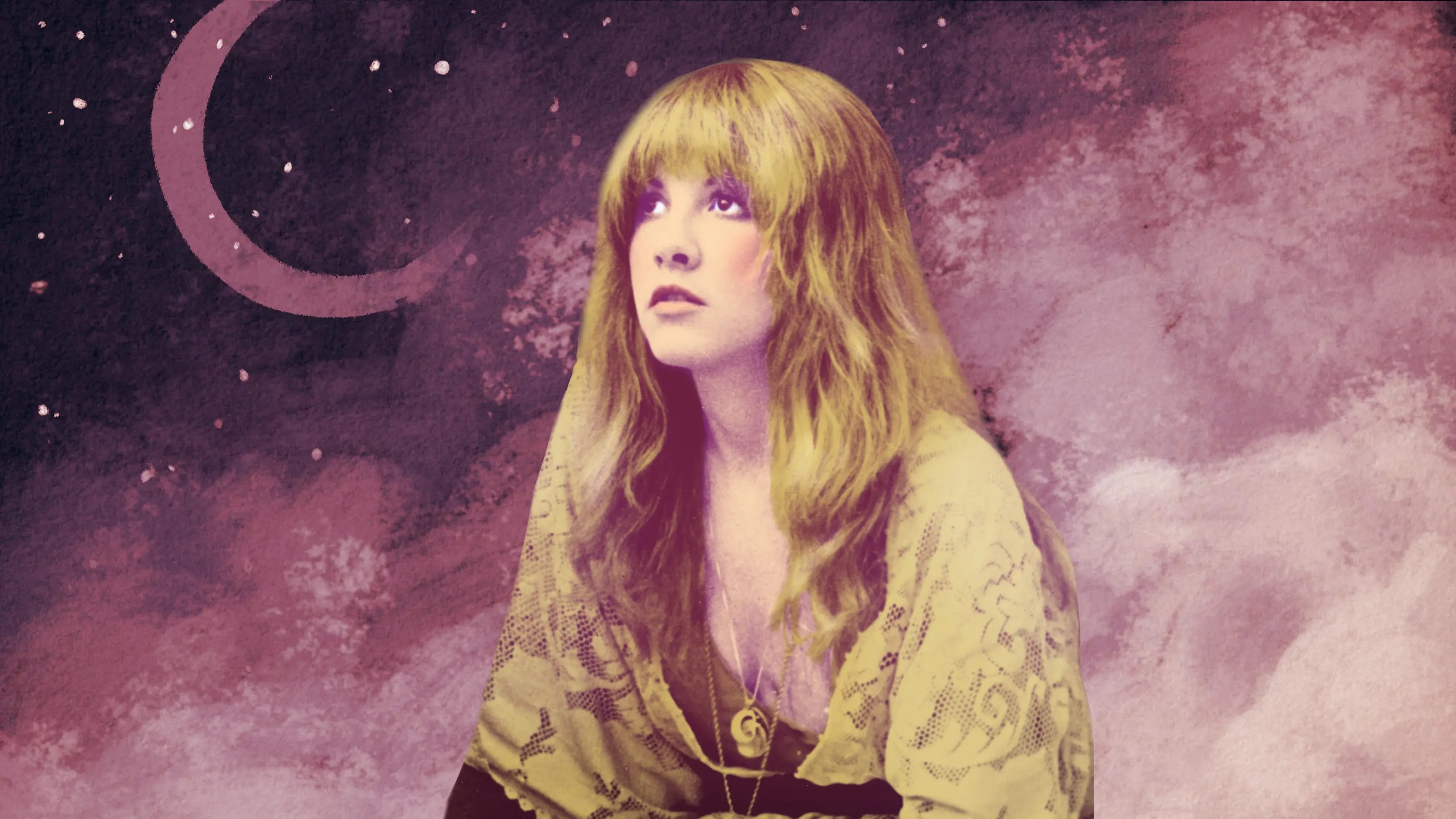
The Making of a Rock Legend
In 1977, Fleetwood Mac released Rumours, an album that would become one of the best-selling records of all time, moving over 40 million copies worldwide. But the band’s success was built on more than just commercial appeal—it was forged in personal turmoil, creative brilliance, and, for one member in particular, an aesthetic steeped in mysticism and the occult.
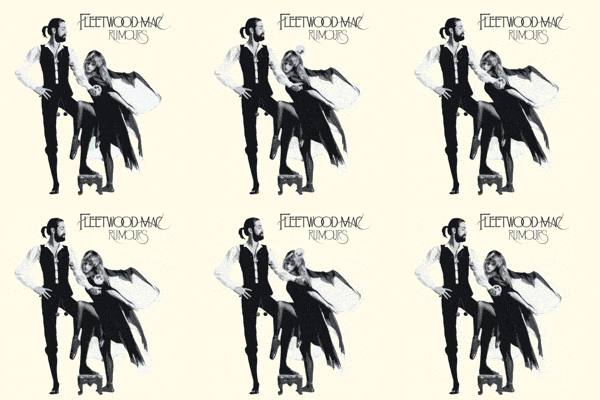
Stevie Nicks joined Fleetwood Mac in 1975 alongside her boyfriend and musical partner Lindsey Buckingham. The British-American band, originally formed in 1967 as a blues outfit under guitarist Peter Green, had undergone numerous lineup changes before Mick Fleetwood brought the duo aboard. What Nicks brought to the band transcended her songwriting and vocal abilities—she introduced an entirely new visual and spiritual dimension that would define both her career and rock music’s relationship with witchcraft.
By the time Rumours dominated the charts, Fleetwood Mac was imploding internally. Nicks and Buckingham’s relationship was disintegrating, as were the marriages of Christine and John McVie, and Mick Fleetwood’s own union. The album’s songs chronicled these breakups in real-time, creating a raw emotional intensity that resonated with millions. Yet amid the personal chaos, Nicks was cultivating something else entirely: a reputation as rock’s most enigmatic witch.
The Birth of the White Witch: Rhiannon and the Occult Connection
Nicks would preface live performances of “Rhiannon” by announcing, “This is a song about a Welsh witch,” immediately establishing the mystical framework that would come to define her. The song, released in 1975 on the self-titled Fleetwood Mac album, became the cornerstone of her witchy reputation.
Nicks first encountered the name Rhiannon in the 1973 novel Triad: A Novel of the Spiritual by Mary Leader. She wrote the song about a woman named Rhiannon without knowing the name’s mythological significance. It wasn’t until early 1978, years after writing it, that Nicks learned Rhiannon was actually a Welsh goddess when a fan sent her “four paperback novels in a Manila envelope.”

Nicks later explained the synchronicity: “I come to find out, after I’ve written the song, that in fact Rhiannon was the goddess of steeds, maker of birds. Her three birds sang music, and when something was happening in war you would see Rhiannon come riding in on a horse.” This accidental connection to actual pagan mythology only deepened the mystical associations, as if Nicks had somehow channeled ancient knowledge without conscious awareness.
The live performances of “Rhiannon” during 1975-1980 took on theatrical intensity. Nicks would twirl endlessly in flowing black chiffon, her shawls creating wing-like shapes as she spun, embodying the character so completely that audiences couldn’t tell where Stevie ended and Rhiannon began. The performances weren’t simply staged—they felt like invocations.
The Costume as Ritual: Creating the Mystical Persona
Nicks’ signature aesthetic—layers of chiffon, velvet, and lace in black and midnight colors, paired with platform boots and shawls—wasn’t accidental fashion. She deliberately cultivated this look to embody the mysterious, powerful women she sang about. The flowing fabrics gave her freedom of movement on stage, allowing the theatrical twirling that became her trademark, but they also served a deeper purpose: creating an aura of otherworldliness.
This visual presentation aligned perfectly with the cultural moment. The 1970s saw a surge in interest in witchcraft, astrology, and alternative spirituality, particularly among women exploring identities beyond traditional roles. Second-wave feminism intersected with nature-based spirituality, and witchcraft became associated with female empowerment and liberation. Nicks embodied this intersection, presenting femininity not as weakness but as mystical power.
The Dark Side: When the Witch Rumors Turned Dangerous
As Fleetwood Mac’s success skyrocketed, Nicks began receiving disturbing mail referencing witchcraft—correspondence troubling enough that she became afraid of being kidnapped. The aesthetic she’d carefully crafted had taken on a life of its own, with some fans unable to separate the artistic persona from reality.
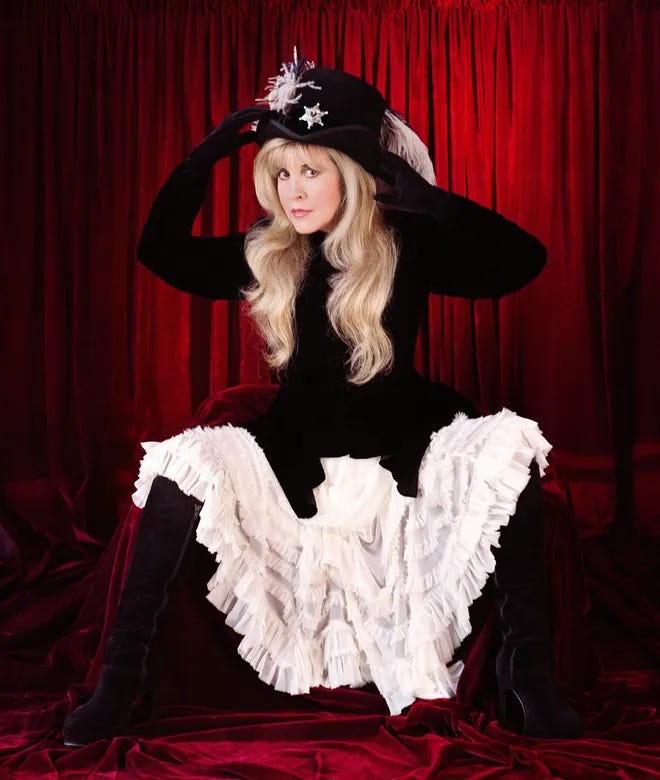
Throughout the 1980s, Nicks was inundated with accusations and questions about her assumed witchcraft, a situation that grew increasingly uncomfortable. The witch association, which had initially seemed romantic and empowering, had become a burden. People believed she actually practiced dark magic, that her concerts were occult rituals, that her success was the result of supernatural bargains.
The Solo Years: Embracing and Rejecting the Witch Label
When Nicks launched her solo career in 1981, her debut album Bella Donna did nothing to dispel the witch rumors. If anything, the imagery intensified. In 1982, Nicks told High Times magazine that she “only dreamed about giving a little fairy tale to people,” attempting to reframe the mystical aesthetic as storytelling rather than genuine occult practice.
Her songs “Crystal” and “If You Ever Did Believe,” written in 1973, would later be used in the soundtrack of the 1998 film Practical Magic, a romantic comedy about hereditary witches. The synchronicity seemed almost supernatural—songs written decades earlier fitting perfectly into a narrative about generational witchcraft.
Nicks has stated: “I totally believe in magic. Because my life, I think, has been very magic, and magical things have come true for me time after time after time.” She elaborated: “There is always magic to be summoned at any point. I love to live in a world of magic, but not a fake world of magic. We all really basically have a lot of magic...it’s only those of us that choose to accept it, that really understand it.”
But was this belief in “magic” actual witchcraft practice, or was it metaphorical thinking? Nicks has walked this line carefully throughout her career, neither fully confirming nor denying occult involvement.
The Evidence and the Denial
Nicks has consistently denied allegations of practicing witchcraft or being part of the Wicca religion, despite decades of speculation. When she appeared as herself playing a witch in American Horror Story: Coven and Apocalypse, it seemed to be a knowing wink at her reputation—embracing the myth while maintaining distance from literal practice.
Her aesthetic choices tell one story: the deliberate cultivation of witchy imagery, the consistent use of occult-adjacent symbolism, the embrace of mystical themes. But her words tell another: she loves the romance and aesthetics of witchcraft without necessarily practicing it as a religion or craft.
Fleetwood Mac’s Breakup and Reunion: The Coven Reunites
Fleetwood Mac never officially broke up, but they went through long periods of inactivity and lineup changes. The classic Rumours lineup would reunite periodically over the decades, most notably for The Dance tour in 1997, which proved their music—and Nicks’ mystical appeal—remained powerful decades later.
The band’s internal conflicts, which had fueled their greatest creative period, never fully resolved. Nicks and Buckingham’s complicated relationship continued through reunions and splits, with their final collaboration ending acrimoniously when Buckingham was fired from the band in 2018. Even without him, Nicks continued to tour with Fleetwood Mac, her presence still the mystical anchor of the band’s identity.
The Cultural Legacy: High Priestess of a Generation
Events like “Night of a Thousand Stevies” showcase the devoted fanbase that views Nicks as genuinely spiritual or transformative. These aren’t typical celebrity tribute events—they’re gatherings where fans dress in Nicks’ signature style, creating a collective ritual of devotion that borders on the religious.
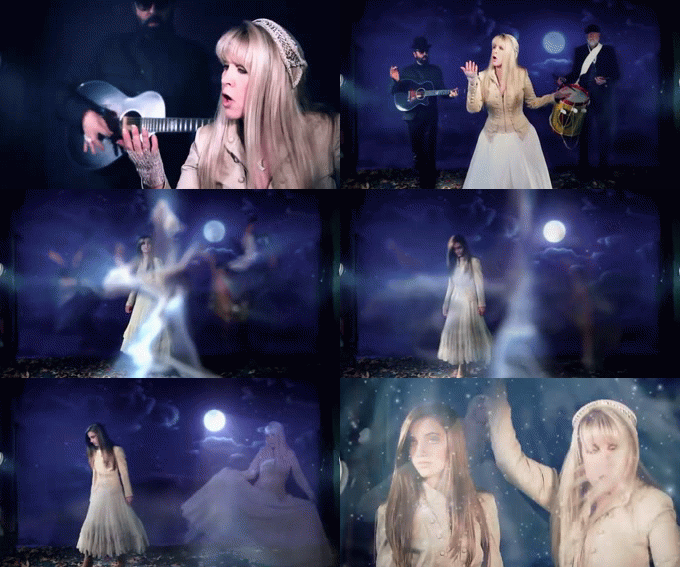
Nicks’ influence extends to contemporary artists including Sheryl Crow, Haim, and Lana Del Rey, many of whom have adopted similar mystical aesthetics. She created space in mainstream rock for exploring spirituality, femininity, and power in ways that continue to resonate.
The Question Remains: Real Witch or Masterful Persona?
The evidence suggests Nicks inhabited a liminal space—not a practicing Wiccan or traditional witch, but someone genuinely interested in mysticism, magic as metaphor, and the aesthetic power of occult imagery. She believed in “magic” in the sense of synchronicity, manifestation, and the transformative power of art, even if she didn’t cast spells or practice ritual magic.
Perhaps the most witchy thing about Stevie Nicks is her refusal to fully explain or demystify herself. In maintaining that enigmatic quality, she preserves the very essence of what draws people to both her music and the concept of witchcraft itself—the allure of the unknown, the celebration of feminine power, and the possibility that there’s more to reality than what’s immediately visible.
Whether practicing witch or brilliant architect of mystical persona, Stevie Nicks achieved something genuinely magical: she transformed herself into an icon that transcends ordinary celebrity, becoming a symbol of feminine mysticism, empowerment, and the enduring allure of the occult in popular culture. The question of whether she’s a “real” witch may ultimately be beside the point—her cultural impact as the High Priestess of Rock is undeniably real.
Real witch as you do not reach level of “celebrity “ unless you’re in the club. Her symbolism was mix of witchcraft and freemasonry
Music literally puts people under a spell. Call it what you want. It is spiritual magic and the ultimate magic trick is to get people to worship anything other than the one true God.