


July 4th weekend, 2023. The MSG Sphere at the Venetian Resort lights up for the first time. Standing 366 feet tall and 516 feet wide, this technological marvel could have displayed anything. Fireworks. The American flag. Elvis.

The all-seeing eye.
The same symbol that appears on dollar bills, in Masonic lodges, and throughout esoteric traditions spanning millennia. Social media went nuts. Headlines screamed about people being “freaked out” by the giant eyeball. Something about it triggered a primal response. You couldn’t look at it without feeling like something was looking back.
Those familiar with occult iconography recognized it instantly. The Eye of Providence. The eye of Horus. The watcher. And it was watching over Las Vegas, the city that literally calls itself Sin City and dares you to laugh about it.
What if Las Vegas wasn’t just allowed to become a den of vice? What if it was designed that way from the beginning?
The Impossible City
Las Vegas blooms in the Mojave Desert where no major city should exist. The heat alone should make it uninhabitable. Yet there it stands, a neon miracle powered by the Colorado River and sheer audacity.
The official story goes like this: railroad town founded in 1905, gambling legalized in 1931, mob money transformed it in the 1940s and 50s. Just capitalism and vice meeting in the desert. Nothing to see here.

But look closer at who built Las Vegas. In 1946, Benjamin “Bugsy” Siegel opened the Flamingo Hotel. This wasn’t just a gangster opening a casino. This was a connected man with ties to the most powerful crime families in America, organizations that operated through blood oaths and ritual ceremonies. Men who understood the power of symbols and secrets.
The timing matters too. World War II ends, America enters a new era, and suddenly this patch of desert becomes the nation’s playground. While historians point to profit motives and money laundering, other interpretations exist. What if men who practiced ritual magic decided to build something in the desert? What would it look like?
It would look exactly like Las Vegas.
Blood Oaths and Burning Saints
The Italian American Mafia fascinates people. The violence, the loyalty, the codes. But one aspect gets less attention: their rituals.
These aren’t Hollywood inventions. Historical documentation confirms that Mafia initiation ceremonies involve real ritual practice. Blood is drawn from the initiate’s finger. Images of saints burn while oaths are sworn. The ceremony transforms ordinary criminals into “made men” through symbolic death and rebirth.
Some criminal organizations have documented connections to occult practices. Santeria, Palo Mayombe, and other spiritual systems have turned up in crime networks. The Mafia’s rituals look like corrupted Catholic tradition, but the structure remains: ritual has power. Symbols have meaning. Oaths have consequences beyond the physical world.
Could men who believed this have built Las Vegas purely for money? Or might they have understood deeper principles? Men who cut their fingers and bled onto burning saint cards might see possibilities in a city that others wouldn’t.
The Chaos Engine
In occult philosophy, certain activities generate specific types of spiritual energy. This isn’t modern invention. According to the Book of Enoch, the fallen angels taught forbidden wisdom to humanity before the flood. This knowledge was hoarded in secret for millennia, passed down through mystery schools and occult lodges, carefully guarded from outsiders.

Then in the 1910s and 1920s, Austin Osman Spare broke the silence. His seminal works introduced ‘chaos magic’ concepts to the wider theosophist and occult movement. He didn’t invent these ideas. He revealed them. The movement grew even larger in the 1970s and 80s as more practitioners formalized and expanded Spare’s teachings.
But the core principle remained ancient and simple. Altered states of consciousness can be harnessed for magical purposes.
What creates altered states? Intoxication. Sexual frenzy. The adrenaline spike of a winning hand. The crushing despair of loss. The surrender of inhibition and control.
Everything Las Vegas sells in industrial quantities.
Look at what the city offers. Gambling hijacks your reward systems, creating obsessive cycles of hope and devastation. Prostitution commodifies sex and strips it of intimacy. Alcohol and drugs flow 24/7, altering consciousness on demand. Casinos have no clocks and no windows, deliberately destroying your sense of time and circadian rhythm. Financial ruin delivers emotional devastation, desperation, and despair.
One city concentrates all of this. Not Entertainment City. Not Fun City.
Sin City.
The branding isn’t ironic. It’s honest.
“What happens in Vegas stays in Vegas” isn’t just marketing. It’s an invitation to shed moral restraint. To become someone else. To do things you’d never consider in normal life. It’s an invitation to chaos.
Some researchers suggest that concentrating vice, altered consciousness, and moral transgression in one geographic location serves purposes beyond profit. In occult terms, such a place functions as a generator. Not of electricity. Of something else. While mainstream society sees money changing hands, those with esoteric knowledge might see a massive engine running continuously in the desert, fueled by human weakness.
The Black Pyramid
If Las Vegas were designed with occult principles, you’d expect overt symbolism. And there it stands at the south end of the Strip, impossible to miss: the Luxor Hotel. A massive black pyramid shooting a beam of light from its apex into the night sky.

Pyramids are among humanity’s most ancient and powerful symbols. In Egyptian tradition, they weren’t just tombs. They were transformation machines, structures designed to facilitate the pharaoh’s journey to godhood. The pyramid’s geometry itself has obsessed esotericists for centuries, believed to concentrate and focus energy.
The Luxor’s light beam is visible from space. It shoots straight up from the pyramid’s apex, precisely where occult traditions place the capstone. The point of divine connection. Ancient Egyptians left their pyramids without capstones, believing the gods would provide the final piece. The Luxor’s beam could be interpreted as a symbolic capstone. A connection between earth and sky. Between material and spiritual realms.
Inside, Egyptian imagery dominates. Sphinxes, hieroglyphs, statues of pharaohs. It’s marketed as theme and spectacle, but symbols have power independent of intention. The pyramid shape, according to esoteric tradition, focuses and amplifies energy. Whether the builders knew this or not, they erected a massive pyramid in the desert and set it broadcasting light into the heavens.
Why a pyramid? Why Egyptian symbolism in Nevada? And why make it black, the color traditionally associated in occultism with Saturn, with restriction, with material power?
Some call this coincidence. Others ask better questions.
The Demon of the Southwest Wind
The ancient Sumerians knew something about deserts that modern Americans have forgotten. They understood that wastelands aren’t empty. They’re inhabited.
By things that predate civilization.
Pazuzu ruled the southwest wind in Sumerian cosmology. Not a gentle breeze. The scorching wind that brings drought, famine, and locusts. The wind that strips flesh from bone and drives men mad. Other demons feared Pazuzu. That’s how the tablets describe him. So terrible that even hell’s inhabitants gave him respect.

Some occult researchers go further. They believe Pazuzu is simply another name for the devil himself, wearing a more ancient face. The same entity, known by different cultures across millennia.
Throughout history, black magicians have invoked Pazuzu in rituals meant to bring chaos, destruction, and transformation. The demon represents primal forces of the desert, of desolation, of the wasteland where normal rules don’t apply. Where civilization breaks down and darker powers emerge.
In 1946, the same year Bugsy Siegel opened the Flamingo in Las Vegas, something else happened in the American southwest. Jack Parsons, brilliant rocket scientist and devoted occultist, performed the Babalon Working ritual in the Mojave Desert near Pasadena. Parsons was attempting to summon a goddess, to tear open the veil between worlds, to birth something new into reality.
The timing is remarkable. The location even more so.
Las Vegas sits in the American southwest. The desert region. The domain, according to ancient mythology, of Pazuzu. The demon associated specifically with the southwest wind, with desolation, with the wasteland.
Was it coincidence that organized crime chose to build their monument to vice in the southwest desert? That they selected this specific patch of wasteland to erect pyramids and temples to mammon? Or did someone understand the symbolic significance of the location itself?
Parsons believed he was opening portals. He died in 1952 in a mysterious explosion, his work seemingly complete. But what if the portal wasn’t closed? What if something did come through? And what if Las Vegas, rising impossibly from the desert in those same years, was part of something larger?
The southwest. Pazuzu’s domain. Where Jack Parsons tore holes in reality and Las Vegas bloomed like a poisonous flower in the wasteland. Where black magicians throughout history sought to invoke powers beyond human understanding.
And where, as it happens, stage magicians would soon make Las Vegas their home.
The Magicians
Walk the Strip and you’ll notice something curious. Magic shows are everywhere. David Copperfield. Penn and Teller. Criss Angel. Las Vegas has become America’s capital of stage magic.
The relationship between stage magic and occult practice has always been messy and intertwined. Historically, stage magicians and court magicians occupied overlapping territory. The line between trick and ritual was never as clear as modern audiences assume. Many stage techniques derive from ceremonial magic practices, adapted for performance. Even the terminology reveals the connection. Both are called magic.
Stage performance rituals mirror occult ritual. The dramatic gestures. The invocations. The transformation of one thing into another. The apparent violation of natural law. What was once performed in secret temples now plays before thousands nightly.
Is Las Vegas simply a profitable venue for magicians? Or does something about the city itself draw practitioners of magical arts, both stage and otherwise? Do the symbols and gestures performed nightly carry power independent of belief or intention?
These aren’t rhetorical questions. They’re worth considering.
Howard Hughes and the Jars
Perhaps no figure in Las Vegas history is stranger than Howard Hughes. The billionaire recluse bought and controlled much of the city during the late 1960s and early 1970s. He lived on the top floor of the Desert Inn, never leaving, slowly descending into paranoid isolation that biographers attribute to mental illness and OCD.
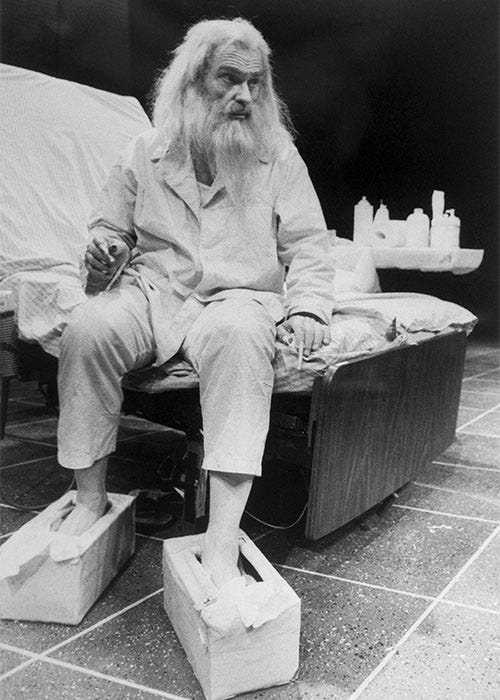
But Hughes’s specific behaviors reveal something odd. He preserved his bodily waste in jars. Urine and feces, carefully stored in his suite. Mainstream accounts call this germophobia or compulsive disorder.
But those familiar with folk magic know something else. Human bodily waste has long been used in cursing rituals.
In hoodoo, European witchcraft, and various magical traditions, obtaining someone’s hair, nail clippings, blood, or waste gives you power over that person. These “personal concerns” create sympathetic magical links, allowing curses to target victims from a distance. To protect yourself from such magic, one method is controlling access to your bodily waste. Ensuring it can’t fall into the wrong hands.
Was Howard Hughes mentally ill? Or was he terrified of witches?
His paranoia about contamination, his elaborate rituals for handling objects, his insistence on isolation could all be symptoms of psychological disorder. But they could also be the behaviors of a man who believed himself under occult attack. A man who knew what Las Vegas really was and feared the forces dwelling there.
Hughes had purchased numerous casinos and hotels, making him the single largest power in Las Vegas. He’d displaced mob control in several properties. If Las Vegas was a city with occult significance, controlled by men who understood ritual power, would they have been pleased? And would Hughes, a brilliant man with access to information most never see, have learned something about Las Vegas that drove him to paranoid isolation?
We can’t know what Hughes believed. But his behavior is consistent with someone protecting himself from magical attack using methods that would make sense to practitioners of folk magic. In a city allegedly built on chaos and occult principles, the richest man in town died alone, paranoid, surrounded by jars of his own waste.
A Warning for Christians
For Christian readers, Las Vegas presents itself as adult Disneyland. Harmless fun. What happens there stays there. A place to blow off steam.
The city spends billions marketing this image: glamorous, exciting, consequence free.
But Christians should understand something fundamental. There is no such thing as consequence free sin. The Bible is explicit. “Do not be deceived: God is not mocked, for whatever one sows, that will he also reap” (Galatians 6:7). What you do in Vegas doesn’t stay in Vegas. It stays with you. In your conscience. In your soul. Before God.
Moreover, if even a fraction of what we’ve explored is true, if Las Vegas was designed to concentrate vice, if occult symbolism is woven into its architecture, if the forces that built it understood spiritual principles most modern people have forgotten, then Las Vegas isn’t a playground. It’s a trap.
Consider what the city offers. Pride. The illusion that you’re special, lucky, destined to win. Greed. The insatiable desire for more, for the big score. Lust. Sexual sin commodified and normalized. Gluttony. Excess in food, drink, and sensory stimulation. Sloth. The abandonment of responsibility and discipline. Wrath. The rage of loss, conflicts fueled by alcohol and ego. Envy. The resentment of others’ success, their wins, their pleasure.
Las Vegas is a machine designed to trigger every deadly sin repeatedly in an environment built to erode resistance. The flashing lights. The free alcohol. The absence of clocks and natural light. The beautiful people. The promise of transformation. All of it works together to break down the defenses that normally keep people from destructive choices.
Christians are told to “flee from sexual immorality” (1 Corinthians 6:18), to “abstain from every form of evil” (1 Thessalonians 5:22), to “make no provision for the flesh, to gratify its desires” (Romans 13:14). Las Vegas is the opposite of this wisdom. It’s a place designed to make provision for the flesh, to remove obstacles to gratification, to normalize what should horrify us.
The Question
So we return to the central question. Is Las Vegas simply where capitalism and human weakness intersect? Or was it designed by men who understood principles most have forgotten? A generator of chaos. A monument to vice. A spiritual snare disguised as entertainment.
The evidence is circumstantial but compelling. The concentration of every form of vice in one location. The occult symbolism throughout the city. The history of ritual practicing organized crime at its founding. The emphasis on altered consciousness and moral transgression. The strange story of Howard Hughes and his paranoid precautions. The all-seeing eye watching over it all.
Could all of this be coincidence? Perhaps. The architecture could be themed decoration. The mob could have been purely profit motivated. Hughes could have been simply mentally ill. The eye could be meaningless art.
But Christians are called to be “wise as serpents and innocent as doves” (Matthew 10:16). We’re warned that “our struggle is not against flesh and blood, but against the rulers, against the authorities, against the powers of this dark world and against the spiritual forces of evil in the heavenly realms” (Ephesians 6:12).
If spiritual warfare is real, and Scripture insists it is, then we should expect the enemy to build strongholds. We should expect places designed to trap souls, to normalize sin, to celebrate everything God calls abomination. We should expect these places to hide in plain sight, to market themselves as harmless, to mock those who see them for what they are.
Las Vegas calls itself Sin City and dares you to laugh. To think it’s ironic. To believe it’s all in good fun.
But sin is never in good fun. Sin destroys. Sin separates us from God. And a city built to industrialize sin, to concentrate it, to celebrate it should be recognized for what it is.
Whether Las Vegas was deliberately designed with occult purposes or organically became what it is, the result is the same. A spiritual danger zone that should carry a warning label for every Christian who considers visiting.
Some will read this and dismiss it as conspiracy theory. Others will recognize the pattern of symbols and ask deeper questions. But for Christians, the conclusion should be the same either way.
Las Vegas is not neutral ground. It’s not harmless entertainment. It’s a celebration of everything Scripture warns us to flee.
The eye watches from the Sphere. The pyramid beams its light to the heavens. The money flows. The vice continues. And souls are lost, one bet, one drink, one compromise at a time.
What happens in Vegas may stay in Vegas, but what Vegas does to your soul comes home with you.
Stay vigilant. Stay sober. Stay away from the desert city and its promises.
Because in the end, the house always wins. And in this case, the house might be older and darker than you ever imagined.
“Be sober minded; be watchful. Your adversary the devil prowls around like a roaring lion, seeking someone to devour.” (1 Peter 5:8)
Interesting observations. Shoe fits and all that. One minor note. Jack Parsons last words were ‘but I’m not finished yet’. Yes he opened a portal, yes bad things came through, yes, he died before he could do the magick needed to confine them again. The Collin’s elite came to the conclusion that UFO’s were the demons unleashed by those rituals. The Mojave is a realm of quartz and massive underground flowing water. Plenty of energy quite naturally. So, Vegas being a ritual site. Good spot for it.
What an essay. You’ve articulated so much that I’ve unknowingly internalized. My immediate family & I are amongst the few we know that NEVER wanted to go to Vegas. I’ve always found it deeply disturbing, and repulsive. Our instincts are working.