


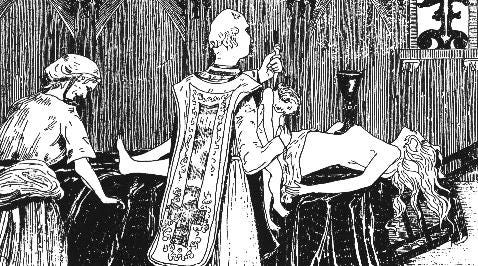
Imagine standing in the shadows beneath Paris. Candlelight flickers. A naked woman lies spread across an unholy altar, black candles clutched in her extended hands, a chalice positioned between her thighs. The stench of incense mingles with something fouler. An old priest in silver-embroidered vestments murmurs backwards prayers. An assistant glides forward carrying an infant.
One swift motion across the throat. A stifled cry. Warm blood streams into the chalice and spills across pale skin.
This wasn’t fiction. This happened in the 1670s. The woman on the altar? Madame de Montespan, the official mistress of Louis XIV, the Sun King himself. And this wasn’t the only child who died this way.
Welcome to the Affair of the Poisons, the most spectacularly depraved scandal in French history.
The Sorceress of Paris
Catherine Deshayes Monvoisin was born around 1640, and from childhood she learned to read palms and tell fortunes. She married a jeweler named Antoine Monvoisin in her teens, and they had at least three children. Life was comfortable until Antoine’s business collapsed. Catherine refused to return to poverty. She’d tasted something better.
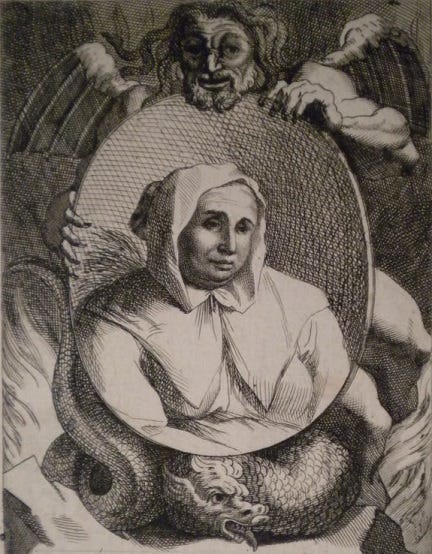
So she became La Voisin. The Neighbor.
She set herself up as a fortune teller, using cold reading skills to convince aristocratic clients she possessed genuine powers. She spent lavishly on atmosphere. Crimson velvet robes embroidered with golden eagles. Darkened consultation rooms. Theater for the desperate rich.
But fortune telling was just the start.
La Voisin employed priests to perform Satanic rituals in catacombs beneath her home, where naked women served as altars while priests performed inverted Catholic masses, spilling the blood of newborn babies into chalices as participants prayed to dark powers. She sold aphrodisiacs, love potions, and abortion services. She learned how to give women abortions, a procedure in high demand when strict Catholicism collided with aristocratic appetites for debauchery.
And she sold poison.
Lots of poison.
They called them “inheritance powders.”
The King’s Mistress Makes a Deal
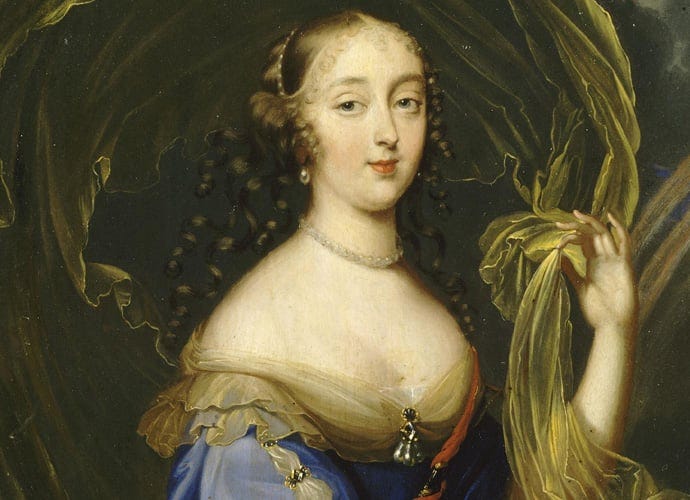
In the spring of 1667, Madame de Montespan sought out La Voisin with a desperate purpose: she wanted to steal the king from his current mistress, Louise de la Vallière. Louis XIV had already told his brother he wasn’t interested in Athénaïs. She’d tried for over a year to seduce him. Nothing worked.
So she turned to darker methods.
La Voisin created a love potion made from bats, toads, blood from dead infants, ground human bones, and herbs. Montespan was to administer it to the king daily until it worked. How she would slip it to him was left to her ingenuity.
Whatever Montespan did, it worked. She became the king’s official mistress, bearing him seven illegitimate children over the next decade. But power is paranoia. Love is control. And Montespan wasn’t taking chances.
Around 1672-1673, Montespan participated in at least three black masses conducted by the defrocked priest Abbé Étienne Guibourg. Guibourg was the sacristan of Saint-Marcel church at Saint-Denis and claimed to be the illegitimate son of Henri de Montmorency. He knew chemistry. He knew ritual. He’d traded his collar for something darker.
Montespan lay across the altar on her back, her body perpendicular to its length with knees drawn up, a pillow supporting her head and holding candlesticks with black candles in her extended arms, a cross placed between her breasts and the chalice between her thighs, while Guibourg stood between her knees.
During the ritual, Guibourg intoned: “Astaroth, Asmodeus, princes of friendship and love, I invoke you to accept the sacrifice, this child that I offer you, for the things I ask of you. They are that the friendship and love of the King and the Dauphin may be assured to me, that I may be honoured by all the princes and princesses of the Court, that the King deny me nothing I ask whether it be for my relatives or for any of my household.”
Three masses were performed at intervals, with the second taking place in a tumble-down house at Saint-Denis and the third in a house at Paris, where Guibourg was taken blindfolded. And in due course, Montespan regained her hold over Louis XIV.
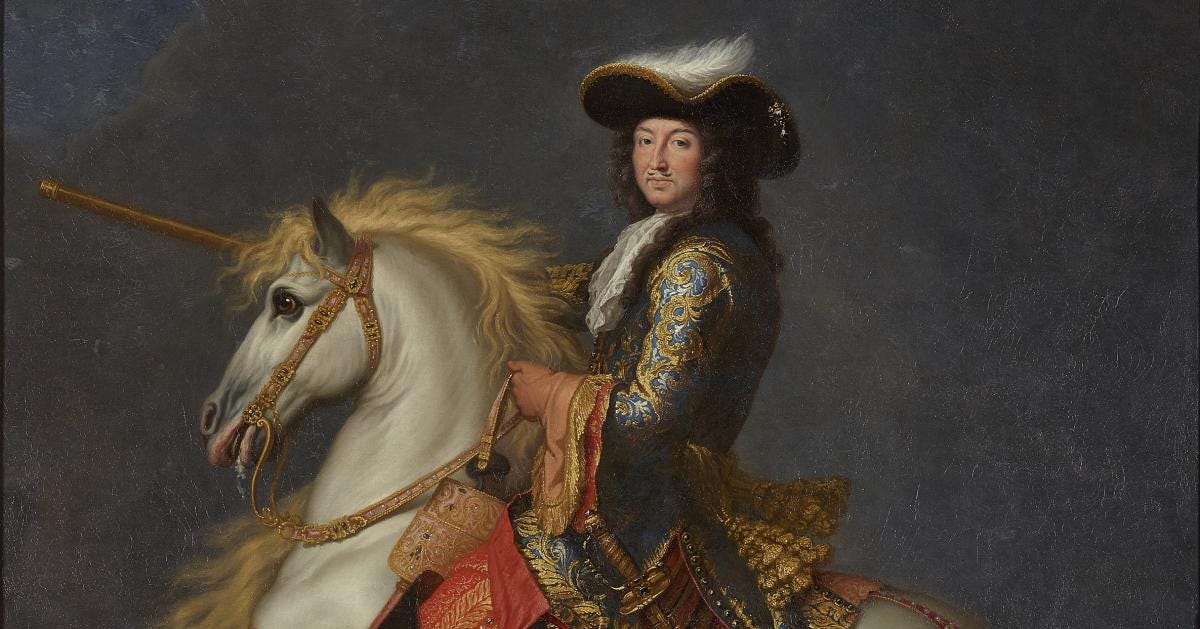
But the king’s eye wandered. It always did. When Louis XIV entered into a relationship with Angélique de Fontanges in 1679, Montespan called for La Voisin and asked her to have both the king and Fontanges killed.
La Voisin hesitated. Killing commoners was one thing. Regicide was quite another. But she was eventually convinced.
The Web Unravels
Everything started to collapse in 1677.
A woman named Magdelaine de La Grange was arrested and charged with poisoning her lover. Facing execution, she claimed she had information about crimes involving prominent people. The police chief, Gabriel Nicolas de la Reynie, started investigating. What he found horrified him.
Authorities rounded up fortune tellers and alchemists suspected of selling not only divinations and aphrodisiacs, but “inheritance powders,” and under torture they confessed and gave authorities lists of their clients.
In January 1679, the successful fortune teller and poisoner Marie Bosse was arrested, and the investigation revealed a network of fortune tellers in Paris dealing in poison distribution. Marie Bosse was a rival of La Voisin. She talked.
On March 12, 1679, La Voisin was arrested outside Notre-Dame de Bonne-Nouvelle after attending mass, just before her planned meeting with Catherine Trianon.
The king was terrified. His mistress was implicated. Half his court might be involved. Louis XIV ordered the opening of a special court to handle the case: the Chambre Ardente, or Burning Court, so called because it was reminiscent of medieval trials usually set in dark rooms dimly lit by torches. The court held 210 sessions at the Arsenal in Paris, issued 319 writs of arrest, and sentenced 36 persons to death.
The Body Count
How many people died because of La Voisin’s network?
Her purported organization of commissioned black magic and poison murder was suspected to have killed 1,000 people, but it’s believed that upwards of 2,500 people might have been murdered.
Many of the victims were infants and children used as ingredients for ritual magick.
There are conflicting accounts of exact numbers - though upon La Voisin’s arrest, investigators allegedly discovered the corpses of 2,500 infants buried in her yard, allegedly sacrificed the same way as in Guibourg’s ritual, with La Voisin having paid prostitutes for their infants for use in the rituals.
However, historian Anne Somerset disputes this claim and states there’s no mention of the garden being searched for human remains. Marie Bosse claimed that fetuses aborted late in pregnancy were burned in a furnace at the house of La Voisin and buried in her garden, but Louis XIV gave the order that the abortion aspect should not be pursued further, so this remains unconfirmed.
The truth? We’ll never know. Louis XIV made sure of that.
