

The Coolest Guy I Ever Met: A Rock Star Without a Band
Sometimes I wonder if he was even human—an alien, an immortal god walking among us, or just a figure born from my own imagination.

What does it mean to be truly cool? Not the manufactured, Instagram-filtered version of cool that gets packaged and sold back to us, but the raw, unfiltered, authentic kind that makes you stop and wonder if you've just encountered someone from another dimension entirely. I thought I knew until I met Steve.
It was 2010, and I was 28, co-managing a telemarketing boiler room in Tampa. I'd always considered myself reasonably intelligent—the kind of guy who could hold his own in most conversations, solve problems, think on his feet. Then Steve walked into my life and made me feel like I was operating with the intellectual capacity of a houseplant.
The Entrance
Picture this: a sun-drenched Florida office where everyone sweated through their mandatory suits and ties, clicking away at computers, following the corporate playbook to the letter. Then the door opens, and in walks this guy who looked like he'd stepped straight out of a 1980s Depeche Mode video—leather duster, bondage pants, pale as rice paper despite living in one of the sunniest places on the planet. While the rest of us wondered how the hell he'd talked HR into letting him dress like that, Steve was already making his first sale of the day.
He was approaching 40 but looked my age, which he attributed to being vegetarian since he was nine. This health consciousness came with a fascinating twist: he smoked two packs of Marlboro Reds daily and drank nothing but fresh hand-squeezed Florida orange juice and top-shelf Jack Daniel's—the kind aged ten years in oak barrels that cost close to $50 a bottle back then. A bottle he polished off every single day.
The Contradiction Machine
Steve was a walking contradiction, and somehow that made him more magnetic, not less. He was a technological Luddite who barely knew what the internet was, yet he was such a sales virtuoso that the company hired a girl specifically to do data entry for his orders because he refused to touch those "damn devil boxes." He worked maybe an hour or two a day and was our top performer, pulling in around two grand a week.
And he was always broke.
His tiny apartment was a study in selective minimalism—no furniture except a bed, a few handmade tables, and a bookshelf, all imported from Tibet at a cost that exceeded my annual salary. No TV. No computer. No clutter. Just expensive, purposeful emptiness and stacks of books I couldn't pronounce the titles of.
The Physics of Cool
Here's what I learned about coolness from watching Steve: it's not about trying to be anything. It's about being so authentically yourself that you create your own gravitational field, and everyone else either gets pulled in or bounces off. Steve didn't perform coolness—he inhabited it like a second skin.
He could talk his way into a supermodel's bedroom one night, then get shot down by a 400-pound woman with a five o'clock shadow the next, and his reaction would be exactly the same: a slight smile, a shrug, and zero shame. He didn't care because caring about other people's opinions would have required him to acknowledge that their opinions mattered more than his own experience. And why would they?
Friday Night Rituals
Every Friday, we had our routine. Dinner at a vegetarian Indian restaurant, then one of three options: hit up a strip club, catch some jazz at a smoky bar where we'd smoke $50 cigars while watching thin, exotic women in slinky dresses coo into microphones (even though we both hated jazz), or call up high-end escorts, get an ounce of cocaine, and spend the next two days in a haze of powder and flesh—though Steve never actually slept with any of them.
That last part always fascinated me. Here was a guy who could afford the finest everything, who lived without inhibition or social constraints, yet he seemed to exist above basic human appetites. He was performing wealth and hedonism rather than indulging in it, like he was conducting some elaborate anthropological experiment on American excess.
The Alien Theory
For a time, I genuinely wondered if Steve was human. Not in a cute, hyperbolic way—I mean I seriously considered whether I was dealing with an extraterrestrial or some kind of immortal vampire playing at being mortal. He was too intelligent, too disconnected from normal human concerns, too comfortable existing outside the social physics that governed the rest of us.
He lived more in a week than most people do in their entire lives, and he did it all with the casual indifference of someone channel-surfing. Nothing fazed him because nothing surprised him, as if he'd already seen all possible permutations of human behavior and found them mildly amusing at best.
The Vanishing Act
Then one day, he was gone. Not "gave his two weeks' notice and moved to Seattle" gone—just gone. Left everything in his apartment, walked away from his job, vanished without a trace. Those expensive Tibetan tables, his books, his leather duster—all abandoned like props in a play that had suddenly ended.
I spent years searching for him. Someone mentioned they thought he'd headed to San Francisco because he had a son there, so I traveled out there, asking around, following dead-end leads. Nothing. It was as if Steve had never existed, except for the lingering feeling that I'd encountered something extraordinary disguised as a chain-smoking telemarketer.
![The Harry Du Bois Mega Mix [Disco Elysium] - playlist by Klaus ⭐ | Spotify](https://substackcdn.com/image/fetch/$s_!1_JK!,f_auto,q_auto:good,fl_progressive:steep/https%3A%2F%2Fsubstack-post-media.s3.amazonaws.com%2Fpublic%2Fimages%2Fefccd983-9aa9-4529-a5e0-eaf9c0544a8b_300x300.jpeg "The Harry Du Bois Mega Mix [Disco Elysium] - playlist by Klaus ⭐ | Spotify")
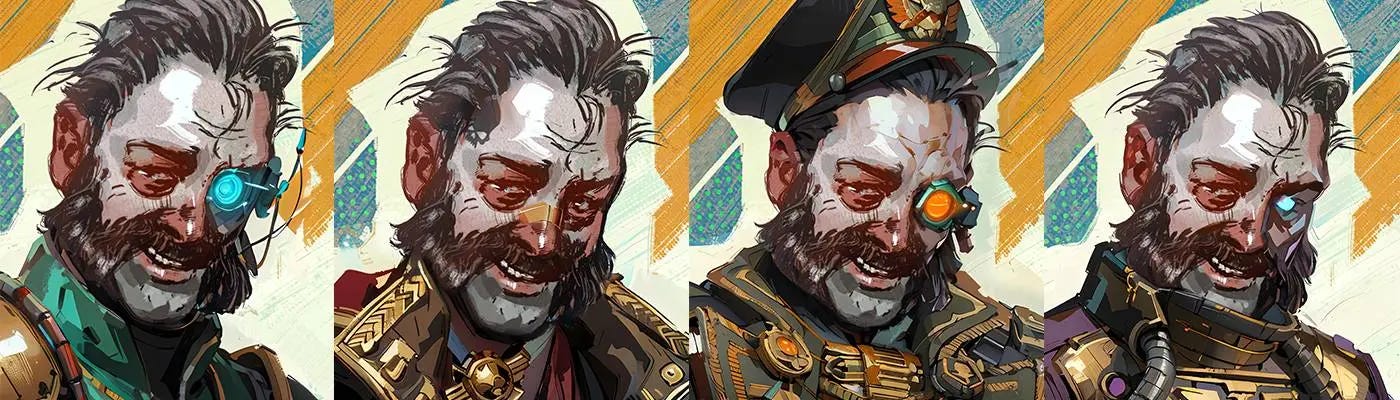
Years later, playing through the video game Disco Elysium, I encountered the only character who ever reminded me of Steve: Harry Du Bois. Here was this whiskey-soaked, philosophically tortured detective who somehow managed to be brilliant and self-destructive in equal measure. The way Harry could deliver profound insights while falling apart at the seams, his complete disregard for social norms, his ability to be simultaneously the smartest and most reckless person in any room—it all felt hauntingly familiar. Sometimes during my playthrough, I wondered if the developers had somehow encountered my old telemarketing friend and turned him into digital fiction. Because the only person I'd ever met who came close to Steve's particular brand of hedonistic philosopher wasn't even a real person.
The Lesson
What Steve taught me about coolness is that it's not a pose or an attitude—it's a complete absence of the need to be anything other than exactly who you are. Cool people don't try to be cool; they're too busy being themselves to worry about the impression they're making. They operate from their own center of gravity, creating their own weather patterns, indifferent to the storms swirling around everyone else.
Steve was a rock star without a band, a movie star without a silver screen. He was cool because he was shameless, not in the desperate, attention-seeking way, but in the profound, existential way of someone who had somehow transcended the basic human need for approval.
Maybe he was an alien. Maybe he was an immortal god on vacation. Maybe he was just a guy from Ohio who figured out something the rest of us are still trying to learn. But wherever Steve is now—if he exists in any conventional sense—I hope he's still walking through life like he owns the place, still making everyone around him wonder what it would be like to be that free.
Because that's what real coolness is: freedom from caring about being cool at all.
Here's another story about Steve and my drug and booze fueled misadventures in Florida:
My forty-something brain, caught in the amber of nostalgia, fixates on those glorious days when Steve and I carved our particular brand of chaos across the Florida panhandle, circa 2008-2012. One memory surfaces with crystalline clarity—a night that has embedded itself in my neural pathways like shrapnel from some beautiful explosion.
Not far outside Tampa, headed inland toward the sweaty armpit of America's peninsular appendage, sits a small swamp town called Ocala—at least I think it was Ocala, time having performed its usual slight-of-hand on geographical certainties. Once you've tasted the salt air of the Keys, the rest of Florida reveals itself as what it truly is: America's equivalent of a sweaty, fat woman's asshole.
But in this particular asshole of geography sat Skipper's Smoke Shack, a dive bar that served food capable of inducing religious experiences and, more importantly, had earned its reputation as the premier venue for that beautiful bastard child of punk rock known as psychobilly. If you've absorbed The Misfits into your bloodstream, you understand the sonic DNA we're discussing.
This was the era of the Geico gecko's media saturation campaign, when that twangy rockabilly song by The Legendary Shack Shakers first crawled through television speakers into America's collective unconscious. JD Wilkes—incredible artist, singular human specimen—fronted this band, and the commercial's success had catapulted them from regional obscurity into national touring status. They were scheduled to desecrate Skipper's that weekend.
Steve materialized at my condo door at precisely 6 PM, his entrance choreographed with the casual presumption of Cosmo Kramer invading Jerry's apartment—unannounced, uninvited, inevitable. I was still imprisoned in my corporate monkey suit, that despised uniform of capitalist servitude, tie knotted like a noose around my neck. Steve, cool as liquid nitrogen, produced his calling card: a substantial bag of cocaine, the universal key that unlocked every adventure in his considerable arsenal.
The mathematics were simple: I possessed the only driver's license and vehicle in his shrinking social circle that hadn't been permanently alienated by his particular brand of chicanery. Everyone else had ostracized him completely, cutting him from their lives like a malignant tumor. So it fell to me to pilot our expedition to Ocala. Fortunately, we shared dual addictions—psychobilly music and pharmaceutical enhancement—and Steve's pockets bulged with hundred-dollar bills, his twice-my-paycheck salary (despite working half my hours and reporting to me, he made double my income because he was simply the best goddamn salesperson I'd witnessed in twenty-five years of marketing warfare).
We folded ourselves into my aging VW Jetta and began our pilgrimage. I'd never visited Skipper's, but everyone in our music scene knew its mythical status. I'd been wanting to make this journey for months. I'd never heard of The Legendary Shack Shakers by name, but their music had infiltrated my consciousness through that Geico commercial, corporate jingle transformed into gateway drug.
The bar squatted beside black swamp water where alligator eyes surfaced and disappeared like prehistoric surveillance cameras. Inside, the ecosystem revealed its magnificent absurdity: girls assembled from Southern Gothic fever dreams, wearing cut-off jean shorts and flannel shirts tied around their breasts like they'd stepped directly from the Dukes of Hazzard soundstage into three-dimensional reality.
Steve and I wore our little cocaine jar necklaces, complete with miniature spoons—practical jewelry for the pharmaceutical enthusiast. I nursed a gin and tonic with religious devotion while he systematically dumped hundred-dollar quantities of blow into every straight Jack Daniel's he ordered. Despite consuming enough stimulants to trigger cardiac arrest in large mammals, he maintained his characteristic calm, cool collectedness, grinding his teeth while I felt my skin threatening to explode outward from internal pressure.
The band emerged like a vision from World War II. JD Wilkes wore a military jumpsuit that looked authentically period—which, I would learn later that evening, it actually was.
They delivered an absolutely transcendent set. To this day, this performance ranks in my personal top five concerts, exceeded only by that miraculous night when Steve and I were wandering St. Petersburg's bar district and stumbled into a dive bar with fewer than twenty people watching Trent Reznor perform an acoustic set solo. Literally Trent fucking Reznor, no advertisements, no public announcements—he'd simply materialized in St. Pete and decided to visit a dive bar the same night we happened to wander in. But that's another story for another time, assuming this series proves successful, which I doubt judging from my recent Substack engagement. You'd think fifty thousand subscribers would generate more than ten likes per story.
But I digress. JD the singer embodied kinetic energy in human form, never ceasing movement throughout the entire set. He played harmonica, danced, sang, performed stand-up comedy—everything a rock star should master to manipulate crowd dynamics into pure ecstasy.
I leaned toward Steve: "This guy has to be on even more blow than both of us combined." He laughed in agreement.
Midway through the set, during a song called "Blood on the Bluegrass"—about the Roderick Ferrell vampire murders that had stained Florida not long before this performance—Steve simply rose from his chair and walked to the center of the stage. I had never witnessed this man dance in my entire acquaintance with him. What emerged was the most awkwardly magnificent avant-garde interpretative dance performance I have ever observed: Steve, dressed like some hybrid of South Park goth kids and post-apocalyptic Mad Max villain, his skin pale as fresh snow, moving like he was auditioning for a musical so far off-Broadway it existed on another planet.
The assembled hillbillies stared in complete incomprehension. I heard one large redneck specimen declare, "Look at that little faggot dancing like a faggot"—a perfect example of Central Florida's intellectual sophistication. But I digress.
Then something magical occurred. After the song concluded, JD Wilkes began stripping off his jumpsuit down to his tighty-whitie underwear and threw it directly to Steve. Somehow Steve had anticipated this moment—his hand was already positioned in the air as if he intended to catch something that hadn't yet been thrown.
Steve caught the sweat-soaked garment and waved to the crowd, who stood awestruck that this amazing performer considered this dancing fool worthy of receiving his jumpsuit as a personal souvenir.
Twenty minutes after the show ended, we were sitting at the bar when JD approached and settled beside us. He explained that the jumpsuit had belonged to his uncle in World War II or something similar—I couldn't hear clearly because I was eight gin and tonics deep and my brain felt simultaneously imploding and exploding from the cocaine saturation.
Steve and JD conversed like old friends until my dumb ass interjected with the obvious question: how much blow did Mr. Wilkes consume before a set to generate that level of energy?
He looked at me and laughed. "You see this drink in my hand?"
"Yep."
"It's just water. I don't use drugs or drink. I just got natural energy."
Afterward, he shook our hands and waved goodbye as Steve and I began scanning the crowd for single women to accompany us back to our hotel room.
I really miss that guy. I hope he's still out there somewhere, acting as weird as ever with zero fucks to give anyone. The world is his oyster and he's going to shuck that thing raw until the day he either dies or it ends.
Great story! Really enjoyed it... great writing.