


Picture this: You're reading the most important biography ever written. You're captivated by the early chapters about a remarkable child who astounded religious scholars with his wisdom. Then suddenly, the pages go blank. For eighteen years. When the story resumes, that child has become a man whose words would reshape civilization forever.
This isn't fiction. This is the Gospel of Luke.
Jesus of Nazareth is the most written-about person in human history, yet nearly two decades of his life vanish completely from the biblical record. Between the ages of twelve and thirty, we have exactly one verse: "And Jesus increased in wisdom and in years, and in divine and human favor."
That's it. Eighteen years. Gone.
Where did the Son of God go? What shaped the man who would transform the world? The silence is deafening, and the possibilities are extraordinary.
When Scripture Goes Silent: The Mystery Deepens
The four Gospels weren't written as modern biographies. Matthew, Mark, Luke, and John crafted theological narratives, not personal chronologies. Written decades after Jesus' death and compiled from oral traditions, they focused on his divine message of redemption, not his daily life.
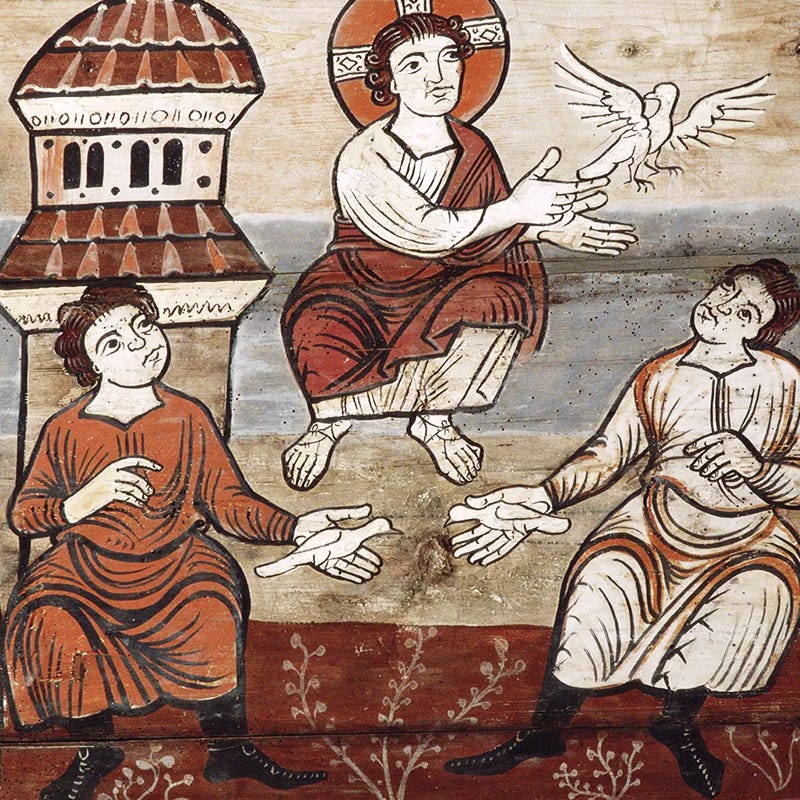
But here's what makes this mystery even more intriguing: dozens of other gospels existed. The Gospel of Thomas, the Infancy Gospel of Thomas, and countless other texts told wild stories of young Jesus bringing clay birds to life and even striking a child dead with a word... and then bringing him back to life! The early church rejected these accounts as too fantastical, too inconsistent with the Christ they knew.
Yet even these rejected gospels remain silent about the lost years.
Contemporary historians living in first-century Palestine wrote extensively about their times, but not one mentions Jesus during these crucial decades. Roman records are silent. Jewish writings contain no trace. It's as if Jesus simply vanished from history, only to reappear as a fully-formed teacher whose wisdom would echo through eternity.
The question haunts us: What happened during those eighteen years that Scripture doesn't want us to know?
The Glastonbury Legend: Jesus in Ancient Britain
William Blake's haunting poem "Jerusalem" asks the question that has captivated English Christians for centuries: "And did those feet in ancient time walk upon England's mountains green?" Written in 1804, Blake's mystical verse imagined Christ himself walking the English countryside, transforming the rolling hills into holy ground. The poem became so beloved that it's now considered an unofficial national anthem, sung in churches and at royal ceremonies across Britain. But Blake wasn't just crafting beautiful poetry - he was giving voice to an ancient legend that refused to die.
Could Jesus have actually walked on British soil?
The legend centers on Joseph of Arimathea, the wealthy disciple who provided his own tomb for Jesus' burial. Ancient traditions suggest Joseph was more than just a follower... he was family. Some sources claim he was Jesus' great-uncle, a successful merchant involved in the lucrative tin trade between Palestine and Cornwall.
Here's where the story becomes fascinating: What if young Jesus accompanied his uncle on trading voyages to Britain? Roman records show extensive trade routes between the Mediterranean and the British Isles. Jewish merchants were common in these networks.
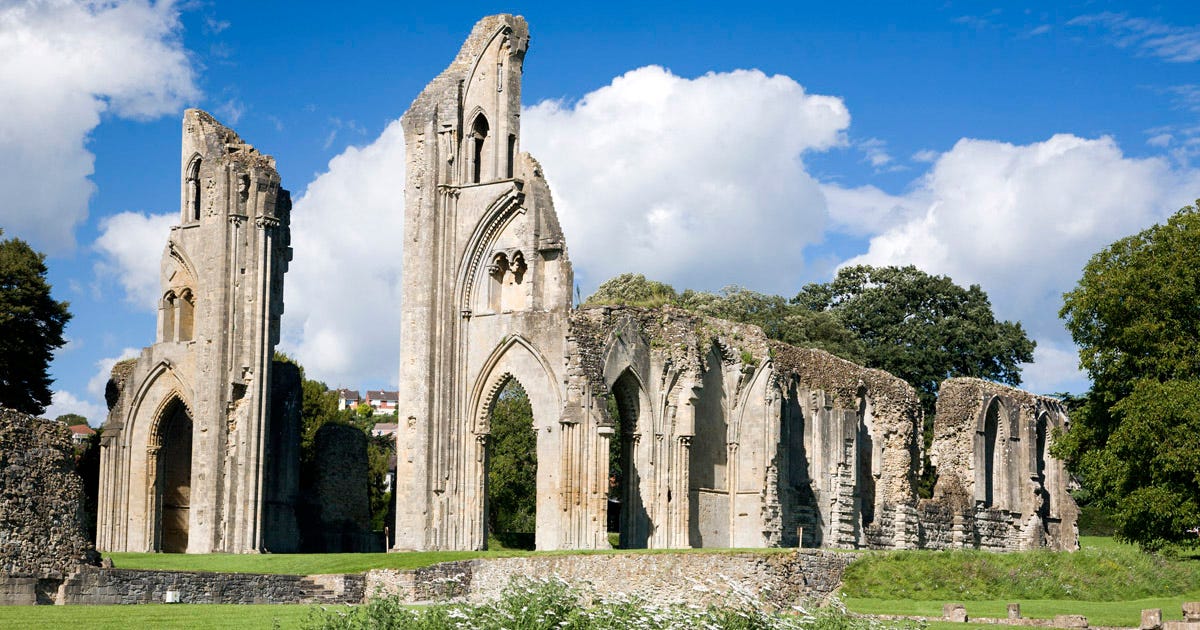
Ancient Glastonbury Abbey claims to be where Joseph founded Britain's first Christian church around 63 AD. Local legends speak of a young man from the East who walked the green hills of England, learning from the Druids who served as priests to the Celtic people.
The Druids believed in a coming Messiah they called "Yaesu." They taught about the soul, the afterlife, and humanity's connection to the divine. Their beliefs seemed almost... Christian.
Could God have been preparing the British Isles for the Gospel centuries before missionaries arrived? Did Jesus himself plant seeds of faith in ancient England during his lost years?
Academic skeptics dismiss these legends as medieval fantasy. Joseph of Arimathea's very existence is debated, and no archaeological evidence supports Jesus in Britain.
But sometimes the most profound truths hide in the stories people refuse to let die.
The Desert Scrolls: Jesus Among the Revolutionaries
In 1947, a Bedouin shepherd boy threw a rock into a cave near Qumran and heard something shatter. What he discovered changed our understanding of first-century Judaism forever: the Dead Sea Scrolls.
These ancient texts revealed the existence of the Essenes, a mysterious Jewish sect that had withdrawn to the wilderness to await the coming of the Messiah. They lived communally, practiced ritual baptisms, and called themselves the "Sons of Light," preparing for an apocalyptic war between good and evil.
Sound familiar?
John the Baptist preached in the wilderness. He baptized followers in the Jordan River. He proclaimed the coming Kingdom of Heaven. Many scholars believe John lived among the Essenes before beginning his public ministry.
And John baptized Jesus.
The connections run deeper. The Essenes criticized temple corruption. So did Jesus. They expected an imminent divine intervention. So did Jesus. They emphasized community, sharing possessions, and caring for the poor. So did early Christians.
One figure in the Dead Sea Scrolls stands out: a mysterious "Teacher of Righteousness" who would lead God's people in the final days. The description is tantalizingly vague, but the messianic implications are clear.
Could this teacher be Jesus himself?
There's one problem: The Essenes expected their Messiah to be a warrior who would violently overthrow Rome. Jesus preached peace and love for enemies. As one scholar notes, "Jesus could not accept the popular warrior-Messiah model. He stood against it."
But what if the Essenes weren't wrong... they were just premature? What if Jesus spent his lost years among them, learning that their warrior-Messiah prophecies were absolutely correct, but discovering through divine revelation that there would be two comings? The first time as the suffering servant, the Lamb of God who takes away the sins of the world. The second time as the Lion of Judah, the conquering King who will indeed wage war against evil and establish his eternal kingdom.
The Essenes expected one Messiah. Jesus understood he would fulfill both roles, but in God's perfect timing. The desert years may have been where the Prince of Peace learned he was also destined to be the Warrior King, just not yet.
The India Theory: Did Jesus Walk the Path of Buddha?
In 1887, a Russian journalist named Nicholas Notovitch made a claim that sent shockwaves through the Christian world. Deep in a Himalayan monastery, he discovered ancient manuscripts telling the story of "Issa," a young prophet from the West who traveled to India and Tibet, studied under Buddhist masters, then returned to Palestine to preach.
The timeline was perfect. The name "Issa" matched. But could it be true?
Consider the parallels between Jesus and Buddha that have puzzled scholars for centuries. Both were born of miraculous conceptions. Both preached love, nonviolence, and compassion for the poor. Both performed miracles of healing and feeding multitudes. Both taught that true wisdom comes through service and simplicity.
When Jesus said "Love thy neighbor as thyself," was he echoing Buddhist teachings of universal kindness that he learned in monastery courtyards half a world away?
The manuscripts Notovitch claimed to find have never been verified. But in the 1920s, a Hindu priest made similar claims about ancient texts describing Jesus in India. The evidence remains elusive, yet the theory persists because the philosophical connections are too compelling to ignore.
The Japan Theory: A Tale So Bold It Takes Your Breath Away
But if you think the India theory is extraordinary, wait until you hear about Japan.
Hidden in the remote mountains of northern Japan lies a small village called Shingō. To most of the world, it's unremarkable. But according to local legend and a controversial manuscript discovered in 1935, this quiet village holds the most shocking secret in Christian history: the tomb of Jesus Christ himself.
The story, as told by the Takeuchi manuscript and preserved by the Sawaguchi family, unfolds like an ancient thriller. At age 21, Jesus didn't begin his ministry. Instead, he journeyed to Japan to undergo twelve years of spiritual training, learning the divine mysteries of the East. He studied meditation, philosophy, and the deeper truths that would later inform his revolutionary teachings.
After this profound education, Jesus returned to Palestine at age 33 to share what he had learned. But the people rejected his message. They arrested him. They sentenced him to crucifixion.
Here's where the story takes an incredible turn: Jesus didn't die on the cross.
According to this Japanese tradition, his younger brother Isukiri voluntarily took his place, dying as a substitute while Jesus escaped. Through an elaborate plan, Jesus fled across Siberia, eventually reaching the northern shores of Japan where he settled in what is now Herai Village.
There, Jesus took the Japanese name Torai Tora Daitenku. He married a twenty-year-old woman named Miyuko and fathered three daughters. He lived peacefully for decades, sharing his wisdom with the local community, until his death at age 106. The Sawaguchi family claims direct lineage from Jesus through his eldest daughter, pointing to certain non-Japanese physical characteristics as evidence.
In Shingō village today, you can visit two burial mounds. One allegedly contains Jesus' body. The other holds a lock of his hair, representing his brother Isukiri who died in his place.
East Meets West: When Ancient Wisdom Converges
Whether in India or Japan, these Eastern theories share fascinating common elements. Both suggest Jesus spent his lost years learning from ancient wisdom traditions. Both emphasize his role as a student before becoming a teacher. Both show a Jesus who embraced the spiritual insights of other cultures.
But perhaps the most striking connection comes from an unexpected source: the ancient Chinese sage Lao Tzu and his timeless work, the Tao Te Ching.
Consider these remarkable parallels that have left scholars speechless:
On True Strength:
Lao Tzu: "The highest type of ruler is one who is barely known to exist... When his task is accomplished and things have been completed, all the people say, 'We ourselves have achieved it!'"
Jesus: "But many who are first will be last, and the last will be first." (Matthew 19:30)
On Humility and Leadership:
Lao Tzu: "The reason why rivers and seas are able to be kings of all the valleys is that they are skilled in taking the lower position."
Jesus: "Whoever wants to become great among you must be your servant, and whoever wants to be first must be slave of all." (Mark 10:43-44)
On Non-Resistance:
Lao Tzu: "The soft overcomes the hard; the gentle overcomes the rigid."
Jesus: "But I tell you, do not resist an evil person. If anyone slaps you on the right cheek, turn to them the other cheek also." (Matthew 5:39)
On the Power of Water:
Lao Tzu: "Nothing in the world is softer than water, yet nothing is better at overcoming the hard and strong."
Jesus: "Whoever believes in me, as Scripture has said, rivers of living water will flow from within them." (John 7:38)
The similarities are breathtaking. Both taught that true power comes through yielding, that the greatest leaders serve others, that gentleness conquers violence, and that the way of heaven flows like water, finding the lowest places and nourishing everything it touches.
These aren't mere coincidences. They represent a profound spiritual truth that transcends cultural boundaries.
The implications are staggering. What if Christ's revolutionary teachings weren't just Jewish prophecy fulfilled, but the culmination of humanity's deepest spiritual insights? What if the Prince of Peace learned from the ancient Chinese understanding of the Tao, the Way that flows through all things?
For those captivated by these profound connections between Christ's teachings and ancient Eastern wisdom, this intersection of divine truth deserves deeper exploration. The harmony between the Gospel message and the Tao reveals layers of meaning that can transform how we understand both faith traditions.
Could there be truth in this pattern, even if the specific details remain unverifiable?
The Mystery That Defines Us
Why does this gap in the biblical record fascinate us so deeply? Perhaps because it mirrors our own spiritual journey. We all have lost years, times when we wandered in wilderness, searched for truth, struggled with doubt and discovery.
Jesus vanished for eighteen years and reappeared with a message that changed everything. In that silence, we find space for wonder. In that mystery, we discover that even the Son of God had to grow, learn, and become who he was destined to be.
Every generation reinvents Jesus through new theories, archaeological discoveries, and spiritual insights. We see him through our own lens because the Gospels left room for us to do so. The lost years aren't just about his story... they're about ours.
The Secret Chapter We'll Never Read
The truth about Jesus' lost years may remain forever hidden. Whether he studied with Buddhist monks in the Himalayas, walked the green hills of ancient Britain, prayed with desert mystics at Qumran, learned from the eternal Tao that flows through all things, or simply worked as a carpenter in Nazareth, one thing is certain: those eighteen silent years shaped the man who would transform the world.
Perhaps that's the point. Perhaps the mystery itself is part of the divine plan.
In our age of instant information and documented everything, the lost years remind us that some truths transcend facts. Some stories are bigger than history. Some silences speak louder than words.
The power of Jesus lies not just in what we know about him, but in what we don't. In that sacred space between childhood and ministry, between question and answer, between human and divine, we find room for faith.
And faith, after all, is what transforms ordinary people into world-changers.
Get Our New Book on Christ Absolutely Free ($19.99 Value)
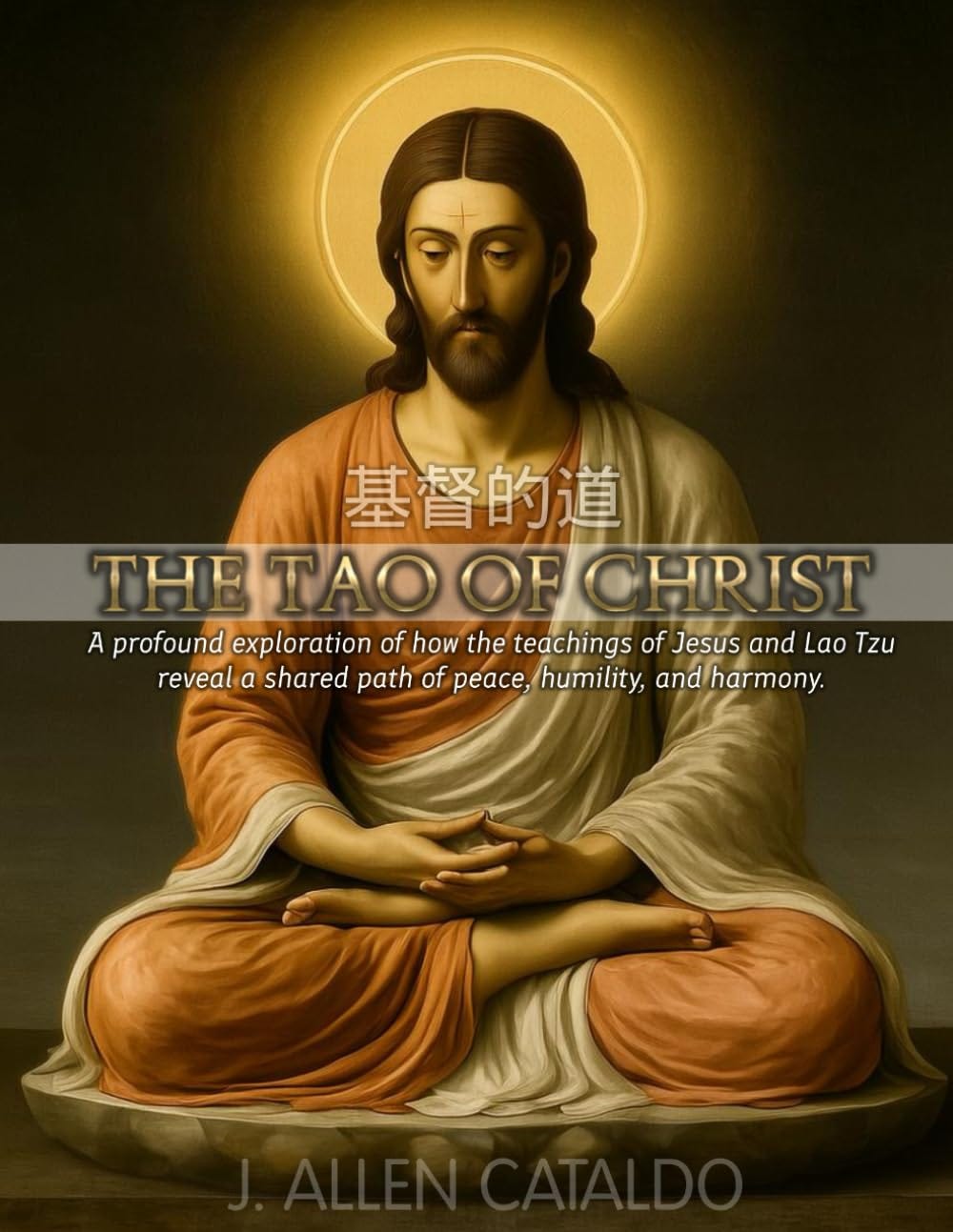
The mystery of Jesus' lost years has captivated believers for centuries. If this exploration has stirred your heart, you've touched something profound. These conversations matter and deserve to be shared. Because the connections between Christ's teachings and the ancient Tao Te Ching are so remarkable, we've written a new book exploring these parallels in depth. Share this article and I'll send you a free digital copy of "The Tao of Christ."
I’m just going to keep believing that he was a good kid helping with his “father’s” carpentry business until Joseph died. And then sometime after that, his younger brothers took over from Him and he began preparing for His ministry.
Krishna devotees speculate that Jesus' lost years were spent in India. I find that more credible than England or Japan.
Whatever, the more theology I read, the less I think I know for certain, and the less regard I have for those who shout out 'absolute truth'.
For me, spiritual truth has to align with both logic and the Golden Rule. Thus, I accept the Bhagavad Gita's basic premises of reincarnation, karma and God's ever presence as Brahman/ Holy Spirit.
I don't see Vaishnavism taking over the West any time soon however, thus align locally with Christianity really as a vehicle for spirituality rather than a deep seated belief, although I pray to Christ as I do to Krishna/ God.