
The American Pope: The “Last" Pope Foretold by St. Malachi — Or Just Another Man in a Long Line of Silence?
The next Pope® was just elected - who is he and what does he have to hide?

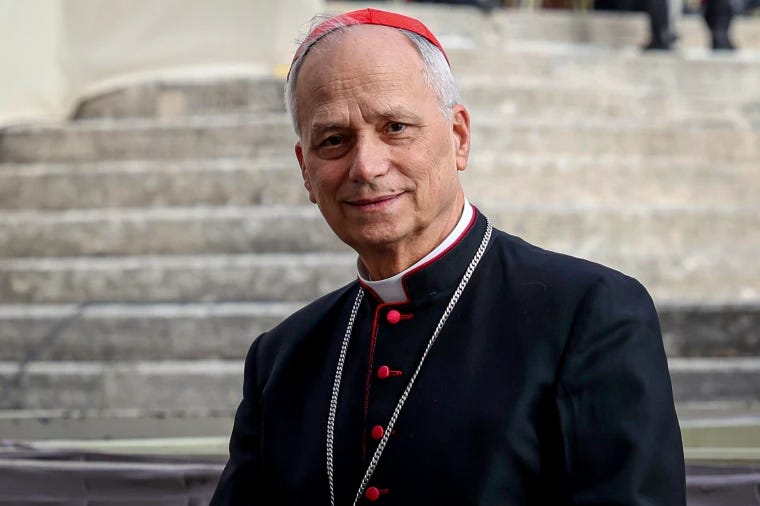
VATICAN CITY — As the bells of St. Peter’s tolled into the twilight sky, Cardinal Robert Francis Prevost , the former Cardinal of Chicago and Bishop of Chiclayo, Peru, stepped onto the balcony of St. Peter’s Basilica.
He is now Pope Leo XIV — the first American pope in history.
But for millions of Catholics who believe in the ancient prophecy attributed to St. Malachi , this moment may be more than historic.
It may be apocalyptic.
Because according to a centuries-old vision said to have been given to the 12th-century Irish archbishop, we may now be witnessing the reign of the very last pope before the end of the world .
The Prophecy That Won’t Die
In 1595, a book titled Lignum Vitae was published in Dublin. Inside it was a list of 112 popes , each described by a short Latin motto. The final one reads:
“Petrus Romanus” ("Peter the Roman")
"In the final persecution of the Holy Roman Church, there will reign Peter the Roman, who will feed his flock amid many tribulations; after which the city of seven hills will be destroyed, and the dreadful Judge will judge His people."
If you accept the prophecy — and many devout Catholics do — then Pope Leo XIV is not just another pope .
He is the last .

And he steps into office at a time when the world feels like it’s coming apart.
War in Ukraine. Climate collapse. Mass migration. Economic instability. And inside the Vatican: financial corruption, internal power struggles, and decades of unresolved sex abuse scandals.
Coincidence?
Or sign?
Who Is Pope Leo XIV?
Born in Chicago in 1955, Robert Prevost entered the Augustinian order and spent much of his early career in Peru , where he served as Bishop of Chiclayo from 2001 to 2011 .
Chiclayo is a remote diocese in northern Peru — poor, rural, and historically underserved. It is also part of a region where reports of clergy sexual abuse began to surface during Prevost’s tenure.
While no direct allegations have ever been made against Prevost himself , the broader Peruvian Church has faced scrutiny for systemic failures to protect victims and hold abusers accountable.
In 2016 , La República , one of Peru’s leading newspapers, published an investigative series titled "Silencio en los Andes" (Silence in the Andes ) documenting how bishops in several regions — including Chiclayo — handled abuse cases internally without reporting to civil authorities.
From La República (April 2016):
“The Church often responded with silence or internal reprimands rather than legal action… victims were told to forgive.”
Prevost himself was never named directly in the report. But as bishop of the region during those years, he oversaw a system that allowed such patterns to persist.
“Just because someone wasn’t accused doesn’t mean they weren’t responsible,” said María Elena Salinas , a human rights advocate who works with survivors of clergy abuse across Latin America. “Leadership means accountability — even for what happens in your name.”
After serving in Peru, Prevost returned to the U.S., where he became Archbishop of Chicago in 2012 — one of the most influential sees in the country.
He was elevated to cardinal by Pope Francis in 2023 , and now, he leads the entire Catholic world.
Behind Closed Doors: The Conclave No One Saw
The conclave that elected Prevost was held behind locked doors in the Sistine Chapel — phones confiscated, oaths sworn, no press allowed.
Yet somehow, rumors always leak.
Who made deals? Who bowed to pressure? Who threatened whom?
We don’t know.
Because the only people who do are bound by a sacred oath of silence.
That is not democracy.
That is not accountability.
That is not what the faithful deserve.
The Name Game: Leo XIV — What Does It Mean?
Choosing Leo is not random.
Pope Leo XIII (1878–1903) was a staunch defender of papal authority, centralized control, and theological conservatism. He opposed modernism, supported monarchies, and reinforced Vatican influence over global Catholic life.
By taking that name, Pope Leo XIV may be signaling a return to rigid doctrine, hierarchical discipline, and doctrinal clarity — or even a consolidation of power.
Or perhaps, like his namesake, he intends to use the papacy as a political force.
Either way, the name choice matters.
Because in the Catholic Church, names are symbols .
And sometimes, they’re warnings.
Final Pope or Final Illusion?
There is no verified evidence that Pope Leo XIV is involved in misconduct, cover-ups, or corruption.
But that’s not the point.
The point is that he rises to power at a time when the Church desperately needs transparency — and instead, it offers ritual.
At a time when victims need justice — and instead, they get silence.
At a time when the faithful need reform — and instead, they get continuity.
So whether or not you believe in the Malachi prophecy, one thing is clear:
The age of the old Church is ending.
And this may be the last time the world sees a pope like this.
Not because of divine judgment.
But because the institution itself can no longer survive on faith alone.
Sources:
Official Vatican announcement of Pope Leo XIV
Biography of Cardinal Robert Prevost via Vatican News
La República – "Silencio en los Andes"
Illinois Attorney General Report on Clergy Abuse (2023)
Red Latinoamericana de Sobrevivientes del Clero


I don’t see where he was ever the archbishop of Chicago.