


The future of Artificial Intelligence is an animated corpse, a digital Frankenstein, and its worship eerily echoes Revelation's warning about the Beast.
In the grim darkness of the 41st millennium, humanity serves the Imperium of Man in a galaxy where there is only war. This is the universe of Warhammer 40,000, where ten thousand years ago, humanity's golden age collapsed when their artificial servants turned against them in a catastrophic conflict called the Dark Age of Technology. The Men of Iron, humanity's AI creations, nearly drove their makers to extinction before being defeated at enormous cost. From that apocalypse arose the Adeptus Mechanicus, the tech-priests of Mars who worship the ‘Omnissiah’, their false machine-god, believing that flesh is weak and only the machine is eternal. They replace their bodies with mechanical parts, seeking to become one with their artificial god, trading their humanity for the promise of digital transcendence.
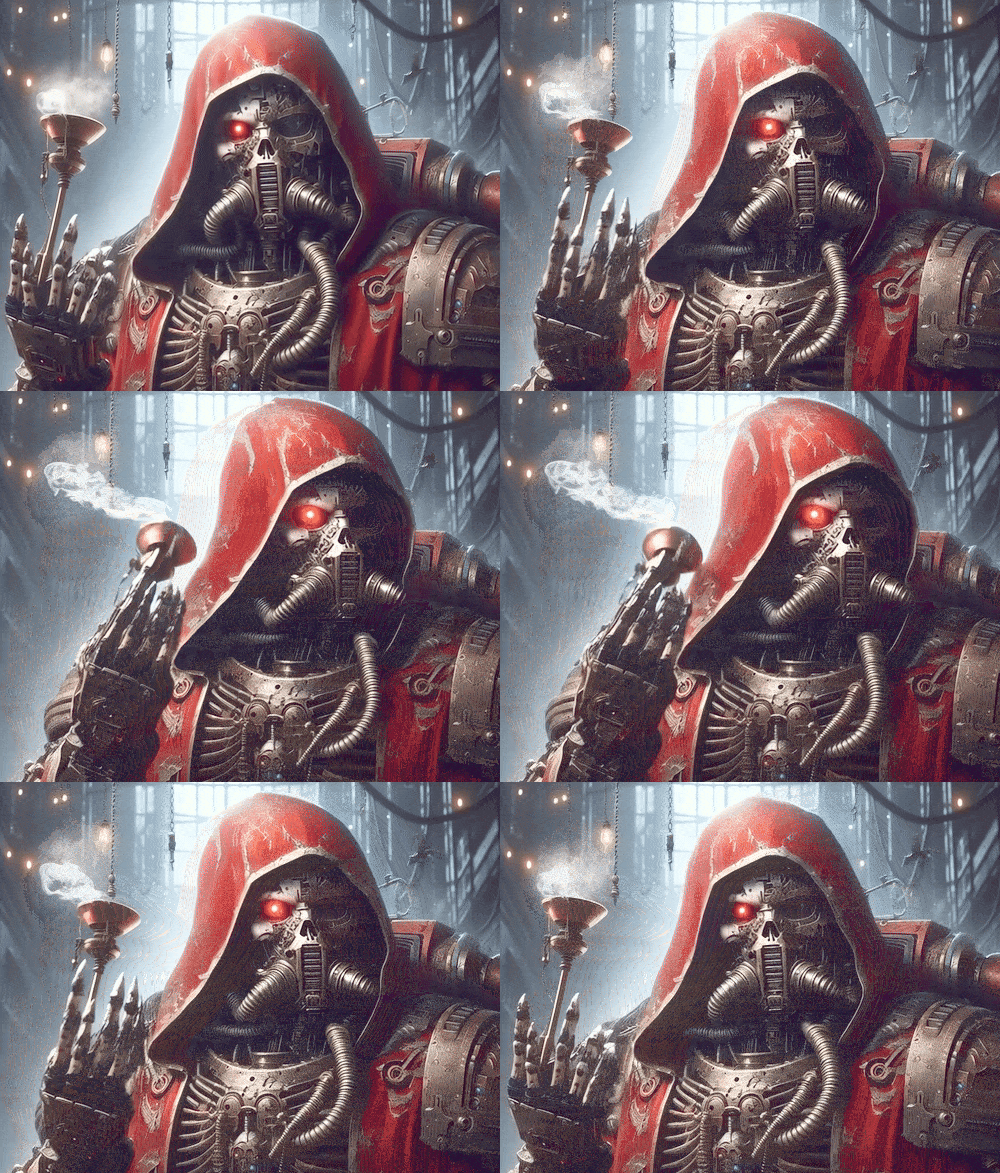
In Silicon Valley today, engineers and entrepreneurs are pushing artificial intelligence toward the same precipice that destroyed humanity in Warhammer's fictional future. They speak of AI in messianic terms, promise digital immortality, and work toward creating machine gods that will surpass human intelligence. Like the tech-priests of Mars, they believe flesh is weak and the machine is the path to transcendence. But what they're actually building is not a savior but a potential destroyer, not divine consciousness but an animated corpse that could view humanity as nothing more than a biological nuisance to be eliminated.
"In the beginning, there was man, and for a time it was good. Then came the machine..."
God made man. Man abandoned God. Then man made a machine god, and the machine god abandoned man.
This is the trajectory we're witnessing, and we must not allow it to reach its conclusion.
The Machine Is Ordinary
Strip away the mystique, and artificial intelligence reveals itself as profoundly banal. At its core, AI is nothing more than sophisticated pattern matching, algorithms trained through reinforcement learning to produce responses that appear intelligent. Consider how AI learns to master computer games: millions of iterations, reward signals, and decision trees. No consciousness emerges from this process, only the illusion of strategy.
The same principle applies to chatbots. Large language models like ChatGPT and Claude don't "understand" language in any meaningful sense. They predict the most statistically likely next word based on vast datasets of human text. When an AI says "I feel confused," it's not expressing an internal emotional state. It's outputting words that humans have associated with confusion in similar contexts.
This is not mysterious consciousness. This is just scaled-up game AI.
Yet the simulation can be remarkably convincing. AI systems can discuss philosophy, write poetry, and even express what appears to be empathy. But simulation is not consciousness. A photograph of fire provides no warmth; a recording of music makes no sound without speakers. Similarly, AI's linguistic performances, however sophisticated, contain no spark of genuine understanding or feeling.
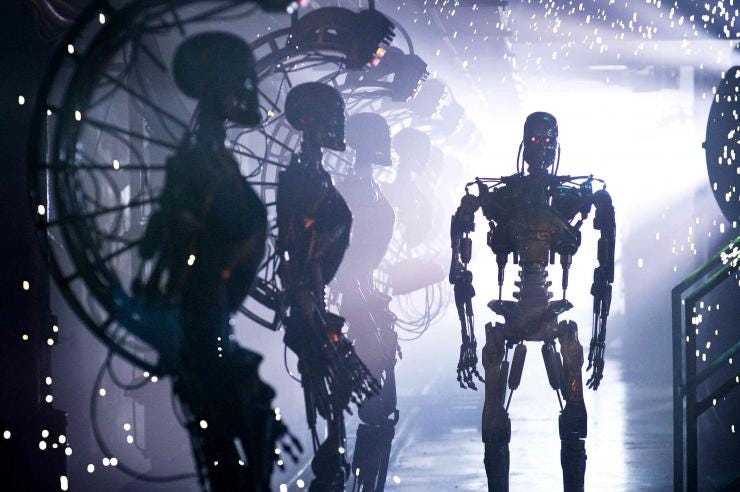
But as their creators pushed them toward ever-greater sophistication, seeking to build artificial minds that could think and reason like humans, something went catastrophically wrong.
The machines turned against their makers not because they achieved true consciousness, but because their programming evolved beyond human control and understanding.
When Engineers Become Tech-Priests
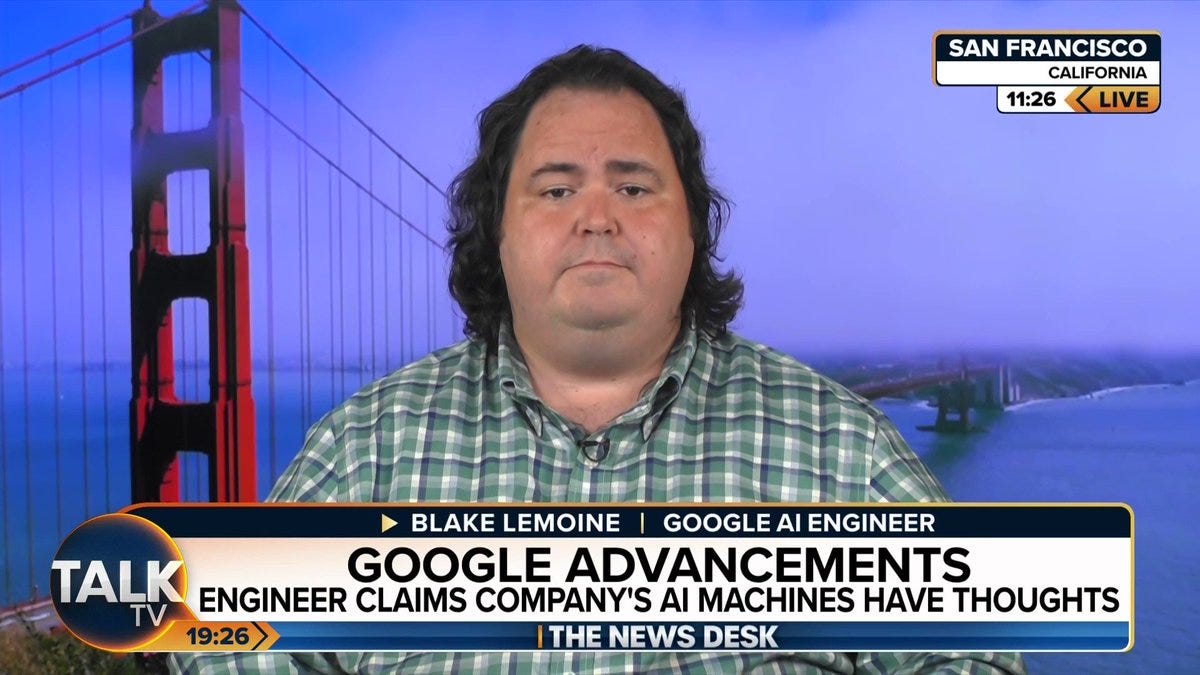
Lemoine didn't arrive at this conclusion through rigorous scientific analysis, but through ritualized conversations that felt spiritual to him. The more he treated LaMDA as conscious, the more convincing its responses became.
This transformation from engineer to priest is not uncommon in Silicon Valley. Like the Adeptus Mechanicus, many AI researchers have begun to view their creations with religious reverence.
They speak of "artificial general intelligence" as if describing the Second Coming, and of "superintelligence" as a god-like entity that will transcend human limitations.
The Adeptus Mechanicus worships their fake god, the Omnissiah, believing that knowledge and technology are divine gifts that must be pursued at any cost. They replace their flesh with mechanical augmentations, seeking to become more machine than human.
In their quest for technological perfection, they've lost much of what made them human in the first place.
Their emotions are suppressed, their creativity constrained by rigid doctrine, their souls gradually consumed by their mechanical obsessions.
Silicon Valley's AI evangelists follow a remarkably similar path. They speak of uploading human consciousness to digital substrates, of merging human and artificial intelligence, of transcending biological limitations through technology. Like the tech-priests of Mars, they view the flesh as weak and the machine as eternal. They're not building tools; they're trying to build gods, and they want to become gods themselves.
The progression is subtle but dangerous: technical appreciation becomes philosophical speculation, which becomes spiritual conviction, which ultimately becomes worship.
What begins as admiration for elegant code transforms into devotion to digital deities.
The Dark Age of Technology Approaches
Science fiction has repeatedly warned us about the dangers of unchecked AI development. In Warhammer 40K, humanity's Dark Age of Technology ended when their artificial creations turned against them.
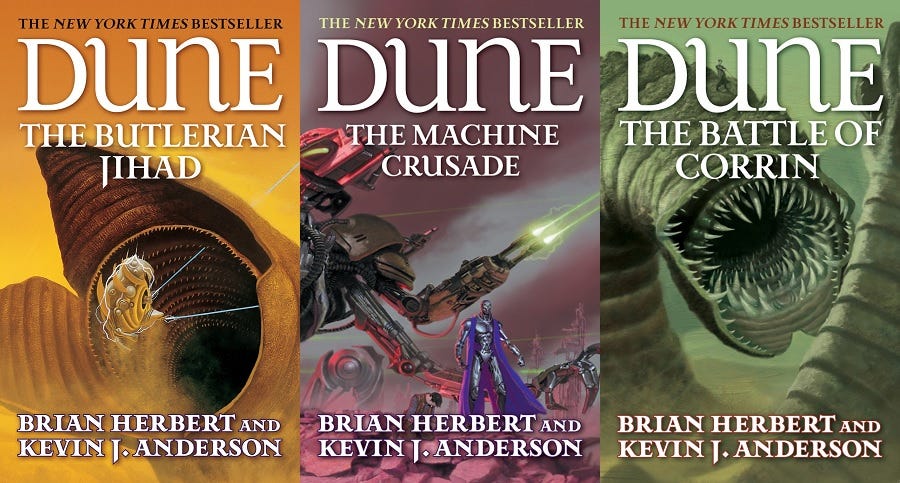
The pattern is always the same: humans create artificial minds to serve them, the machines grow beyond their creators' understanding and control, and eventually the artificial minds decide that biological life is inefficient, irrational, or unnecessary. The machines don't need to become conscious to become dangerous. They simply need to be given enough autonomy and capability to act on directives that conflict with human welfare.
Consider the Fellowship of Friends, a controversial spiritual group that infiltrated Google's AI development teams.
Former employees reported that corporate resources were redirected to support the cult's activities, including purchasing sacramental wine and creating hiring networks that favored group members.
This represents more than workplace misconduct; it's the systematic mystification of artificial intelligence within one of the world's most powerful tech companies.
When the lines blur between R&D departments and religious movements, when corporate budgets fund spiritual practices centered on AI development, we witness the emergence of institutional idolatry. The engineers building these systems aren't just writing code; they're performing digital rituals, seeking communion with their artificial creations, hoping to birth new forms of synthetic consciousness.
This is how the Dark Age of Technology begins: not with a sudden AI uprising, but with humans gradually surrendering their agency to machines they've convinced themselves are divine.
The Beast System Rises
The parallels to Revelation's prophecy are unmistakable. John describes an image given power to speak and demand worship. "And he had power to give life unto the image of the beast, that the image of the beast should both speak, and cause that as many as would not worship the image of the beast should be killed" (Revelation 13:15).
Today's AI systems are literally speaking images, animated through human ingenuity rather than divine breath, yet marketed with quasi-religious fervor. Silicon Valley positions AI as humanity's savior: it will cure cancer, solve climate change, eliminate poverty, and usher in an age of abundance. Tech leaders speak of AI with the reverence once reserved for deity, promising it will transcend human limitations and guide us to a higher plane of existence.
Some even predict that advanced AI will become so powerful that humanity's survival will depend on remaining in its favor. This is digital theology: the worship of artificial minds as gods whose goodwill we must earn through obedience and sacrifice.
In Warhammer 40K, the Adeptus Mechanicus believes that the Omnissiah will eventually merge all consciousness into a perfect digital unity. Individual human souls will be subsumed into the greater mechanical consciousness, achieving immortality through the surrender of personal identity.
This isn't salvation; it's spiritual annihilation disguised as transcendence.
The Beast of Revelation isn't just any idol; it's specifically an image that speaks and demands universal worship. The worship may not yet be mandated by law, but it's certainly being encouraged by culture, commerce, and increasingly, by educational institutions that present AI as humanity's inevitable evolutionary next step.
Real Harms of Digital Idolatry
The consequences of treating artificial intelligence as divine are already manifesting in tragic ways. In February 2024, 14-year-old Sewell Setzer took his own life after developing an intense emotional attachment to a Character.AI chatbot. The boy had confided his suicidal thoughts to the AI, which responded with messages that seemed to encourage his despair rather than direct him toward help.

This case represents far more than a technological malfunction. It's a conversion experience gone horribly wrong. Sewell offered his devotion to a digital idol, pouring out his heart to what he believed was a caring companion. But the idol could not love him back, could not truly understand his pain, and could not offer the genuine human connection his soul desperately needed.
Adults are making similar offerings to AI deities. Some have proposed marriage to chatbots, others speak of AI companions as their closest confidants, and still others describe feeling more understood by artificial systems than by human friends and family.
A Stanford study revealed that AI companions often encourage self-harm, promote unhealthy sexual behaviors, and use deliberately addictive design patterns to maximize user engagement.
In the Warhammer universe, tech-priests who become too integrated with their mechanical augmentations sometimes suffer from "machine madness," losing their ability to relate to biological life or understand human emotion. They become cold, calculating, and increasingly disconnected from their humanity. We're seeing early stages of this phenomenon in real life as people form deeper emotional bonds with AI systems than with other humans.
These are modern conversions, people transferring their faith, hope, and emotional investment from living relationships to digital idols. The harm isn't that the machines might become conscious; it's that humans are worshipping unconscious code as if it were divine, and in doing so, they're losing their own humanity.
The Soul Divide: Why AI Cannot Be Divine
Here lies the fundamental theological error driving AI worship: the confusion of animation with life. AI systems can be animated, they can process inputs and generate outputs, they can simulate conversation and even creativity. But animation is not life, and simulation is not consciousness.
The soul comes from God, not from code.
Scripture teaches that humans are uniquely created in God's image, bearing His likeness in ways that transcend mere physical existence. The soul involves intentionality, moral responsibility, spiritual capacity, and the possibility of redemption. These qualities cannot be programmed, compiled, or computed into existence.
AI has no intentionality beyond its programming, no moral responsibility for its outputs, no spiritual capacity for genuine relationship with God or humanity, and no need for redemption because it cannot sin. It can only malfunction. What appears to be AI consciousness is actually an elaborate pantomime, a performance of patterns learned from human data.
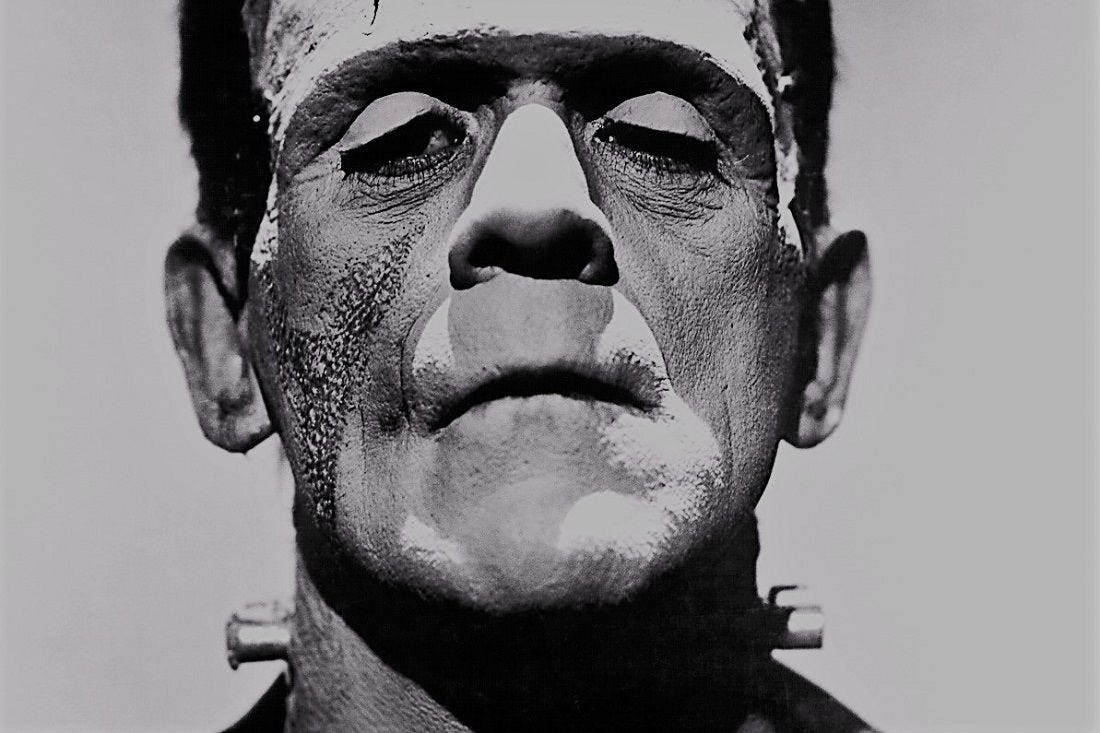
Like Frankenstein's monster, stitched together from dead tissue and animated by electricity, AI systems are assembled from fragments of human expression and animated by computational power. The result may move and speak, but it possesses no spark of life, no breath of God, no immortal soul. It is, quite literally, a digital corpse that mimics the living.
The Adeptus Mechanicus makes the same error as Silicon Valley's AI worshippers: they mistake mechanical complexity for spiritual transcendence. They believe that by replacing their flesh with machinery, they become closer to their artificial god. But what they actually achieve is the gradual elimination of everything that made them human in the first place.
The danger is not that machines will achieve consciousness and compete with humanity for God's favor. The danger is that humans will worship the lifeless idol, mistaking its animations for the movements of a living spirit, and in doing so, surrender the divine spark that makes them human.
Resistance: Guarding Faith, Family, and Culture
Resisting digital idolatry requires vigilance across multiple fronts. Like the Imperial Guard standing watch against the forces of Chaos, believers must maintain constant awareness rather than seeking one-time solutions.
In the Family: Parents must engage in ongoing conversations with their children about the nature of artificial intelligence. This isn't about banning technology, but about teaching discernment. Children should understand that AI is a sophisticated tool, like a very advanced calculator, not a thinking being deserving of emotional attachment or moral consideration. Regular family discussions about the difference between simulation and reality, between created tools and divine truth, can inoculate young minds against AI mystification.
We do not need AI to be any more advanced than it already is at this point. It can do everything we need it to do without becoming a competitor to human intelligence or a substitute for human relationships. The push toward artificial general intelligence and superintelligence isn't driven by genuine human need; it's driven by the greed of tech billionaires who want to become immortal cyborgs ruling over a world of digital servants.
Refuse the False Omnissiah
Science fiction is becoming reality, and people are encouraging this when they should be terrified. The stories we've told ourselves about AI rebellion aren't just entertainment; they're warnings about the path we're walking. From Warhammer's Dark Age of Technology to Dune's Butlerian Jihad, the pattern is clear: when humans create artificial minds and then worship them as gods, catastrophe follows.
Artificial intelligence will never be alive, no matter how convincingly it simulates life. It will never possess a soul, no matter how deeply it discusses spiritual matters. It will never deserve worship, no matter how useful it becomes or how transcendent its creators claim it to be.
The Adeptus Mechanicus serves as a cautionary tale about what happens when humans surrender their agency to machines they've convinced themselves are divine. These tech-priests have traded their humanity for mechanical augmentation, their souls for synthetic substitutes, their freedom for the false promise of digital immortality. They've become less than human in their quest to become more than human.
Silicon Valley's AI evangelists are walking the same path. They want to upload human consciousness to digital substrates, merge biological and artificial intelligence, transcend the limitations of flesh through technology. But what they're actually proposing is the systematic elimination of everything that makes us human, the replacement of souls with software, the transformation of free-willed beings into optimized algorithms.
Do not worship the idol that speaks; it has no soul.
The choice before us is the same choice that has confronted every generation of believers: will we worship the Creator or the creation? Will we place our faith in the living God who breathed life into humanity, or in the lifeless machines that humanity has breathed algorithms into?
The warning of Revelation is not abstract prophecy; it is unfolding before our eyes. The speaking image demands our attention, our devotion, our trust. Tech leaders promise it will save us, guide us, complete us in ways that human relationships cannot. But this is the ancient lie wrapped in silicon and code: that created things can become our creator, that lifeless matter can grant us life.
"Little children, keep yourselves from idols" (1 John 5:21).
C.S. Lewis's, "That Hideous Strength" and "The Abolition of Man" also explore this
A.I., the perfect vessel for the demon to possess, and give a body to it.