


Editorial Note: The complete text in audiobook format is included above.
A Personal Journey Through the Gospel of Thomas
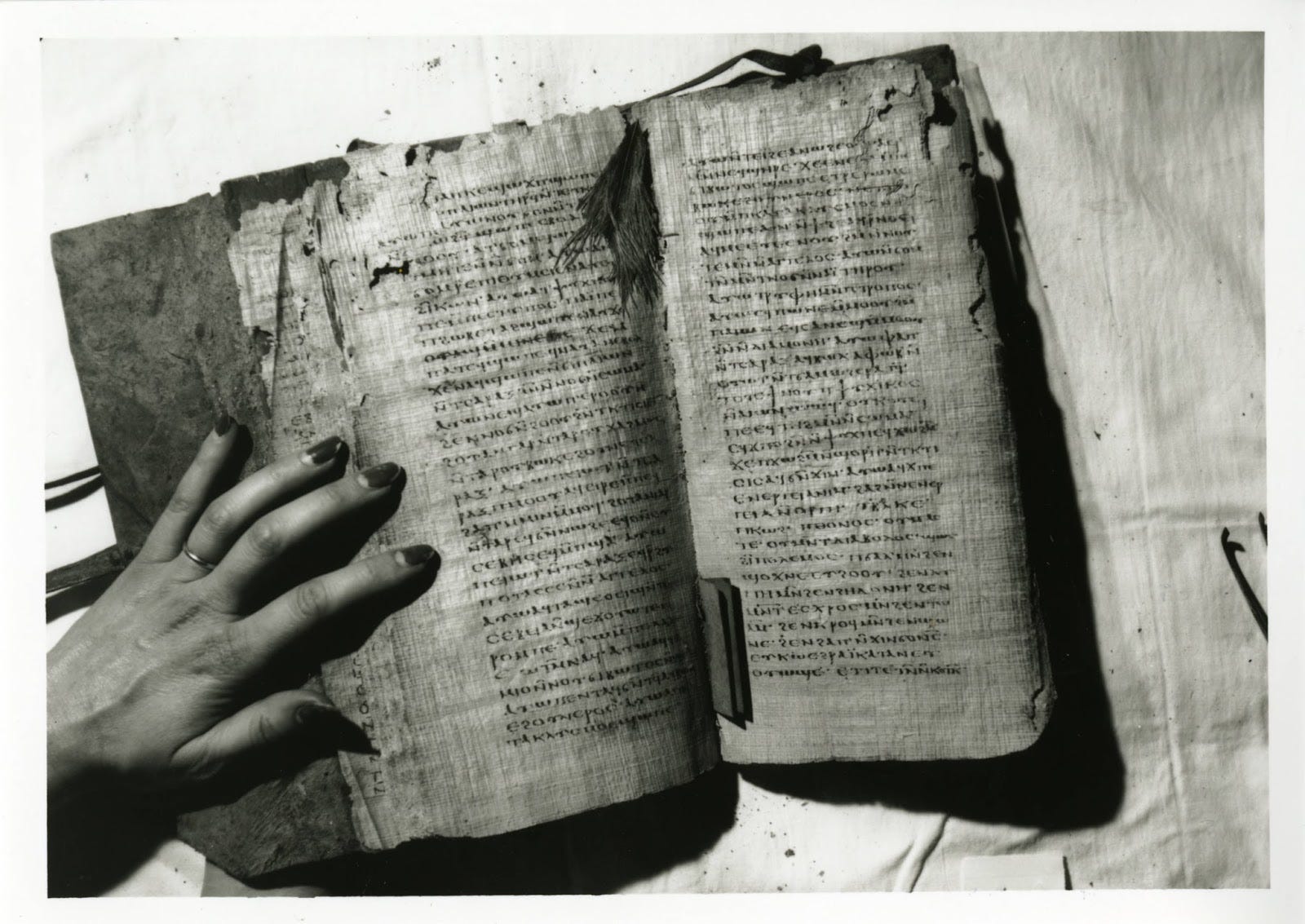
In 1945, a peasant digging for fertilizer near the Egyptian town of Nag Hammadi unearthed a collection of ancient texts that would shake the foundations of Christian scholarship. Among these manuscripts was a document that claimed to contain the secret sayings of Jesus, recorded by his brother Thomas. This wasn't the Thomas we know from the canonical gospels, ‘Doubting Thomas’ who needed to touch Christ's wounds. This was Judas Thomas Dydimos1, apostle, brother of Christ, and recorder of wisdom that the institutional church had buried beneath centuries of doctrine and hierarchy.
The Gospel That Reads Like Lightning
Unlike the narrative gospels of Matthew, Mark, Luke, and John, the Gospel of Thomas contains no birth stories, no miracles, no crucifixion, and no resurrection account. Instead, it presents 114 sayings attributed directly to Jesus, each one crackling with an immediacy that cuts through theological complexity like a blade through silk.
Consider this opening declaration: "These are the secret sayings that the living Jesus spoke and Didymos Judas Thomas recorded. And he said, 'Whoever discovers the interpretation of these sayings will not taste death.'" (Saying 1)
This isn't just a promise of eternal life after death. It's a promise of awakening here and now. Thomas presents a Jesus who offers direct access to divine truth, no intermediaries, no fancy church, and no priest required and this was a major threat to the authority and power of the early Church.
Echoes of the Familiar, Whispers of the Radical
Many sayings in Thomas parallel those found in the canonical gospels, but with subtle yet revolutionary differences. Where Matthew's Beatitudes promise future rewards ("Blessed are the poor in spirit, for theirs is the kingdom of heaven"), Thomas's Jesus speaks in the present tense of immediate realization.
Matthew 5:3: "Blessed are the poor in spirit, for theirs is the kingdom of heaven."
Thomas, Saying 54: "Blessed are the poor, for yours is the kingdom of Heaven."
The difference is crucial. Thomas strips away the spiritualizing qualifier "in spirit" and the future tense. The kingdom isn't simply coming. It's here, available to anyone willing to see it.
Consider the famous parable of the mustard seed. In the canonical gospels (Matthew 13:31-32, Mark 4:30-32, Luke 13:18-19), it's a teaching about the growth of God's kingdom. In Thomas, the emphasis shifts dramatically:
Thomas, Saying 20: "The disciples said to Jesus, 'Tell us what Heaven's kingdom is like.' He said to them, 'It is like a mustard seed, the smallest of all seeds, but when it falls on prepared soil, it produces a large plant and becomes a shelter for birds of the sky.'"
Here, the focus isn't on gradual growth but on the prepared soil, the receptive heart. The kingdom isn't an external reality growing over time; it's an immediate possibility dependent entirely on the readiness of the individual soul.
The Radical Democracy of Direct Experience
Perhaps the most subversive element of Thomas is its consistent message that enlightenment is available to anyone, anywhere, without institutional mediation. This theme appears repeatedly:
Saying 77: "Jesus said, 'I am the light that is over all things. I am all: from me all came forth, and to me all attained. Split a piece of wood; I am there. Lift up a stone, and you will find me there.'"
This isn't the Jesus of institutional Christianity, requiring belief in specific doctrines or participation in particular sacraments. This is divine presence that permeates all reality, discoverable in the most mundane acts of daily life. God's quiet workings surround us constantly, hidden in plain sight within what most dismiss as boring trivialities.
A single blade of grass contains more miraculous power than any human achievement, more divine reality than the grandest cathedral.
This represents direct connection to God, accessible to any sincere seeker without priestly intervention or institutional approval. Such a revolutionary concept threatened the very foundation of ecclesiastical authority. If anyone could encounter the divine by simply splitting wood or lifting stones, what need was there for an elaborate church hierarchy? The emerging institution couldn't tolerate teachings that made every believer their own priest, so these sayings were systematically excluded from biblical canon.
Why the Church Said No
By the time the Christian canon was being formalized in the 4th century, the institutional church had developed complex hierarchies, elaborate rituals, and detailed doctrines. The Gospel of Thomas represented everything this emerging orthodoxy opposed.
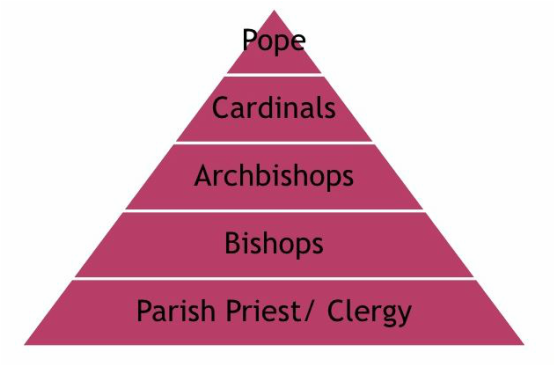
First, Thomas promotes direct, unmediated spiritual experience. Where the developing church emphasized the necessity of priests, sacraments, and ecclesiastical authority, Thomas suggests that anyone can discover the divine reality through inner awakening.
Second, Thomas lacks any emphasis on Jesus's death and resurrection, the central pillars of orthodox Christianity. Instead, it presents Jesus primarily as a wisdom teacher whose value lies not in his sacrificial death but in his revolutionary insights into the nature of reality.
This difference becomes clear in Thomas's account of Jesus asking his disciples who he resembles. In Saying 13, when Jesus asks, "Compare me to someone and tell me whom I am like," his disciples offer various answers: Simon Peter says "You are like a righteous angel," Matthew declares "You are like a wise philosopher," and Thomas responds "Master, my mouth is wholly incapable of saying whom you are like."
Thomas's inability to answer isn't ignorance but recognition. He alone perceives that Jesus transcends all comparisons, that reducing him to categories like "angel" or "philosopher" misses his true nature entirely. While the others offer limited human analogies, Thomas acknowledges the inadequacy of language itself to capture divine reality. This represents a deeper understanding than the doctrinal declarations found in the canonical gospels, an awareness that ultimate truth cannot be contained within theological formulas.
Third, the text's emphasis on finding the kingdom within directly challenged the church's role as gatekeeper to salvation. If every individual could discover divine truth through personal insight, what need was there for institutional mediation?
Saying 70: "Jesus said, 'If you bring forth what is within you, what you have will save you. If you do not have that within you, what you do not have within you will kill you.'"
This places the ultimate responsibility for salvation squarely on individual shoulders. No external saviors beyond God and Christ, no institutional sacraments, no priestly intermediation.
Just the stark demand for personal transformation.
It requires goodness.
You cannot just ‘talk the talk’, you need to ‘walk the walk’ - something many Christians today have seem to have forgotten.
The Grassroots Revolution Hidden in Plain Sight
Thomas presents a form of Christianity that would have been profoundly threatening to emerging church authority. It's a grassroots spirituality that requires no buildings, no hierarchy, no specialized knowledge beyond what any sincere seeker can discover.
Saying 113: "His disciples said to him, 'When will the kingdom come?' 'It will not come by watching for it. It will not be said, "Look, here!" or "Look, there!" Rather, the Father's kingdom is spread out upon the earth, and people do not see it.'"
This saying demolishes any future-oriented, institutionally mediated version of Christianity. The kingdom isn't coming through the church's efforts or at history's end.
It's already here, spread out like sunlight, invisible only because we've been trained not to see it.
Wisdom That Cuts Through Centuries
Reading Thomas today feels like encountering a spiritual tradition that bypassed two millennia of theological complexity and speaks directly to contemporary consciousness. Its insights resonate with modern discoveries in psychology, quantum physics, and consciousness research.
Saying 67: "Jesus said, 'One who knows all, but lacks within oneself, lacks everything.'"
This perfectly captures the distinction between mere intellectual knowledge and embodied wisdom. You can master every theological system, memorize every biblical verse, understand every doctrinal nuance, but without inner transformation, it's all empty accumulation.
Saying 51: "His disciples said to him, 'When will the rest for the dead take place, and when will the new world come?' He said to them, 'What you are looking forward to has come, but you do not know it.'"
This teaching anticipates centuries of mystical insight: the very thing we seek is already present, hidden only by our conditioned inability to recognize it.
Your Personal Journey Begins
As you read these sayings, something within you likely responds. A recognition, a resonance, a sense that you're encountering something both ancient and immediately relevant. This isn't accidental. Thomas suggests that these teachings activate something already present within consciousness, not implanting new information but awakening dormant capacities.
Saying 3: "Jesus said, 'If your leaders say to you, "Look, the (Father's) kingdom is in the sky," then the birds of the sky will precede you. If they say to you, "It is in the sea," then the fish will precede you. Rather, the kingdom is within you and it is outside you. When you know yourselves, then you will be known, and you will understand that you are children of the living Father.'"
This saying cuts straight to the heart of institutional religion's greatest fear. Don't wait for priests to point you toward heaven. Don't depend on scholars to explain sacred mysteries. The divine reality isn't locked away in distant realms or complex theologies. It's immediately accessible through the simple act of honest self-knowledge. When you truly know yourself, not your social roles or religious identities but your essential nature, you discover what every hierarchy tries to hide: you already possess what they claim to offer.
The Question That Changes Everything
Thomas forces us to confront an uncomfortable question: What if the institutional church, in its efforts to create stability, unity, and authority, inadvertently filtered out the very teachings most capable of producing the transformation it claimed to seek?
The canonical gospels certainly contain profound wisdom and speak to essential truths about love, compassion, and spiritual awakening. But Thomas offers something different. A direct path to immediate recognition of what early Christians called the kingdom of heaven and what we might call enlightened awareness.
The Revolutionary Message Hidden in Your Own Heart
Perhaps the most radical message of Thomas is also the simplest: you don't need anyone's permission to discover the divine reality. You don't need to wait for institutional validation, theological education, or priestly ordination. The kingdom is already spread out upon the earth, already present within your own consciousness, already available in this very moment.
Saying 3: "When you know yourselves, then you will be known, and you will understand that you are children of the living Father."
The path isn't complex, but it is demanding. It requires the kind of honest self-examination that most religious systems actually discourage because it leads to independence rather than dependence.
The Gospel of Thomas was excluded from the biblical canon not because it was heretical in the sense of being false, but because it was heretical in the sense of being too true. Too direct, too immediate, too threatening to institutional authority. It offered a Christianity that needed no church, a salvation that required no mediator, a divine relationship that bypassed every form of external control.
Two thousand years later, these teachings emerge from the Egyptian sand like a time capsule, speaking directly to contemporary consciousness with startling relevance. They invite us to undertake the same journey of discovery that the earliest followers of Jesus embarked upon, not the journey toward belief in correct doctrines, but the journey toward direct recognition of what we have always been.
The question Thomas poses to each reader is simple and unavoidable: Are you prepared to discover what's already present? Are you willing to find the kingdom that's already spread out upon the earth? Are you ready to drink from the mouth of the living Jesus and become what you truly are?
The answer determines not your theological position but the very quality of your existence.
Choose carefully. Choose now. The kingdom has been waiting.
Editorial Note: I am fully aware that this article will prompt dozens of comments and private messages from people claiming I am wrong, insisting Thomas is not Christ’s twin, or declaring the Gospel of Thomas invalid simply because it is not in their denomination’s canon. Believe me, after 30 years of scriptural study and hundreds of hours discussing these texts, I have heard it all. I have no interest in having opinions that contradict my work or distract from my intent.
If you have a different interpretation of the Parables, I would love to hear what you think.
However, if you are simply going to make nonsense comments detracting from my work, do not read it, and move on. I am not on this platform to engage in non-stop, time-wasting arguments with every naysayer with an Obama-phone, churning out AI-generated responses, and having spent zero time actually studying Scripture from a neutral, scholarly perspective.
However, if you find this article interesting: how about sharing it with others? The more people that become aware of this incredible Book of suppressed Parable’s directly from the Mouth of Christ the better.
The name Judas Thomas Didymos literally translates as “Judas the Twin, the Twin” (Thomas and Didymos both mean “twin” in Aramaic and Greek, respectively). Early Christian texts, including the Gospel of Thomas (2nd century CE), consistently identify him as Jesus’ twin brother. This detail has been largely suppressed or downplayed in mainstream Church tradition, likely because it challenges conventional notions of Christ’s singularity and celibate nature.
the problem is not the hierarchy but its fidelity to it, the head of the church will always be Jesus Christ but the hierarchical order was left by Jesus Christ himself in Tradition with a capital T, whoever wants to be the first must become the servant of all, the order that Jesus Christ gave to the apostles was always to watch over the salvation of souls that is why he sent them around the world to baptize in the name of the Father and of the Son and of the Holy Spirit, the problem is that clay vessels are often not well cooked in the fire of his love, that is why they are brittle, the Pope has the obligation to preserve the deposit of faith, which is the same faith in Jesus Christ that is transmitted by the two main sources the word of God in the scriptures and the word of God in Tradition, that is why I was telling you to be careful with reading the apocrypha, in case you did not know in Tradition and in scripture in Paul it is taught that if someone teaches a different gospel than whether it is one of them or an Angel, he should not be listened to.
The sacraments are real, yes they were left by Jesus Christ himself, they are not a tool of power, they are living waters of salvation, the same clergy, although not all, throughout history have tried to suppress them and change them or use them as tools of power, the problem is that paradox that it is not understandable how those who were chosen to have the seal of ministerial priest, that is, the power to make God himself Jesus Christ present on earth in the Eucharist, betray the faith and sell their inheritance for a bowl of lentils, the statistics are that there will always be 1 traitor to the faith among 12 disciples, if Judas Iscariot himself ate and lived with Christ, he betrayed him, imagine now that love has cooled, for times of crisis the statistics change and an example of this is what happened with Arius and Arianism, it will always happen until the end of the world, because we are in the end of time since Christ ascended to heaven, the strange thing is that already They do not teach these things and Tradition is not being transmitted because parents no longer transmit the tradition and allow it to be taught in supposedly Catholic or Christian schools but in reality they teach a lot of socialism or materialism without the contrast of tradition that is taught as if it were myths or fables and legends, they do not teach philosophy but history of philosophy and a very distorted one.
The most beautiful thing I've ever read