


You’re walking to work. Tuesday morning. Coffee in hand. The commute you’ve done a thousand times. You’re thinking about the meeting at nine. The email you forgot to send. Whether you’ll have time for lunch today. Normal thoughts.
Just another normal day.
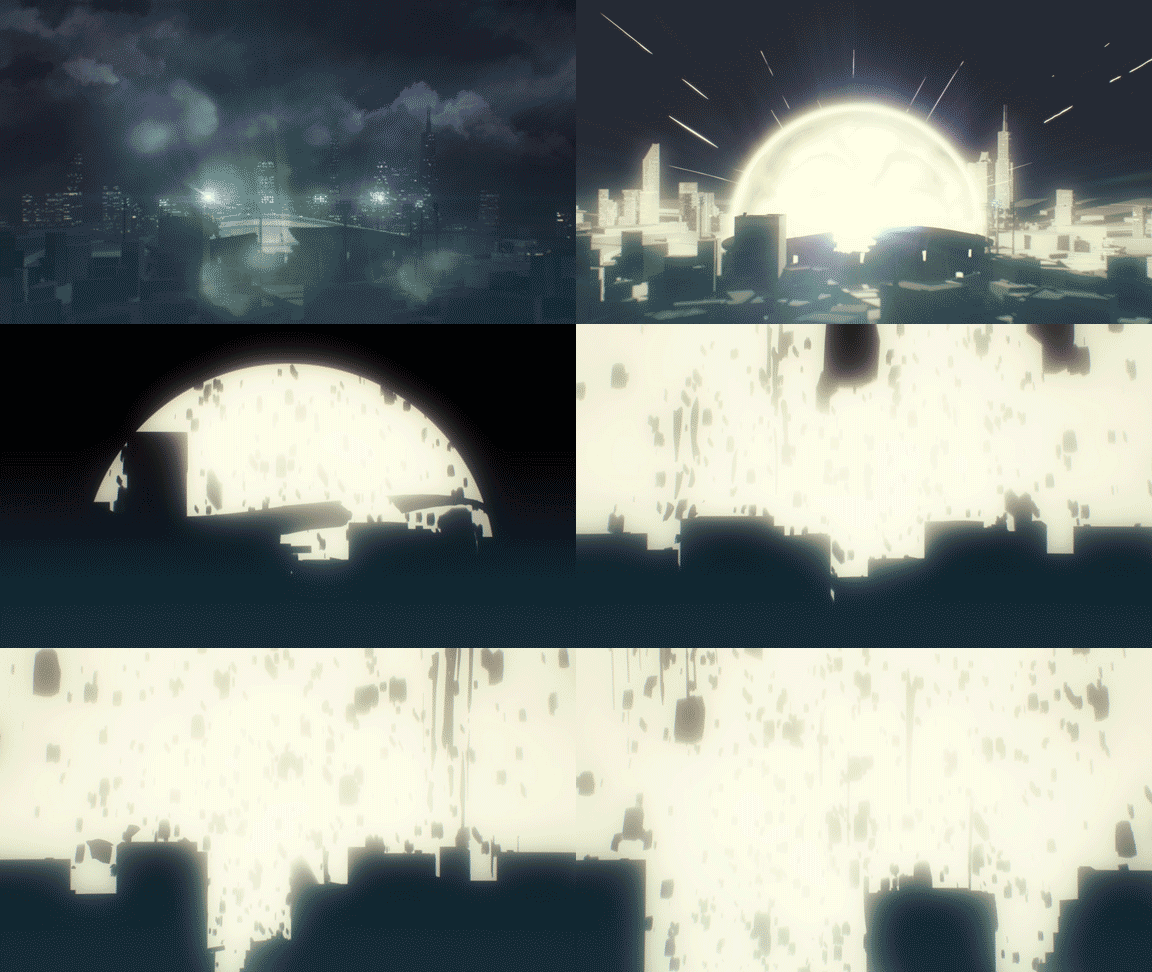
Not like lightning. Not like anything natural. Your phone starts screaming. Not ringing. Screaming. Every phone on the street erupts simultaneously.
EMERGENCY ALERT. QUANTUM WEAPON DETONATION NEW YORK CITY. UNKNOWN ORIGIN. SEEK IMMEDIATE SHELTER. FALLOUT IMMINENT. DO NOT LOOK AT FLASH. DO NOT…
The message cuts off. Your phone dies. Every phone dies. Every car stops. The traffic lights go dark. You’re standing there with your coffee getting cold in your hand, watching that white light fade to orange on the horizon, and you realize your normal day just ended. Everyone’s normal days just ended.
The world you woke up in this morning doesn’t exist anymore.
This isn’t science fiction. The technology exists. The tensions exist. The chaos exists. One malfunction, one miscalculation, one lunatic with access, and the scenario above becomes Tuesday’s news. We live in a civilization balanced on a knife edge, pretending the knife isn’t there because acknowledging it is too uncomfortable. But uncomfortable truths don’t stop being true just because we ignore them. And throughout history, every advanced civilization that ignored the warnings eventually learned the same lesson.
Usually too late.
I. The Ghosts in the Archive
Here’s a question that should keep you up at night: What if we’re not the first?
Not the first civilization to split the atom. Not the first to build cities that scrape the sky. Not the first to think we’d conquered nature, mortality, and the basic physics of hubris. What if we’re just the latest iteration in a very old pattern, and somewhere in the rubble of forgotten continents lie the rusted remains of someone else’s certainty?
The Greeks had a word for it. Actually, they had several. But Plato’s account of Atlantis remains the gold standard of “we used to be great and then we royally screwed it up” stories. They conquered the known world.
Then they got too big for their boots.
The gods noticed. The gods always notice. In a single day and night of earthquakes and floods, Atlantis sank beneath the waves. Gone.
Now, here’s where it gets interesting. You can dismiss Plato as a philosopher telling a morality tale. Lots of people do. But then you have to explain why cultures that supposedly never met kept telling the same damn story.
The Polynesians have Mu. The Theosophists latched onto this one hard in the 19th century, but the original stories predate that by centuries. A Pacific continent. A motherland. Lost beneath the waves when the sky god got angry or the earth goddess shifted or pick your cataclysm.
Then there’s Lemuria. Originally a scientific hypothesis, weirdly enough. 19th-century naturalists couldn’t figure out why lemurs existed in Madagascar and India but nowhere in between.
Now let’s talk about the really uncomfortable stuff. The things that make archaeologists reach for the whiskey.
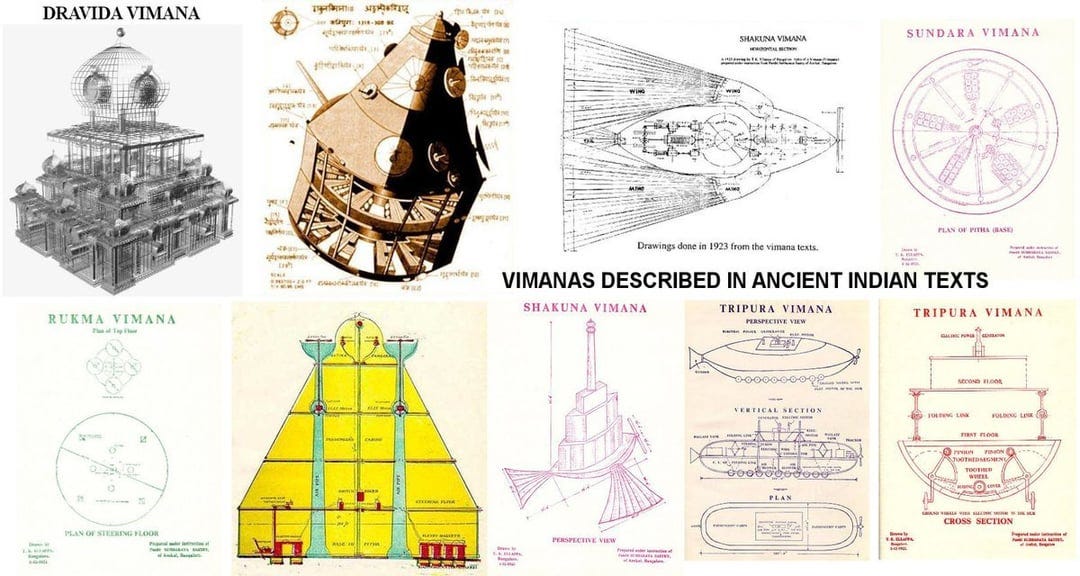
The text also describes weapons that sound disturbingly nuclear. The Brahmastra, for instance, produced a “blazing column of smoke and flame as bright as ten thousand suns.” After its use, the area became cursed. Food spoiled. Hair and nails fell out. People who survived the initial blast died slowly of mysterious ailments.
Sound familiar?
At Mohenjo-daro, one of the major cities of the Indus Valley civilization, archaeologists found skeletons scattered in the streets. Just lying there. No signs of wounds or burial. As if they’d all dropped dead at once. Some of the skeletons showed radiation levels fifty times normal. Black stones throughout the city show signs of fusion, as if they’d been subjected to tremendous heat. The city’s bricks are partially vitrified.
The Sumerians present another puzzle. They appeared in Mesopotamia around 4500 BCE with zero archaeological buildup. Most civilizations show progression. Pottery gets better. Tools improve. Writing evolves from simple to complex. Not the Sumerians. They showed up with the whole package already assembled. Cuneiform writing. Base-60 mathematics (which we still use for time and angles). Sophisticated astronomy. They knew the solar system had planets invisible to the naked eye. They described the precession of the equinoxes, a phenomenon that takes 25,920 years to complete one cycle.
How?
The Sumerians said their knowledge came from the Apkallu, the Seven Sages. Beings who emerged from the sea before the flood and taught humanity everything it needed to know. The Sumerians themselves claimed they were re-establishing civilization after a great deluge that had destroyed the previous world.
Speaking of floods.
The Biblical flood story is famous. Noah, the ark, forty days and nights, the dove, the olive branch. Standard Sunday school stuff. Except it’s not a unique story. It’s just the Hebrew version of a much older Mesopotamian tale. The Epic of Gilgamesh describes Utnapishtim, the Sumerian name of Noah, who was warned by the god Ea that the other gods planned to destroy humanity with a flood. Utnapishtim built a boat. He loaded it with animals and craftsmen (interesting detail, that). The flood came. It lasted six days and seven nights. When it ended, the boat landed on a mountain. Utnapishtim sent out birds to test if the waters had receded.
The Sumerian King List divides history into pre-flood and post-flood periods. Before the flood, kings supposedly reigned for thousands of years. After the flood, lifespans normalized. The list explicitly states: “Then the flood swept over.”
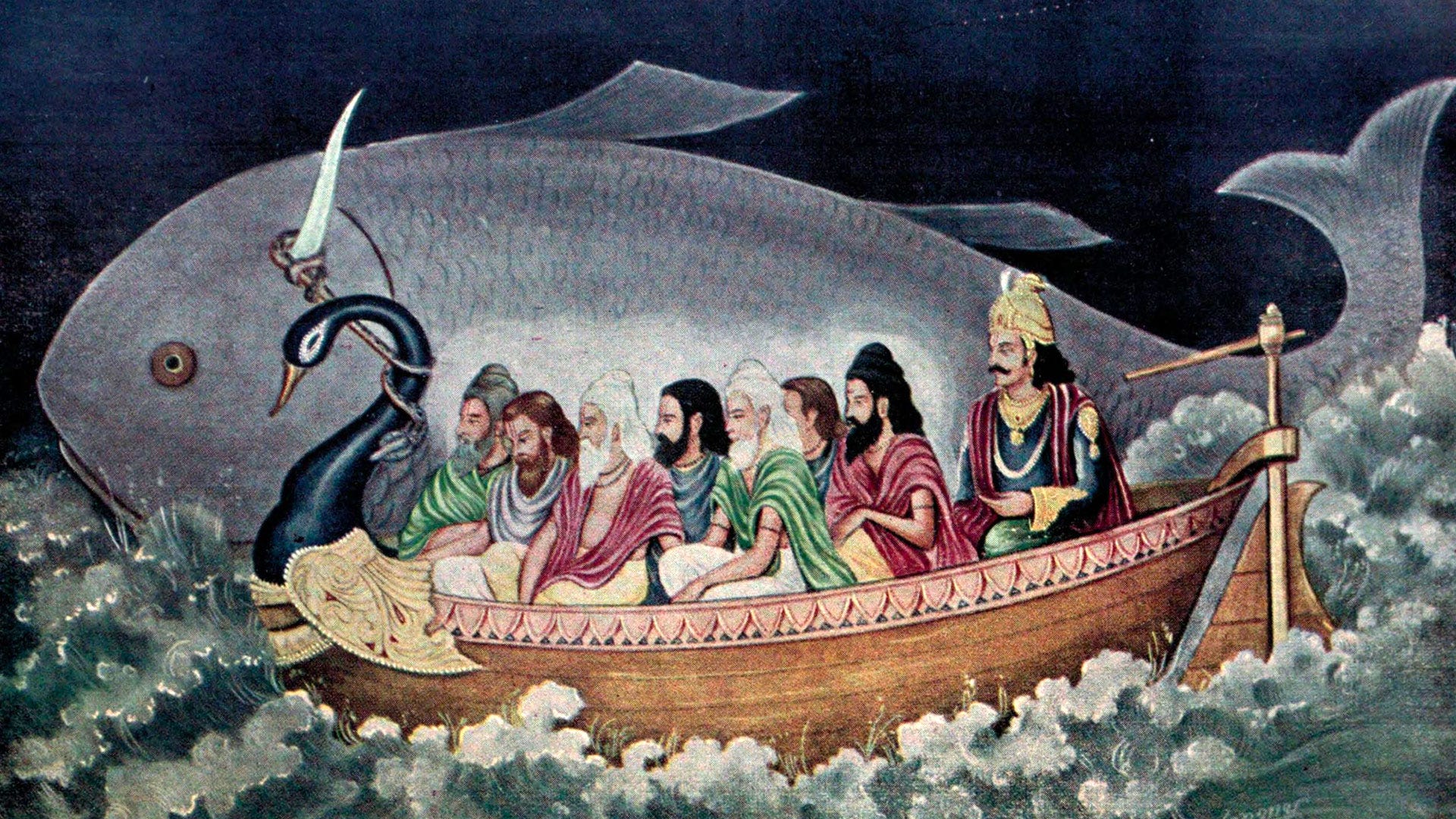
Hindu texts describe multiple great floods. One involves Manu, the first man, who was warned by a fish (actually the god Vishnu in disguise). Manu built a boat. The flood destroyed everything. Manu’s boat was tied to Vishnu’s horn and dragged to safety on a mountaintop.
Chinese mythology has Gun-Yu and the Great Flood. The Aztecs had their own flood story, part of their cyclical creation myths. Norse mythology describes a flood of blood when Odin’s sons killed the giant Ymir. Australian Aboriginal stories speak of a great flood that reshaped the land.
Geological evidence suggests there really was a massive flood around 11,600 years ago. The Younger Dryas period ended abruptly. Ice dams broke. Glacial Lake Agassiz, larger than all the modern Great Lakes combined, emptied catastrophically. Sea levels rose 400 feet over a relatively short period. Coastlines that had been inhabited for thousands of years disappeared under water.
If you were living on the coast in 9,600 BCE, your entire world would’ve drowned. If you survived and tried to tell your grandchildren about the great cities by the sea, about the advanced people who’d lived there, about the knowledge that was lost, you’d sound exactly like these myths.
So were there advanced civilizations before ours? Did they have technology? Did they fly? Did they split atoms?
Mainstream archaeology says no. The evidence isn’t there. And fair enough. Extraordinary claims require extraordinary evidence. We haven’t found pre-flood nuclear reactors or ancient circuit boards.
But we also haven’t looked everywhere. Most of the world’s pre-flood coastlines are now under 200 to 400 feet of water. We’ve explored less than 20% of the ocean floor. We keep finding things we didn’t expect. Göbekli Tepe in Turkey. Built around 9600 BCE by people who supposedly didn’t have agriculture or complex society. Massive stone circles. Sophisticated carvings. It predates Stonehenge by 6,000 years. Then around 8000 BCE, someone deliberately buried it. The whole site. Covered it up and walked away.
Why?
We don’t know. We never will, probably. But the pattern is there. Advanced knowledge. Sudden disaster. Loss. A few survivors trying to preserve what they could and pass it on.
The specifics might be wrong. The interpretations might be mythologized. But something happened. Something that scared us badly enough that we told the story for 10,000 years.
II. The Wheel That Crushes All Things
Time is a flat circle. Or a wheel. Or a snake eating its own tail. Every culture has a metaphor for cyclical time, and every metaphor ends in fire or flood or ice.
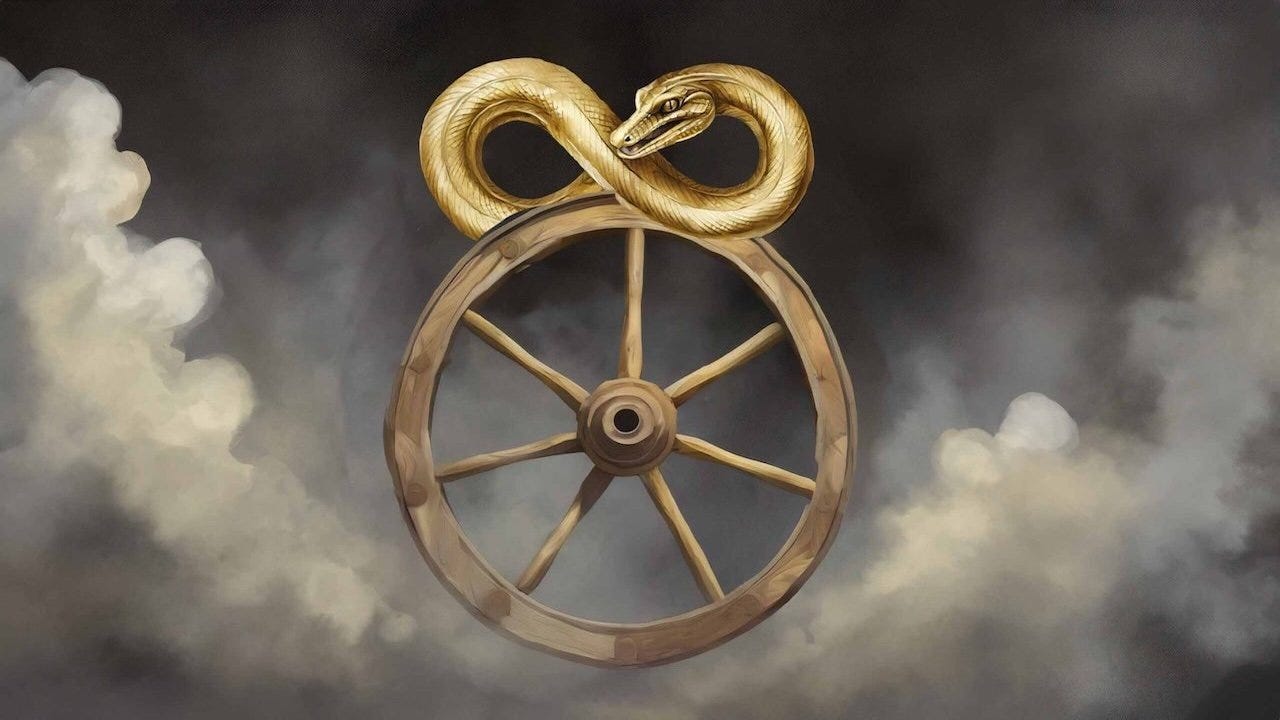
The Hindus mapped it with mathematical precision. Four yugas, four ages, descending from golden perfection to iron decay. We’re in the Kali Yuga now.
The age of demons.
Started 3102 BCE. Lasts 432,000 years. We’re 5,000 years in with a long way to fall. The symptoms? Brothers killing brothers. Children disrespecting parents. The wicked prospering. Rulers becoming tyrants. Knowledge corrupted or forgotten. Social order collapsing. Then Kalki appears, destroys everything, and the golden age begins again. The wheel turns. The cycle continues.
The Greeks had five ages with the same downward spiral. Golden age of abundance. Silver age of spoiled children. Bronze age of warriors who killed each other off. Heroic age (a brief interruption). Then the Iron Age. Our age. Hesiod in 700 BCE already thought it couldn’t get worse. He was wrong. It ends when shame disappears, might makes right, and Zeus destroys this race of men too.
The Norse had Ragnarök. Three years of winter. Brothers killing brothers. Gods dying. The world burning. The earth sinking into the sea. Everything ends. But then the earth rises again. Two humans survive. They repopulate. Even the final destruction seeds the next beginning. Even Ragnarök is cyclical.
The Maya tracked cosmic cycles. Thirteen baktuns equal one Great Cycle of 5,125 years. We’re in the Fourth World. The previous three were destroyed by flood, fire, and wind. This one ends in earthquake, or perhaps by movement itself, by everything coming apart.
The pattern holds across all cultures. Ascent. Peak. Decline. Destruction. Renewal. Repeat.
Here’s the question that matters: Why?
Are we destroyed BY our advancement? Technologies we can’t control. Atoms we split. Viruses that escape. AI that decides we’re unnecessary. Weapons someone eventually uses. Climate systems we destabilize beyond recovery.
Or BECAUSE of our advancement? Something in the universe that can’t tolerate excessive human achievement. A cosmic regulatory mechanism. A thermostat that kicks in when civilizations get too hot.
Information theory offers an answer: complex systems tend toward maximum entropy. The more intricate a civilization, the more failure points. The more specialized the knowledge, the more fragile the structure. One virus. One solar flare. One economic cascade. One psychopath with the right access. The more advanced we get, the more ways we can fail.
But that doesn’t explain why cultures separated by oceans tell the same story of sudden catastrophe. Unless the catastrophes are real. Comet impacts. Supervolcano eruptions. Solar micronovas. Magnetic pole reversals. Any could destroy civilization in days.
The evidence exists. The Younger Dryas impact around 10,800 BCE. The 535 CE event that dimmed the sun for 18 months. The Carrington Event in 1859 that fried telegraph wires. If that hit today, every transformer blows. Every satellite dies. Billions dead within months. The Toba eruption 74,000 years ago that reduced humans to maybe 10,000 individuals.
These happened. They’ll happen again. The question isn’t if. It’s when.
Maybe both answers are true. We’re destroyed BY our advancement because complex systems are fragile. And BECAUSE of our advancement, because the more we build, the more spectacular the failure when the next extinction event arrives.
The pattern isn’t punishment. It’s mathematics. Probability. The universe doesn’t care about our hubris. It just ensures, with statistical certainty, that nothing lasts forever.
III. The Torchbearers: Three Visions of the Same Truth
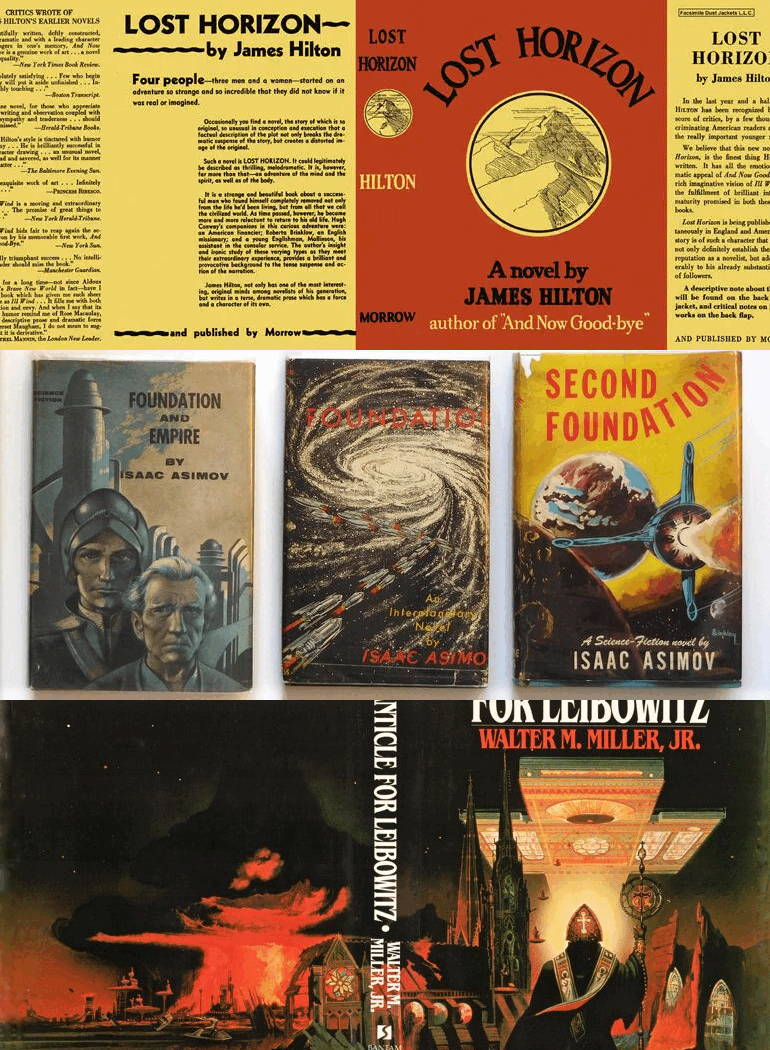
Something strange happened in the mid-20th century. Three different writers, working independently, came to the exact same conclusion about human civilization. They saw the pattern. They understood the cycle. And they all wrote the same story wearing different clothes.
James Hilton’s “Lost Horizon” (1933). Walter M. Miller Jr.’s “A Canticle for Leibowitz” (1959). Isaac Asimov’s “Foundation” trilogy (1951-1953). Different settings. Different plots. Different literary styles. But identical at their core.
Here’s what they all understood: Advanced civilizations destroy themselves. It’s not a question of if. It’s a question of when. The mechanisms vary. Nuclear war. Environmental collapse. Resource depletion. Political disintegration. Divine punishment. The specifics don’t matter. The pattern holds. Complexity breeds fragility. Height precedes the fall. The tower always crumbles.
And here’s what makes these three works profound rather than merely pessimistic: They’re not about preventing the collapse. They’re about what comes after.
In each story, a small group sees the end approaching. Not politicians or generals or the people in power. Those people are too invested in the system to see its failure coming. No, it’s always outsiders. Scholars. Monks. Scientists. People who study patterns instead of quarterly reports. People who think in centuries instead of election cycles.
These groups make a decision. Since the collapse can’t be stopped, the next best thing is preservation. Save the knowledge. Protect the wisdom. Maintain the light through the coming darkness. Become torchbearers carrying civilization’s fire into the depths of whatever hell is coming, with the explicit intention of using that torch to relight humanity when the darkness passes.
Hilton gave us a monastery hidden in the Himalayas, preserving art, philosophy, science, and culture while the world outside tears itself apart in mechanized warfare. Miller gave us Catholic monks laboriously copying technical documents they don’t understand, preserving shopping lists and circuit diagrams through centuries of barbarism, waiting for the day when someone can read them again. Asimov gave us the Foundation, scientists establishing an encyclopedia project at the galaxy’s edge not to prevent the empire’s fall but to shorten the dark age that follows from thirty thousand years to just one thousand.
Different aesthetics. Same core function. Preserve knowledge. Protect it through the catastrophe. Pass it on to whoever survives.
This isn’t escapism. This is the only realistic response to civilizational collapse once you accept that collapse is inevitable. You can’t stop the pattern. You can’t break the cycle. But you can build bridges across the gap. You can be the continuity that connects the world before to the world after.
The heroes in these stories aren’t the ones fighting to prevent disaster. Those people always fail. The heroes are the ones who prepare for disaster and position themselves to help rebuild afterward. They’re not defeatist. They’re pragmatic. They understand that hope without preparation is just wishful thinking.
And here’s what all three authors understood that we’ve somehow forgotten: This isn’t science fiction. This is anthropology. This is history. This has happened before. Multiple times. The Bronze Age collapse. The fall of Rome. The Classic Maya decline. The collapse of the Indus Valley civilization. The destruction described in the flood myths. Every single time, the civilizations that recovered fastest were the ones where somebody, somewhere, preserved fragments of knowledge from the previous age.
Medieval European civilization rebuilt on the foundation of texts preserved by monasteries. Islamic civilization preserved Greek philosophy and science while Europe burned. The Renaissance happened because Byzantine scholars fleeing Constantinople brought manuscripts west. The continuity wasn’t perfect. Huge amounts were lost. But what survived mattered enormously.
This pattern is so consistent it should be a law of civilizational dynamics: After collapse, whoever holds the knowledge shapes the recovery. The torchbearers don’t just preserve light. They determine what the next world looks like when that light spreads again.
Which brings us to the uncomfortable present. We’re watching the same pattern unfold in real time. The complexity. The fragility. The unsustainable trajectories. The weapons we can’t control. The systems we don’t understand. The conflicts we can’t resolve. The environmental damage we can’t reverse. The social cohesion we can’t rebuild.
The collapse is coming. Maybe in five years. Maybe in fifty. But coming. The cycle is turning. The pattern is repeating. The car is speeding toward the brickwall.
So the question isn’t whether we need a Foundation, a Shangri-La, a Leibowitz monastery. The question is why the hell don’t we have one already? Why are we pretending this isn’t necessary? Why are we hoping someone else will handle it?
Miller, Asimov, and Hilton weren’t predicting the future. They were reading the past and extrapolating. They saw the cycle. They understood what comes next. They wrote their books as warnings, as blueprints, as desperate attempts to make us understand what we need to do.
We didn’t listen. We’re still not listening. We’re acting like we’re the exception. Like we’ve transcended the pattern. Like the cycle won’t touch us because we’re special.
We’re not special.
We’re just next.
The torchbearers in those three stories weren’t heroes because they were strong or brave or clever. They were heroes because they looked at the coming darkness and said, “We’re going to carry light through this, or die trying.” They committed to preservation when everyone else was committed to denial.
That’s what we need now. Not more optimism. Not more technological solutionism. Not more faith that someone will invent something or that the politicians will suddenly get wise. We need people who understand the pattern and are willing to be torchbearers. People who’ll build the monastery, stock the library, preserve the knowledge, and maintain the light no matter how dark it gets.
Because the darkness is coming. The only question is whether there’s anyone holding a torch when it arrives.
IV. The Pillars That Held the Sky
According to certain traditions, there was a man who saw the end coming and decided to do something about it.
His name was Enoch. Seventh from Adam in the line of Seth. In Genesis, he gets exactly three verses: “And Enoch lived sixty and five years, and begat Methuselah. And Enoch walked with God after he begat Methuselah three hundred years. And all the days of Enoch were three hundred sixty and five years. And Enoch walked with God, and he was not; for God took him.”
That’s it. That’s all the Bible tells us. He lived. He walked with God. He didn’t die. He was “taken.”
But that wasn’t enough for people. The brevity felt wrong. Someone who walked with God so intimately he bypassed death entirely? Someone who lived 365 years, a suspiciously calendrical number? There had to be more to the story.
So other texts appeared. The Book of Enoch, multiple versions, none of which made it into the official canon but which circulated widely in Jewish and early Christian communities. The Book of Jubilees. The Apocalypse of Weeks. Various rabbinical commentaries and mystical interpretations. And later, Masonic traditions that built entire symbolic systems around Enoch’s supposed deeds.
The story, pieced together from these sources, goes like this:
Enoch was a scholar. A scientist, in the vocabulary of his time. He studied the heavens. He understood mathematics and geometry. He measured the movements of stars and planets. He was, in the language of his era, wise.
God showed him things. Visions. The structure of heaven and hell. The names of angels. The future. And in that future, Enoch saw disaster. A great flood was coming. Divine judgment for human wickedness. The entire world would be drowned. Everything humanity had built, everything they’d learned, all accumulated knowledge and wisdom, would be washed away.
This troubled Enoch. Yes, humanity was wicked. Yes, judgment was justified. But did everything have to be lost? Did the next generation have to start from nothing?
So Enoch undertook a project. He would preserve knowledge. Not just religious knowledge but practical knowledge. Mathematics. Astronomy. Metallurgy. Architecture. Agriculture. Medicine. Everything that mattered. Everything that had taken generations to discover.
But how do you preserve knowledge through a world-ending flood? Paper doesn’t exist yet. Papyrus won’t survive. Clay tablets will dissolve. Wood will rot. Anything organic is doomed.
Stone. Stone survives. But not just any stone. And not just one pillar, because what if it’s destroyed?
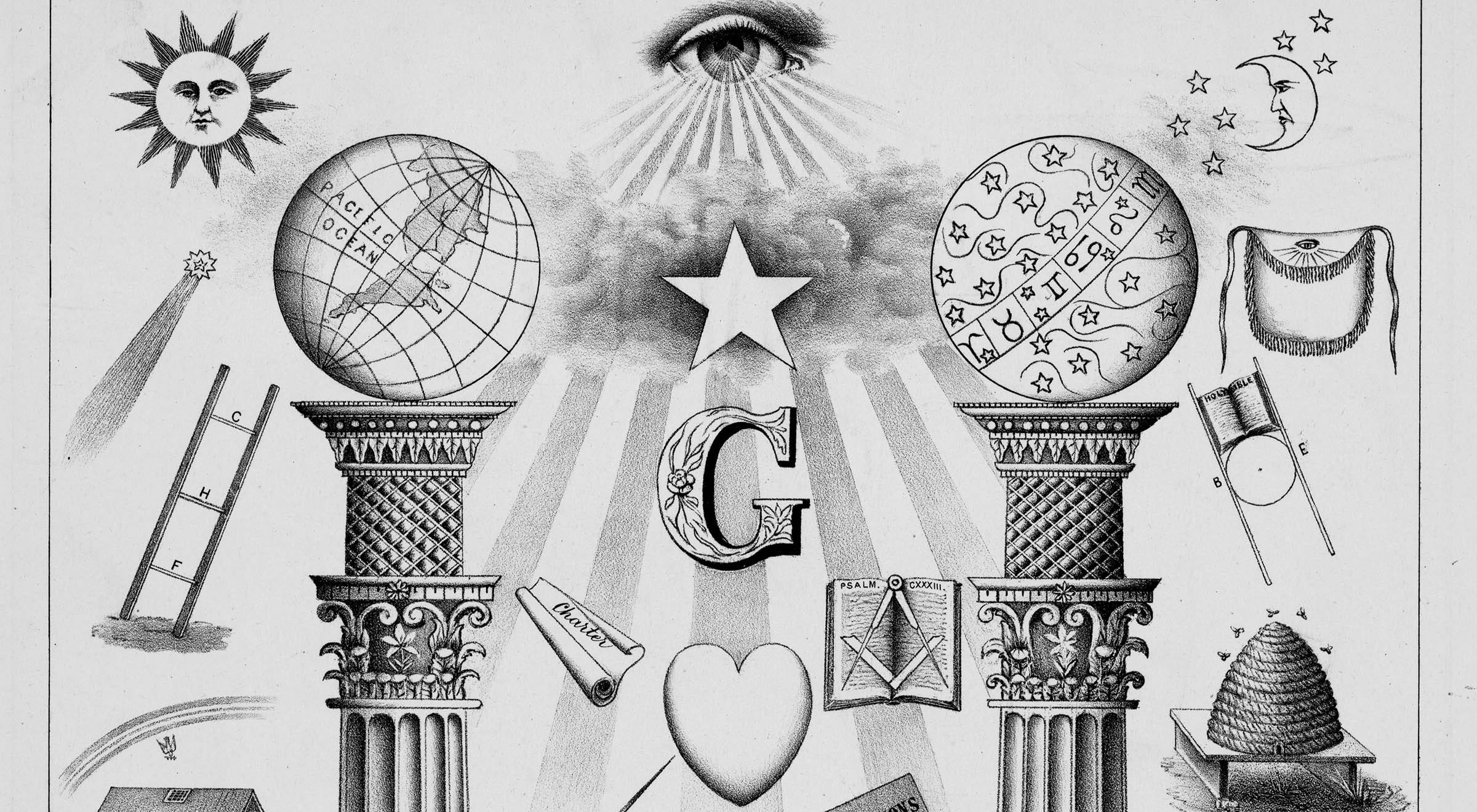
Enoch built two pillars. Legends disagree on the materials. Some say one was brick, to withstand water. One was stone, to withstand fire. Some say one was marble, the other bronze. Some say both were stone but different types.
The symbolism matters more than the specifics. Two pillars. Redundancy. If one fails, the other survives. If flood takes one, fire won’t take both. Belt and suspenders. Backup systems. This is engineering thinking.
The pillars were massive. Some traditions say they stood in the land of Siriad. Others say Syria. Some say they were in the Holy Land. The locations shift with each retelling, but the function remains constant.
Enoch inscribed everything onto these pillars. Not just words but diagrams. Mathematical formulae. Star charts. Technical specifications. He encoded humanity’s accumulated knowledge in stone, using a language that could be deciphered by anyone with sufficient intelligence and persistence.
Then the flood came. Everything drowned. But the pillars stood. One of them, anyway. (Some versions say both survived; others say only one.)
After the waters receded, someone found the pillar. Different traditions name different discoverers. Some say it was Nimrod. Some say it was Abraham. Some say it was Pythagoras or Hermes Trismegistus. Masonic tradition claims the pillar was discovered centuries later, during the construction of Solomon’s Temple.
The pillar was read. The knowledge was recovered. Civilization could rebuild. Humanity didn’t have to reinvent fire, agriculture, and mathematics from scratch. They had a head start. A gift from before the cataclysm.
The two pillars acquired names in Masonic symbolism: Boaz and Jachin. They become central architectural features in the Temple of Solomon, though whether they’re the same pillars Enoch built or symbolic recreations is deliberately ambiguous. The tradition values the symbol more than historical accuracy.
Boaz means “in strength.” Jachin means “he establishes.” Together: in strength, he establishes. Or: strength establishes. The idea is that knowledge, properly preserved, provides the strength to rebuild. That establishing new civilization requires the foundation of old wisdom.
Every Masonic lodge has two pillars flanking the entrance, usually decorated with celestial and terrestrial globes. The symbolism is clear: knowledge of heaven and earth. Science and spirit. The accumulated wisdom of all previous ages, preserved and transmitted to the present, enabling us to build the future.
The pattern is this: Knowledge is precious. Knowledge is fragile. Knowledge will be destroyed unless actively preserved. When disaster comes and civilization falls, the survivors who can rebuild are those who preserved knowledge from the previous age.
Enoch’s story is a template. A mythological instruction manual. It tells you what to do when you see the end approaching. You don’t give up. You don’t despair. You don’t accept the coming darkness as inevitable and total.
You build pillars. You preserve knowledge. You encode wisdom in forms that can survive whatever’s coming. You build redundancy into the system. You plan for worst-case scenarios. You become the bridge between the world before and the world after.
Every culture has some version of this story. Someone who saw disaster coming and preserved knowledge. The Seven Sages of Greece. Thoth in Egypt. Quetzalcoatl in Mesoamerica. Culture heroes who taught humanity fire, agriculture, writing, and mathematics, often after some catastrophe.
The story keeps appearing because the need keeps appearing. Civilizations collapse. Knowledge is lost. The societies that recover fastest preserved something from before. The Venerable Bede in 8th-century England. Irish monks copying Latin texts while Europe burned. Byzantine scholars fleeing to Italy with Greek manuscripts, triggering the Renaissance. These are Enoch’s pillars in action. Real. Historical. Essential.
We’re in a strange position now. We have more knowledge than ever, but nearly all of it lives digitally. One solar flare or electromagnetic pulse wipes it out instantly. Servers need power. Hard drives fail. File formats go obsolete. We’ve built civilization on a data layer more fragile than stone tablets. Enoch’s pillars would survive an EMP. Your smartphone wouldn’t. The paradox of progress: the more advanced our storage, the more vulnerable it becomes. Stone just sits there for millennia. A server farm dies in hours without electricity.
We need both. Digital for accessibility. Physical for survival. Pillars and hard drives. Stone and silicon. We need to be more like Enoch and less like ourselves.
V. The Car, the Wall, and the Silence of Speed
Let’s be uncomfortably honest about where we are.
We have approximately 12,500 nuclear warheads distributed among nine nations. Strategic weapons. Tactical weapons. Submarine-launched ballistic missiles. Intercontinental ballistic missiles. Gravity bombs. Cruise missiles. Enough megatonnage to turn the entire surface of the planet into a radioactive parking lot several times over.
The doctrine is still mutual assured destruction. MAD. An acronym so appropriate it’s almost funny, except there’s nothing funny about deliberately designing a system that guarantees annihilation if anyone uses it. The theory is that no one will use them because using them means dying too. Game theory, weaponized.
Except game theory assumes rational actors with complete information making calculated decisions. Real humans are emotional, poorly informed, and prone to catastrophic judgment errors, especially under stress. We’ve come disturbingly close to ending the world multiple times purely by accident.
We have approximately 12,500 nuclear warheads distributed among nine nations. We’ve avoided using them so far through luck and the hesitation of a few key individuals. Stanislav Petrov in 1983, suspecting a malfunction, didn’t report what appeared to be five incoming American ICBMs. Vasili Arkhipov in 1962 was the lone vote against launching a nuclear torpedo during the Cuban Missile Crisis. We’re here because specific people hesitated at the exact right moment. That’s the margin. That’s how close the wall is.
Climate systems are collapsing faster than predicted. AI development is outpacing safety research by years. Supply chains optimized for efficiency have zero resilience. Antibiotic resistance is returning us to pre-penicillin mortality rates. Microplastics saturate the biosphere. Social cohesion is fracturing across every developed nation. These aren’t theoretical future problems. They’re observable, measurable, happening right now. The feedback loops are already kicking in. The momentum is built in. The car is headed toward the wall.
Maybe we solve it. Maybe renewable energy scales fast enough. Maybe AI alignment works out. Maybe we get lucky again like we did with Petrov and Arkhipov. Maybe the wall is further away than it looks. Maybe someone invents something that changes everything. Maybe. But maybe isn’t a plan. Hope isn’t a strategy. And every civilization that fell thought they’d figure it out too, right up until they didn’t.
But maybe isn’t a plan. Hope isn’t a strategy. And every civilization that fell thought they’d figure it out too, right up until they didn’t.
The pattern suggests otherwise. The cycle suggests otherwise. History suggests otherwise.
We’re not special. We’re not exempt from the wheel. We’re not the chosen ones who break the pattern. We’re just the latest iteration, and we’re exhibiting all the same symptoms every previous civilization exhibited before collapse. Complexity. Overreach. Resource depletion. Internal conflict. Decline in problem-solving capacity. Inability to address existential threats.
The car is speeding. The wall is there. And we can’t agree to hit the brakes.
VI. The Dream in the Bunker (Or: How to Survive Your Own Extinction)
Twenty years. That’s how long this idea has been burning a hole in my skull.
Build something that lasts. Something that survives. Something that matters when everything else goes to hell.
Not a bunker for billionaires. Not a luxury survival condo. Not some preppper fortress stocked with guns and canned beans where rich cowards wait out the apocalypse in comfort before emerging to rule over whatever’s left.
Something else. Something better. Something that serves the future instead of serving the past.
A knowledge preservation facility. Resilient. Redundant. Comprehensive. Designed from the ground up to survive whatever’s coming and to help rebuild whatever comes after.
Start with land. Remote but not inaccessible. Defensible but not fortress-like. Arable, with water. Somewhere stable geologically and climatically, as much as anywhere can be stable anymore. High enough to avoid sea level rise. Far enough from major cities to avoid refugee flows and fallout. Close enough to resources to be practical.
Twenty to fifty acres, minimum. You need space for agriculture, water management, energy production, construction, and buffer zones. You need to be self-sufficient because supply chains will break.
Build underground. Partially at least. Thermal stability. Radiation shielding. Protection from extreme weather. Less visible from above. Lower profile means lower target for anything from looters to governments who might decide preservation is a threat.
Power it off-grid. Solar arrays with substantial battery backup. Wind turbines where wind is reliable. Geothermal where geologically feasible. Hydroelectric if you have flowing water. Backup generators with large fuel reserves. Power is non-negotiable. Everything else depends on it.
Shield it from EMP. Faraday cages around critical systems. Redundant electronics stored offline. Analog backups for essential systems. One Carrington Event or one high-altitude nuclear detonation and every unshielded electronic device becomes an expensive paperweight. Plan for that.
Build a library. Physical books. Thousands of them. Academic texts. Technical manuals. Practical guides. Literature. History. Philosophy. Science at every level, from elementary to cutting edge. Medical references. Agricultural techniques. Engineering handbooks. Encyclopedias. Dictionaries in multiple languages. Maps. Lots of maps. The world’s geography might change, but understanding what it was helps.
Digitize everything possible. Multiple formats. Multiple storage media. Hard drives with redundancy. Optical discs. Solid-state storage. Keep copies offline. Update regularly. Include Wikipedia, arXiv, Project Gutenberg, the Internet Archive, academic databases, everything you can legally store. Build a Kiwix server with offline versions of major knowledge repositories.
Analog computers. Not as a gimmick but as genuinely functional backup computing. Differential analyzers can solve complex equations mechanically. Slide rules work forever. Nomographs, mechanical calculators, astrolabes, sextants. They’re slower, but they don’t need electricity or chips. They can’t be hacked or fried.
Scientific equipment. Not just for research but for teaching. Microscopes. Telescopes. Chemistry glassware. Basic lab equipment. 3D printers with stockpiled filament. CNC machines. Lathes. Mills. Tools for making tools. Because you’re not just preserving knowledge. You’re preserving the ability to apply knowledge.
Seeds. Vast quantities of diverse seeds, properly stored. Heirloom varieties, not patented hybrids that don’t breed true. Enough genetic diversity to rebuild agriculture if supply chains collapse. Properly stored seeds can remain viable for decades or centuries. This is one of the cheapest and most important investments.
Medical supplies. Not just first aid. Surgical equipment. Antibiotics with long shelf lives. Dental tools. Suture materials. Diagnostic equipment. Medical texts. Enough to treat serious conditions. Enough to teach the next generation of doctors if universities aren’t functioning.
Communication equipment. Shortwave radio, ham radio, satellite phones with backup phones and backup backup phones. If everything goes to hell, you need to know what’s happening and you need to reach other pockets of stability.
People. This is crucial. This isn’t a bunker for hiding. It’s a community for preserving and transmitting. You need librarians, teachers, engineers, doctors, farmers, technicians. People with practical skills and theoretical knowledge. People committed to the mission. People who understand they’re not building for themselves but for whatever comes next.
Make it a monastery, essentially. Not in the religious sense, necessarily, though that’s one valid model. But in the functional sense. A community devoted to preservation, learning, and transmission across generations. Vows aren’t to God but to knowledge, to the future, to the idea that humanity deserves a chance to rebuild.
Regular people who don’t live there should be able to access the library. Educational programs. Workshops. The facility serves the present while preparing for a potential future. It’s a functioning institution, not a hidden bunker. This builds legitimacy and community support. It embeds the project into the social fabric so it’s not seen as weird or threatening.
The cost is enormous. Land alone, depending on location, could run half a million to several million. Construction of hardened, EMP-shielded, partially underground facilities? Several million more. Solar and wind infrastructure for off-grid power? Another million or two. The library, equipment, supplies, redundancy systems? Millions. Salaries or stipends for the core community who maintain it? Ongoing operational costs?
You’re looking at $10 to $20 million as a conservative initial investment. And that’s if you’re being relatively modest. If you want to do it right, with full redundancy and capacity to support a real community, you’re talking $50 million or more.
I don’t have that. I’ve never had that. I will never have that. Not through normal means. Not through honest work.
I could’ve pursued it dishonestly. Twenty years is plenty of time to become a crypto scammer or a supplement grifter or whatever flavor of con artist is currently fashionable. Sell fake expertise. Create artificial scarcity. Exploit fear. Lots of people do it. Lots of people get rich doing it.
I won’t. I can’t. I refuse to poison the world to theoretically save a piece of it. That’s not preservation. That’s just another form of destruction. It makes me part of the problem, not part of the solution.
So the dream stayed a dream. The plan stayed a plan. The urgency remained urgent but impotent.
VII. The Question Nobody Wants to Ask (And the Answer That Could Save Everything)
Here’s what keeps me awake: When Rome fell, the Catholic Church survived. When the Bronze Age collapsed, whoever preserved knowledge shaped what came next. After every collapse in history, the future was written by whoever was there when the lights came back on. Whoever held the knowledge controlled the narrative, the recovery, the entire trajectory of the next civilization.
That power shouldn’t belong to warlords. It shouldn’t belong to billionaires hiding in New Zealand bunkers with armed guards. It shouldn’t belong to whoever stockpiled the most weapons and has the least conscience.
It should belong to people who care about human flourishing. People who value knowledge for its own sake. People whose ethics survived the catastrophe. People committed to preservation, not domination.
So here’s the actual question, stripped of rhetoric and flourish: Are there any billionaires or multi-millionaires who see what I see?
People who understand we’re in the decline phase? People who can look at the trajectory and accept the uncomfortable truth that things are probably going to get very bad, very soon? People with more money than they could spend in ten lifetimes who want to fund something that actually matters instead of just insulating themselves from what’s coming?
Ten million dollars to someone worth a billion is one percent. Rounding error money. What they might spend on a vacation home. But that amount could build this. Could create a real knowledge preservation facility designed to survive system-wide collapse and help bootstrap whatever comes after. A real Foundation. A real Shangri-La. A real Order whose only mission is to remember and to help rebuild.
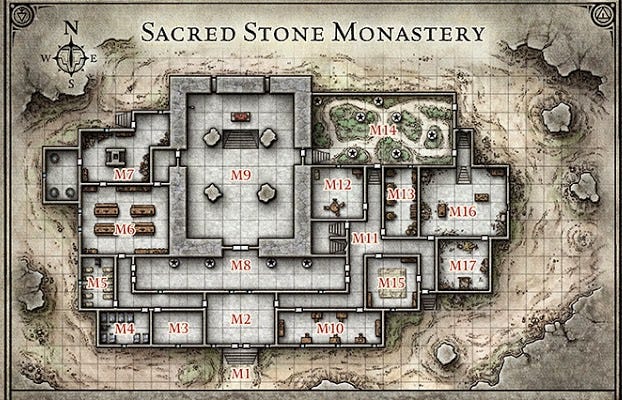
Twenty years I’ve been thinking about this. Twenty years of watching the wall get closer. Twenty years of knowing what needs to be done and not having the resources to do it. I could’ve gotten rich through crypto scams or supplement grifting or whatever con is trending. I won’t. I refuse to poison the world to save a piece of it. That makes me part of the problem, not the solution.
But I’m done waiting. I’m done dreaming. This needs to exist, and if no one else is building it, then I will. I’ll live in a tent on the property while we’re building it if that’s what it takes. This isn’t about comfort or wealth or legacy. This is about being the bridge between ages. About maintaining the thread of continuity when everything else breaks.
Here’s what we need:
Land. Remote but accessible. Stable. Arable. Water. Twenty to fifty acres minimum. Somewhere that can sustain a community when supply chains fail.
Facilities. Partially underground. EMP-shielded. Off-grid power systems with massive redundancy. Solar, wind, backup generators, everything. Built to survive what’s coming.
The Library. Physical books by the thousands. Digital redundancy on hardened drives. Analog computers. Scientific equipment. Medical supplies. Seeds. Tools for making tools. Everything needed to preserve and apply knowledge.
People. Not just to build it but to maintain it. Engineers, farmers, doctors, teachers, librarians. A community committed to preservation across generations. Not a bunker for hiding. A monastery for remembering.
This isn’t a vanity project. Your name doesn’t have to be on it. This isn’t about getting credit or building monuments. This is purely functional. The world needs knowledge repositories that can survive what’s coming. Whether I build it or someone else does, it needs to exist.
If you’re reading this and you have wealth or connections or skills or land, I’m reachable. Not for pitch meetings or business plans. Just a conversation about whether this matters and how to make it real. If you know someone who might care, tell them. If you have expertise that’s needed, reach out. If you think this is important, share it.
Because here’s the alternative: Nobody builds it. The cycle completes. Civilization collapses. The survivors scramble through ruins looking for anything useful. Most knowledge is lost. The next civilization starts from scratch, rediscovering everything slowly and painfully over centuries. Making the same mistakes. Heading toward the same wall. Because nobody was there to remember.
We have historical awareness previous civilizations lacked. We can see the pattern. We know the cycle. We understand what’s coming. That knowledge is worthless if we don’t act on it.
The Order needs to exist. Not monks in robes chanting in Latin. Just people who understand the mission: preserve knowledge through whatever’s coming, maintain access to it, transmit it to whoever needs it, help rebuild ethically and competently when the time comes. No glory. No recognition. Just the work itself. The most important work there is.
Someone has to be the torchbearer carrying civilization’s light through the coming darkness. Someone has to care enough to try. Someone has to believe the future matters even if they won’t live to see it.
That someone could be us. Should be us. Needs to be us.
The wall is there. The car is speeding. The cycle is turning. But the wall can be survived if someone prepares to survive it. Patterns can be disrupted if someone has the courage to try.
The gods won’t save us. The universe doesn’t care. No cavalry is coming. There’s just us. And the knowledge we choose to preserve. And the communities we choose to build. And the choices we make right now about what survives and what doesn’t.
I’m making my choice. I’m building this. With funding or without it. With help or without it. But it’ll happen faster, better, and serve more people if others who see what I see step forward now.
If not us, then who? If not now, then when? The future is screaming for an answer. What’s yours?
Thanks to physicist Samreet Dhillon for the conversations that led here.
His Substack:
https://substack.com/@samreetdhillon/p-172691048
A very important message, we should focus on preserving knowledge as much as running after more of it.
And yes, a Type II advanced alien civilization can control its own Sun and use it as a weapon. And there's no solid reason to rule out this possibility.
Thanks for that mention btw!
One thing that is strange is how in Russia the coming pole shift is openly discussed in public but, in the US….crickets..