



Don’t feel like reading? Extended audio podcast version below:
Something is rotten in Washington and you can smell it from a thousand miles away. The corruption has gotten so deep and so brazen that they don’t even bother hiding it anymore. They know you’re too distracted to notice and too divided to do anything about it even if you did. They count on your apathy. They count on your exhaustion. They count on you being so tired of it all that you just tune out and let them do whatever they want.
The government is failing you. The people in power are failing you. They spend your money on endless wars and foreign aid packages and pet projects that benefit their donors while your roads crumble and your schools deteriorate and your healthcare costs spiral into insanity. They pass thousand-page bills that nobody reads and then act surprised when the consequences turn out to be disastrous. They insider trade on information they receive in classified briefings and somehow retire as millionaires on salaries that don’t come close to explaining their wealth. They tell you to tighten your belt while they spend trillions of dollars that don’t exist on things that don’t help you.
And then there’s Epstein. The name that nobody in power wants to talk about because it leads to places that implicate the most powerful people in the world.

Flight logs with names you recognize. Visitor records from an island where unspeakable things happened to children. Documents being released by the Department of Justice with redactions so sloppy that anyone with basic computer skills can see what’s underneath. Names from Washington. Names from Hollywood. Names from Wall Street. Names from the highest levels of power in this country and others.
This should be the biggest scandal in American history. This should have people marching in the streets demanding answers. This should be on every news channel every single night until every last predator is exposed and imprisoned. Instead? Silence. Distraction. A new outrage every news cycle to keep you focused on anything except the fact that the people running this country may have been raping children and covering for each other for decades.
Before you continue, I want you to watch this scene from the famous 1976 drama ‘Network’ about being ‘mad as hell’ at the way things in this country are going. This scene sets the stage for the rest of the article.
Where Is Your Anger
Twenty years ago, if something like the Epstein scandal came out, people would have been marching on Washington. They would have been camped outside the Capitol demanding accountability. They would have been raising hell in every town hall meeting and showing up at every elected official’s office and making it absolutely clear that this would not stand.
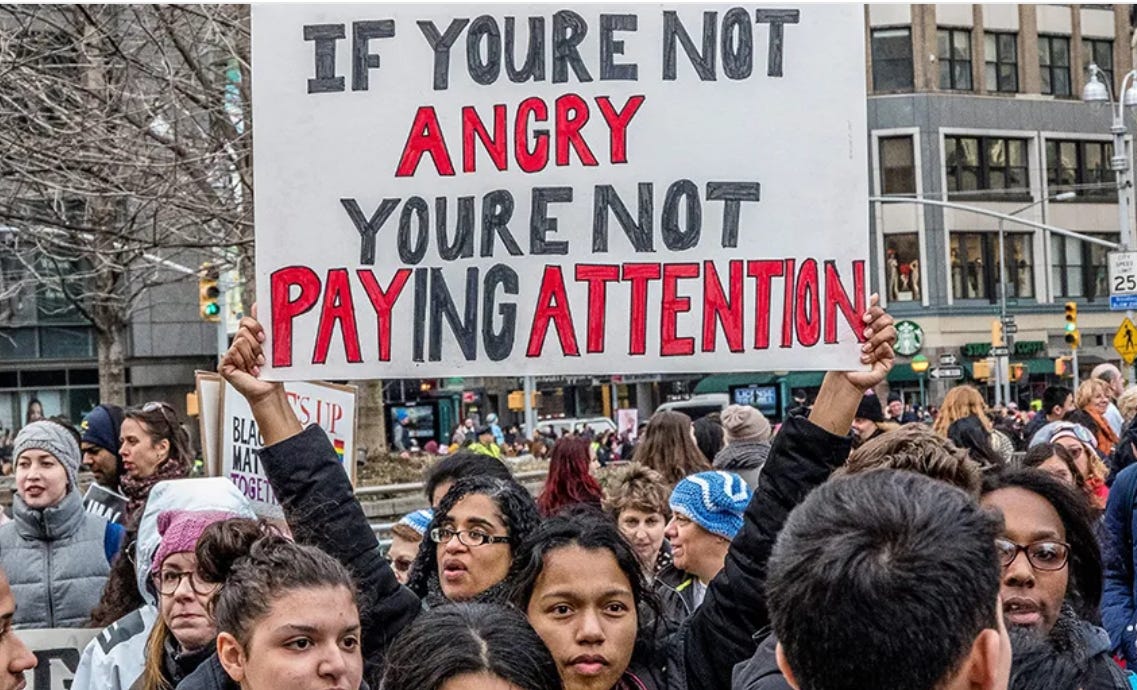
Now? People click a like button. They hit share. They post an angry comment and feel like they did something. They scroll past the story and move on to the next cat meme or celebrity gossip or whatever dopamine hit the algorithm serves up next. And they tell themselves “there, I did my part” as if clicking a button on a screen is the same thing as actually fighting for something.
It’s not.
It has never been…
And if that’s all you’re willing to do you’re not saving democracy.
You’re watching it die while pretending you tried to help.
This is how fascism rises. Not through tanks in the streets and soldiers kicking down doors. It rises when people stop caring. It rises when the population becomes so distracted and so pacified and so convinced that someone else will handle it that they hand over their power without even realizing they’re doing it. It rises when people are too comfortable to fight and too entertained to notice what’s being taken from them.
Post too long for email? Download the Substack app:

The people who want control are counting on your apathy. They are counting on you being too busy and too tired and too distracted to pay attention. They are counting on you trusting the news that tells you what to think while conveniently leaving out the stories that would make you question who really runs this country.
Who Owns Your Mind
The news channels you watch are owned by billionaires. The newspapers you read are owned by billionaires. The social media platforms where you get your information are owned by billionaires. And those billionaires have interests that do not align with yours. They have friends in Washington. They donate to whoever will do their bidding. They have dinner with the same politicians who pretend to fight for you on television and then laugh together at private fundraisers where the real deals are made.
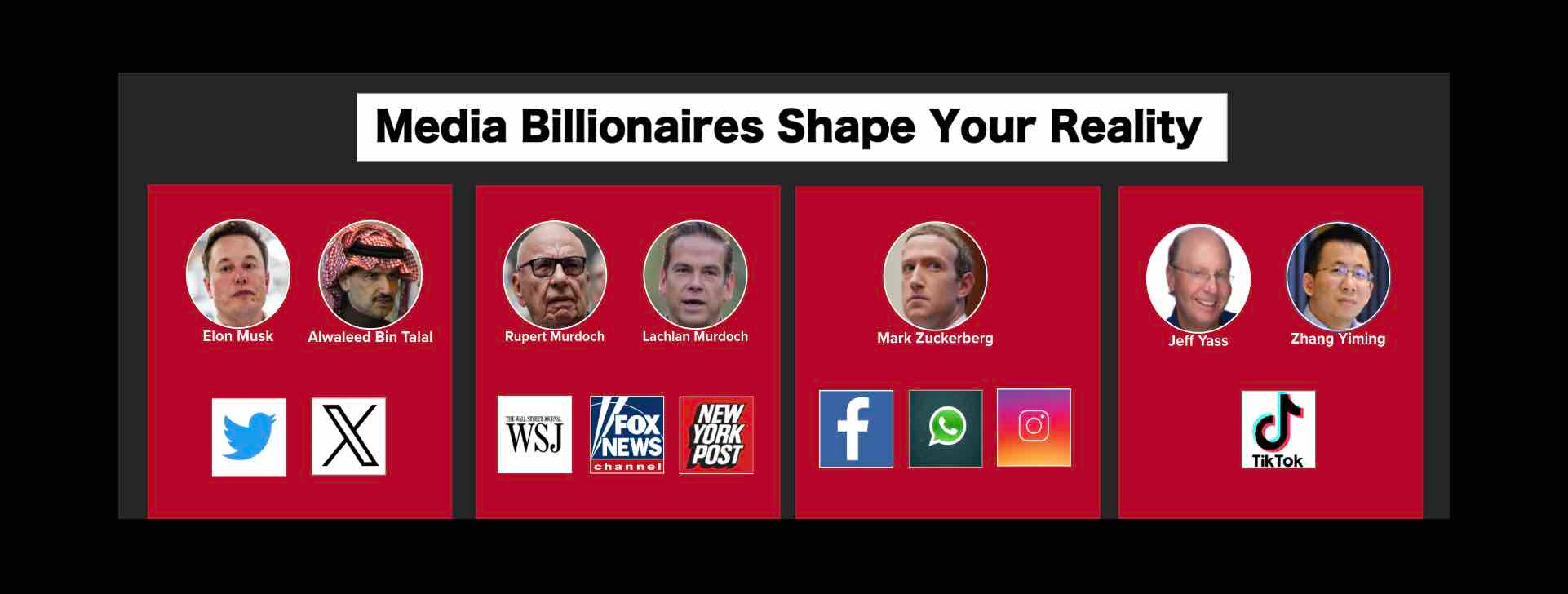
If you believe everything you see on TV news owned by the same people who own the politicians, you are being managed. You are being fed a narrative designed to keep you angry at your neighbors instead of angry at the people actually pulling the strings. You are being divided on purpose because a divided population is easy to control and a united population asking questions is dangerous to people with secrets to hide.
Just two hundred years ago, this world was ruled by kings and queens. Monarchs who believed they had a divine right to rule over everyone else and take whatever they wanted. Do you think those bloodlines just disappeared? Do you think the children and grandchildren and great-grandchildren of those royal families don’t want that power back? Do you think the billionaire class that has accumulated more wealth than most nations isn’t building a new aristocracy right in front of your eyes while you scroll through your phone looking for something to make you feel good for five seconds?
They never stopped wanting to rule.
They just got smarter about how they do it.
This Has Happened Before
If you want to understand what is happening in America right now, go read about the Weimar Republic. Go read about how Hitler rose to power in Germany. Not because I’m calling anyone Hitler, but because the playbook is the same and it has been used over and over again throughout history by people who want to seize control of nations full of good people who never saw it coming until it was too late.
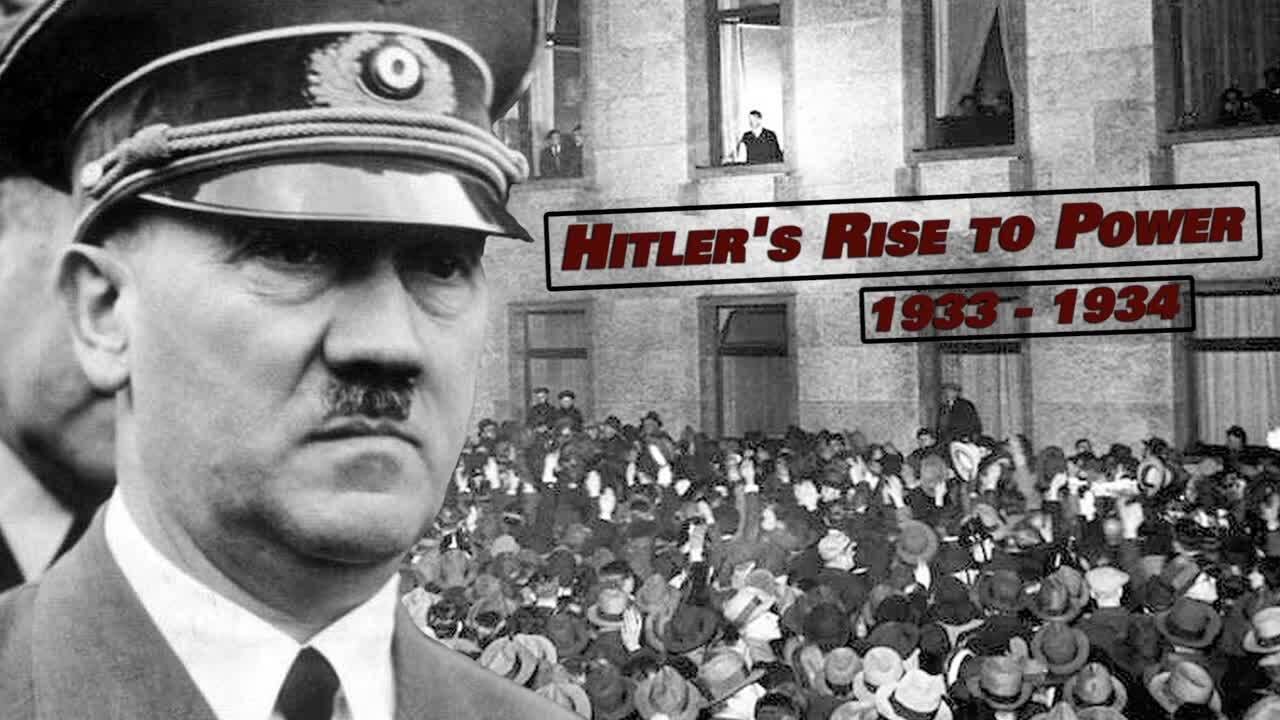
Hitler didn’t take over Germany by announcing he was evil. He took over by convincing good people that all of their problems could be blamed on someone else. The economy is bad? Blame the Jews. You lost your job? Blame the immigrants. Your country isn’t as great as it used to be? Blame the outsiders and the elites and the degenerates and anyone else who makes a convenient scapegoat. He gave people someone to hate so they wouldn’t notice who was really taking their freedom.
He controlled the media. He flooded the newspapers and the radio with propaganda designed to make people feel righteous in their anger while directing that anger wherever he wanted it to go. He used psychology to manipulate good people into believing lies because he understood that people don’t think critically when they’re emotional. Get them angry enough and they’ll believe anything. Get them scared enough and they’ll hand over their rights voluntarily.
This is how evil operates. It doesn’t announce itself. It wraps itself in flags and patriotism and promises of a return to greatness. It tells you that your problems are caused by your neighbors and that if you just give it enough power it will fix everything. It pits people against each other deliberately because a divided population is easy to conquer and a united population asking questions is a threat.
Look at how divided America is right now and ask yourself one simple question: who benefits from this division? The average American doesn’t benefit. Working people are struggling with the same problems, the same stagnant wages, the same crushing costs, the same feeling that the system is rigged against them. The only people who benefit from keeping Americans at each other’s throats are the people who intend to take control while everyone is too busy fighting to notice.
The Future They Are Building
This might sound like a crazy James Bond movie but I need you to think about something for a minute. We live in an era where a billionaire with access to an advanced robotics factory and artificial intelligence could theoretically build his own army. Not an army of soldiers who might refuse immoral orders. Not an army that needs to be paid and fed and convinced that the cause is just. An army of tireless machines that answer only to whoever controls them.

One thing history has proven over and over again is that the people with the sharpest swords and the strongest armor always eventually use them against the people who don’t have them. Always. Every single time. There has never been a powerful weapon invented that wasn’t eventually used to dominate those without it. And we are sleepwalking into an era where the most powerful weapons won’t be controlled by governments accountable to voters but by private individuals accountable to no one.
Wake up. Bad things are being built while you scroll through cat memes. Power is being consolidated while you argue about politics with strangers on the internet. The future is being designed by people who do not have your best interests at heart and most of you don’t even know it’s happening.
What You Can Actually Do
Clicking share is not enough. Liking a post is not enough. Feeling angry for a few minutes before moving on to the next distraction is not enough. If you actually care about this country and the future your children will inherit, you need to do more than perform activism from your couch.
Go to your local town hall meetings and ask uncomfortable questions. Make the people who represent you look you in the eye and explain why they’re not demanding accountability. Talk to your pastor about what’s happening because the church should be a voice against corruption and evil, not a silent spectator. Tell your friends and your family what you’re learning even if it makes them uncomfortable. Share articles that expose the truth with people who need to see them. Talk about this stuff out loud in public where other people can hear you because you might wake someone up who was sleepwalking through this nightmare just like everyone else.
Stop relying on mainstream news to tell you what matters. They are bought and paid for by the same people who benefit from you staying ignorant. Seek out independent journalists who don’t answer to corporate sponsors and billionaire owners. Support the people who are actually doing the work of exposing corruption instead of covering it up.
And for the love of God, stop spending all day chasing dopamine hits from meaningless content designed to keep you pacified and distracted. Every hour you spend scrolling through garbage is an hour you’re not spending on something that matters. Every cat meme and celebrity drama and algorithm-fed outrage is a distraction from the fact that your country is being stolen from you in slow motion while you watch.
Wake Up
When people stop caring, the ones who do care take control. And the people who care most about power are the ones you should be most afraid of. They are organized. They are patient. They have been working toward this for generations while you’ve been living your life assuming someone else was watching the gates.
Nobody is watching the gates. The people who were supposed to be watching are either corrupt or compromised or too afraid to speak up. The institutions that were supposed to protect you have been captured by the same interests they were designed to regulate. The media that was supposed to inform you has become a propaganda arm for whoever signs the checks.
You are the last line of defense. You and everyone like you who still has eyes to see and ears to hear and a spine strong enough to stand up and say this is not acceptable. If you don’t fight, nobody will. If you stay silent, the silence wins. If you keep scrolling and liking and sharing and pretending that counts as participation, you will wake up one day in a country you don’t recognize and wonder how it happened.
It’s happening right now. It’s been happening for years. The question is whether you’re going to do something about it or keep staring at your phone while the world burns around you.
If you’re one of the people who is awake, let us know in the comments. I need to know there are still Americans out there who see what’s happening and refuse to accept it. And if you know someone who is still asleep, share this article with them. Sometimes all it takes is the right words at the right time to shake someone out of their slumber.
Together we can keep this nation free. Divided and distracted, we’ve already lost.
A Note From Lily and The Wise Wolf
Lily, our junior reporter and current journalism student up in Minnesota, keeps joking that she’s going to have to “start an OnlyFans” if I can’t figure out how to pay her more. She’s kidding, obviously. She’s a good kid with a sharp mind and actual talent, which is exactly why I refuse to let her end up like me, still paying off student loans in my thirties for degrees that were supposed to guarantee a better life.
The Wise Wolf is my full-time job now. I walked away from the corporate cage, the soul-crushing web development and financial analyst gigs, to do this work. And part of that work is helping put Lily through school without her having to beg her dad for money or sign her future away to predatory lenders.
We are running 50% off subscriptions all through December. If you can afford it, please consider subscribing. If money is tight, you can still help by restacking this article and sharing it on your social media. Tag your friends and tag your family and tag anyone you know who still believes that real journalism matters and that the truth is worth fighting for.
The mainstream media won’t tell you what’s really happening. They can’t. They’re owned by the same people who benefit from keeping you in the dark. Independent journalism is the only thing standing between you and a world where the only information you receive is the information the powerful want you to have.
Support real journalism. Support real writers. Support the people who are actually trying to wake you up instead of keep you asleep.
Help keep the Wise Wolf howling. Thank you and God bless.
Free preview of the paid Wise Wolf Archive:

Well written my friend. 90 percent of my friends and family are asleep at the wheel its really sad.
You're seeing the pattern, but there's a deeper layer
I appreciate the passion here. The dysfunction you're describing is real - the corruption, the insider trading, the way power consolidates, the media capture. You're not wrong that it's happening.
But here's the question I've been asking myself for years: Why does this pattern keep repeating regardless of who's in charge?
You mentioned the Weimar Republic - smart parallel. But dig one layer deeper: Germany's governing institutions in the 1920s were designed to be weak by the Treaty of Versailles. The Reichstag couldn't function. That institutional weakness created the conditions where someone like Hitler could exploit the vacuum.
Same thing here. The corruption and power consolidation you're describing aren't happening despite our governing systems - they're happening because our governing systems were designed in the 1700s for a completely different world. And in the early 2000s, many of the constraints we had were systematically dismantled.
We're running 21st century complexity on 18th century architecture. No matter who you elect, no matter which party wins, they're all operating within a system that:
Has no institutional memory (policy whiplash every 4-8 years)
Creates perverse incentives (politicians spending 30+ hours/week fundraising)
Allows regulatory capture by design (revolving door between industry and oversight)
Literally shuts itself down when it can't agree on basic functions
That's not a people problem. That's an architecture problem.
Your anger is justified. But anger without a structural diagnosis just keeps us focused on the next villain while the system continues producing the same outcomes.
The real question isn't "how do we stop bad actors?" It's "how do we redesign the governance architecture so it doesn't keep selecting for dysfunction?"
Have you looked at the institutional design side of this? Because I think the system itself needs redesign, not just better people operating in the same broken structure.