



When God Went to the Movies
The lights dimmed in a nickelodeon somewhere in Brooklyn, 1897. Flickering images danced across a bedsheet. An actor in fake beard and robes raised his arms. The Passion Play had arrived on film, and nothing would ever be the same.
Cinema didn’t just borrow from scripture. It was born from it.
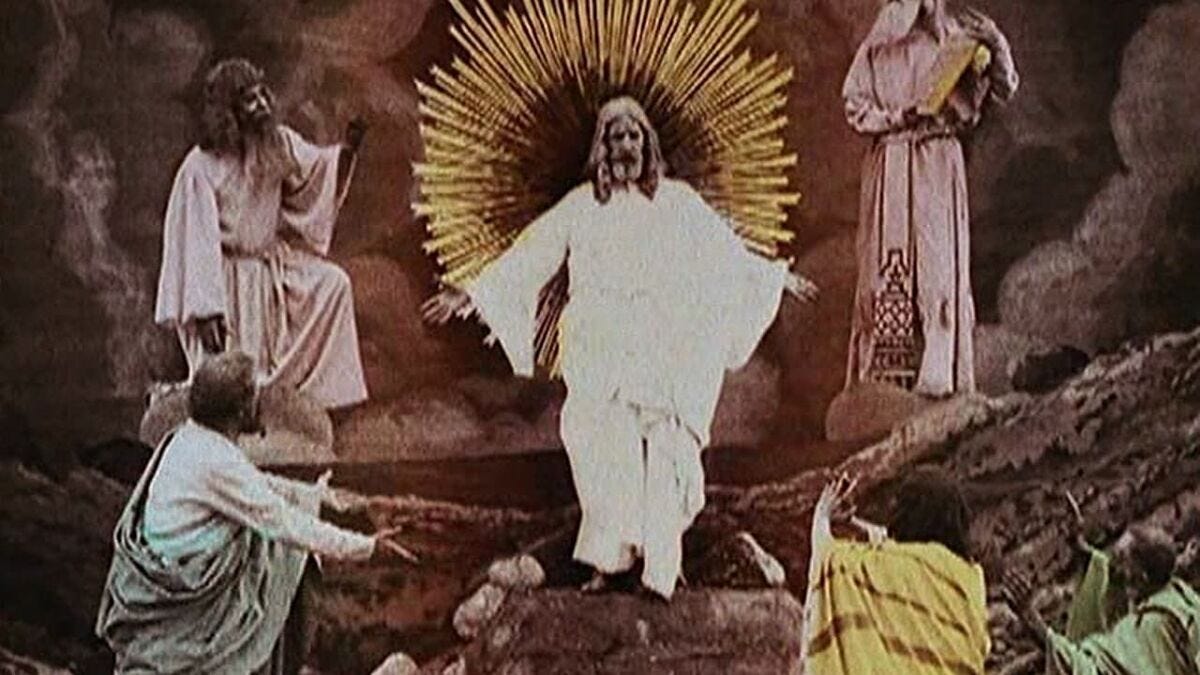
Not a comedy. Not a train pulling into a station. The crucifixion. Because when you’ve invented a technology that captures light and shadow and makes them move, what else would you show people but the greatest story ever told?
Early filmmakers understood something we’ve forgotten. The Bible wasn’t just source material.
It was the origin of all great works of cinema artistry.
The Cathedral Made of Light
Think about what movies actually are. You sit in darkness. You look up at illuminated images. A voice speaks from everywhere and nowhere. You experience transcendence, terror, wonder. You leave changed.
That’s not entertainment. That’s liturgy.
The silent era churned out biblical epics like medieval monks copying manuscripts. Quo Vadis (1913) ran two hours. Intolerance (1916) wove Babylon into its narrative tapestry. D.W. Griffith understood that cinema could do what churches had done with stained glass: tell sacred stories to the illiterate and literate alike.
But here’s where it gets interesting. As Hollywood grew, it faced a problem. Movies were too powerful. They moved people too much. And when you can move people, you can corrupt them.
The Code That Saved Hollywood from Itself
Enter the Production Code of 1930, enforced by 1934. You know it as the Hays Code, but that sanitizes what it really was: a direct attempt to inject Judeo-Christian morality into every frame of film.
The Code didn’t just ban nudity and profanity. It demanded that evil be punished. That virtue triumph. That marriage be sacred. That ministers and priests be portrayed with respect. That “the sympathy of the audience should never be thrown to the side of crime, wrongdoing, evil or sin.”
Was it censorship? Absolutely. Was it also the secret sauce that made Hollywood’s Golden Age golden? Also yes.
Directors had to get creative. They couldn’t show you everything, so they showed you enough. Hitchcock became Hitchcock because he had to suggest rather than display. Billy Wilder’s innuendos landed harder than any modern explicitness because you had to meet them halfway.
And biblical films? They flourished like desert flowers after rain.
When Spectacle Meant Something
Let’s talk about the films that got it right. Not the Sunday school flannel-graph versions. The ones that understood cinema could be sacred without being sanctimonious.
1. The Passion of Joan of Arc (1928)
Carl Dreyer’s silent masterpiece isn’t technically biblical, but it’s more holy than most scriptures adapted straight. Renée Falconnet’s face fills the frame. No makeup. No mercy. Just closeup after closeup of a woman being destroyed for hearing God’s voice.
![The Passion Of Joan Of Arc - The Masters Of Cinema Series [DVD] [1928]: Amazon.co.uk: Maria Falconetti, Eugene Silvain, André Berley, Maurice Schutz, Antonin Artaud, Michel Simon, Jean d'Yd, Louis Ravet, Armand](https://substackcdn.com/image/fetch/$s_!XZhQ!,f_auto,q_auto:good,fl_progressive:steep/https%3A%2F%2Fsubstack-post-media.s3.amazonaws.com%2Fpublic%2Fimages%2F8180db0c-1ca6-4237-9139-c6f217711835_894x638.jpeg "The Passion Of Joan Of Arc - The Masters Of Cinema Series [DVD] [1928]: Amazon.co.uk: Maria Falconetti, Eugene Silvain, André Berley, Maurice Schutz, Antonin Artaud, Michel Simon, Jean d'Yd, Louis Ravet, Armand")
You can’t look away. You can’t breathe. It’s an ordeal. Which is exactly what it should be.
Dreyer shot this like he was documenting a martyrdom in real time. The judges loom. Joan suffers. There’s no music in the original cut (find that version if you can). Just silence and the human face contorted by faith.
This is what biblical cinema can be: not a costume drama but a theological argument made in light and shadow.
2. The Ten Commandments (1956)
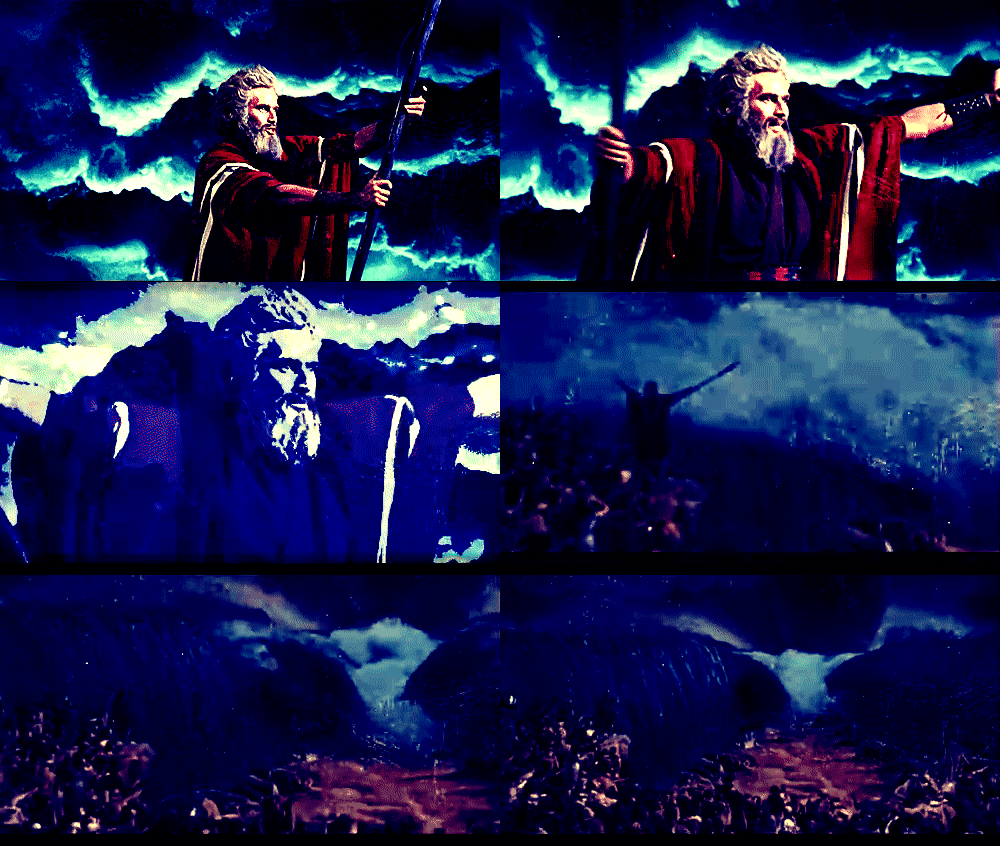
DeMille’s second crack at Moses makes the first one look like a home movie. Three hours and forty minutes of Technicolor maximalism. Mountains split. Seas part. Yul Brynner’s Rameses glowers in eyeliner.
Critics sneer at this film. They’re wrong.
Yes, it’s bombastic. That’s the point. The Exodus wasn’t a kitchen-sink drama. It was cosmic. DeMille understood that some stories demand spectacle. The parting of the Red Sea took six months to film using 300,000 gallons of water and probably cost more than most countries’ GDP.
But watch Charlton Heston’s Moses descend from Sinai. Watch his face when he finds the golden calf. The spectacle serves the story. The story serves the faith.
Modern blockbusters give you CGI armies fighting over MacGuffins. DeMille gave you the foundation of Western civilization.
3. Ben-Hur (1959)
William Wyler’s revenge epic disguised as a biblical film. Or is it a biblical film disguised as a revenge epic? That ambiguity is the genius.
The chariot race gets all the attention. Rightfully so. Eleven minutes of practical effects, real horses, actual danger. They shot 200,000 feet of film to get it. Stunt men nearly died. One horse did die (which wouldn’t happen today, but we’re discussing artistry, not ethics).
But the real power comes from Judah Ben-Hur’s transformation. He meets Christ three times. Each time changes him. Not through sermons but through presence. You never see Jesus’s face clearly. Just his impact.
That’s sophisticated theology. Grace works through encounter, not exposition.
4. The Gospel According to St. Matthew (1964)
Pier Paolo Pasolini was a Marxist homosexual atheist. He made the most faithful Christ film ever committed to celluloid.
How? He just shot Matthew’s gospel. No additions. No interpretations. He used non-professional actors, real locations, and stark black-and-white photography. Jesus looks like a Middle Eastern peasant, not a Renaissance painting. The disciples look confused because they are confused.
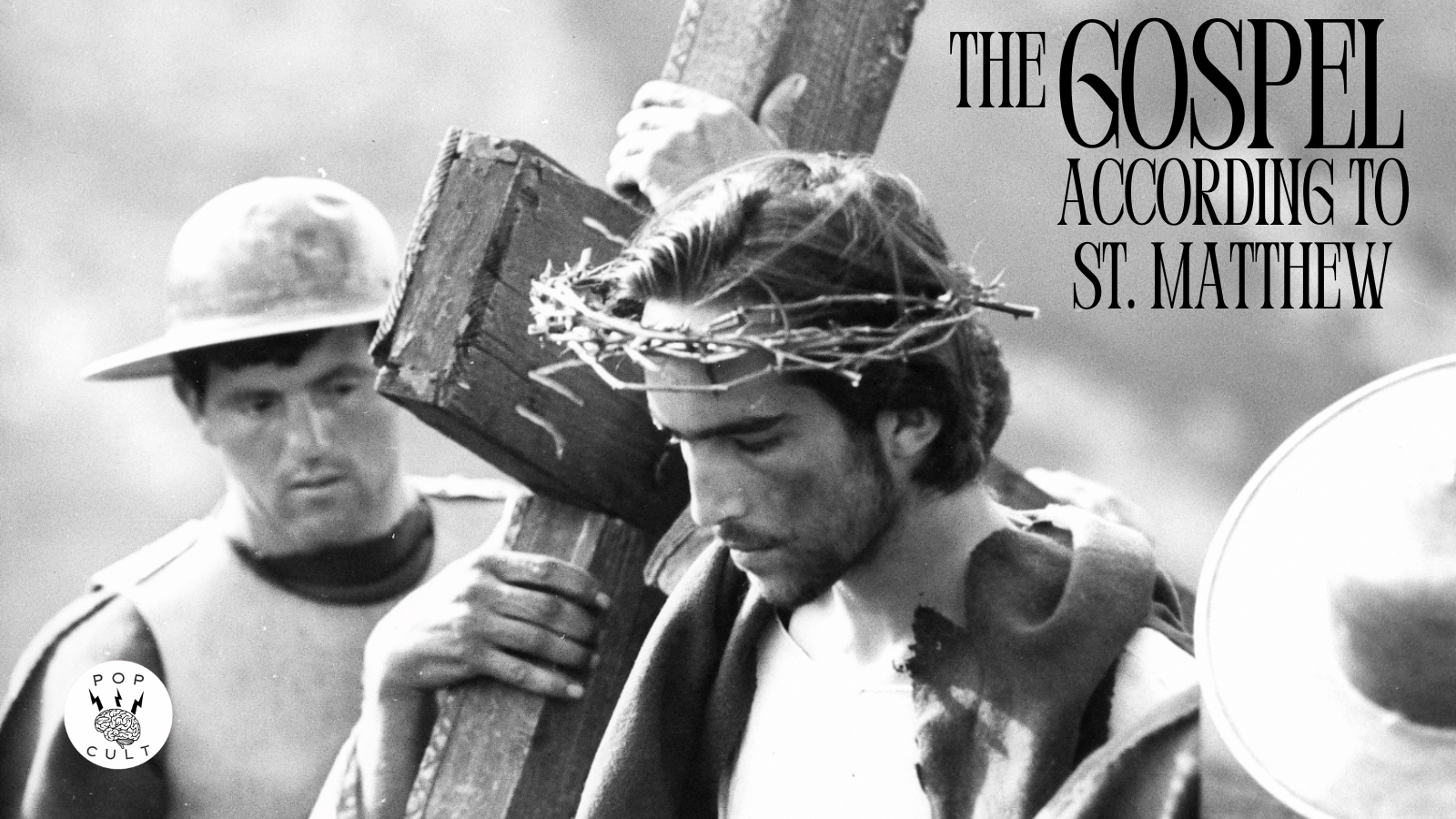
Critics expected controversy. Instead, the Catholic Church embraced it. Pasolini had accidentally proved something: the text works. You don’t need to improve it. You need to trust it.
The Sermon on the Mount plays over faces of the poor. The Passion unfolds with documentary intensity. There’s no sentimentality.
Just the words and the Word made flesh.
5. A Man for All Seasons (1966)
Thomas More dies for an idea: that some things matter more than survival.
Fred Zinnemann’s film is all dialogue and moral rigor. Robert Bolt’s script crackles. Paul Scofield’s More is no saint. He’s witty, political, fully human. He loves life. He still chooses death.
“I will not give in because I oppose it,” More says. Not because he’ll go to heaven. Because it’s wrong.
This is biblical cinema at its most mature. No miracles. No spectacle. Just a man and his conscience and the cost of integrity.
The film won six Oscars. Could a film this talky and morally uncompromising win today? Not a chance.
6. The Prince of Egypt (1998)
DreamWorks’ animated Moses shouldn’t work. Animated biblical epics tend toward veggie-tale sappiness.
Instead, you get the one of best Exodus films ever made.
The animation is stunning. Egypt feels real. The plagues are horrifying.
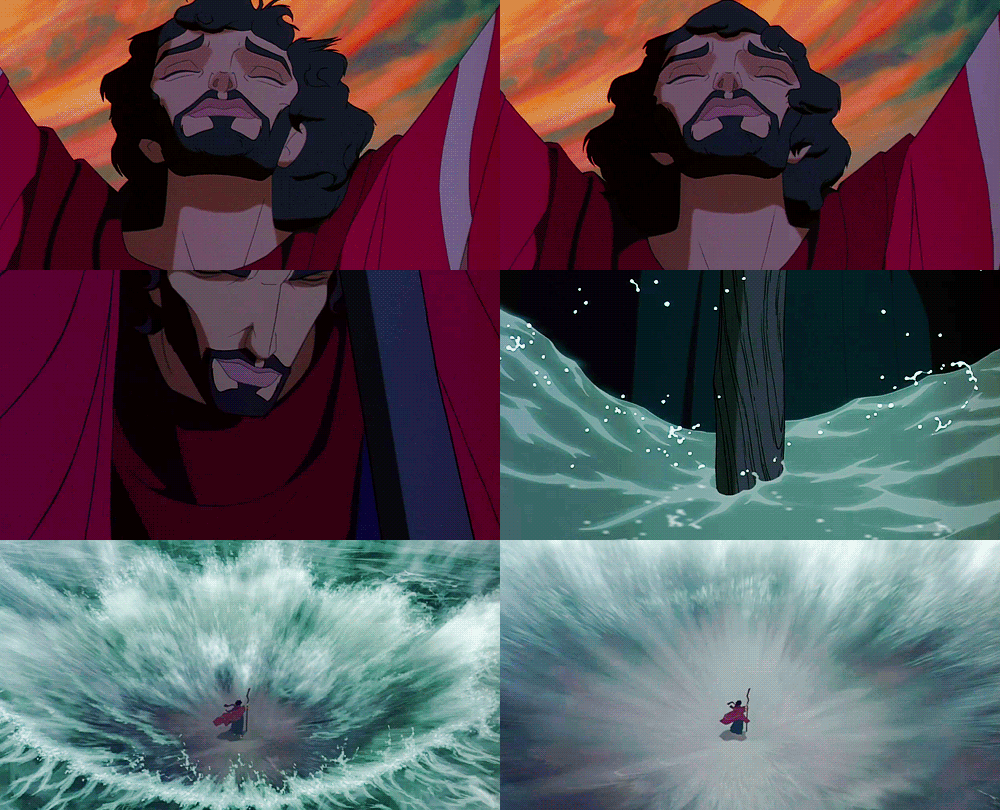
But the secret weapon is the relationship between Moses and Rameses. These are brothers who love each other. Fate makes them enemies.
“You who I called brother, how could you have come to hate me so?” Rameses asks.
“I never hated you,” Moses replies.
There’s your entire theology of the Fall in one exchange. Love twisted by pride. Destiny demanding sacrifice.
Plus, “When You Believe” is an absolute banger.
7. The Passion of the Christ (2004)
Mel Gibson went full Gibson. Aramaic. Latin. Two hours of torture.
Secular critics called it pornographic. They missed the point.
The Passion isn’t entertainment. It’s Stations of the Cross on film. You’re supposed to suffer through it. The violence isn’t gratuitous. It’s the point. This is what the crucifixion was: state-sponsored torture designed to break body and spirit.
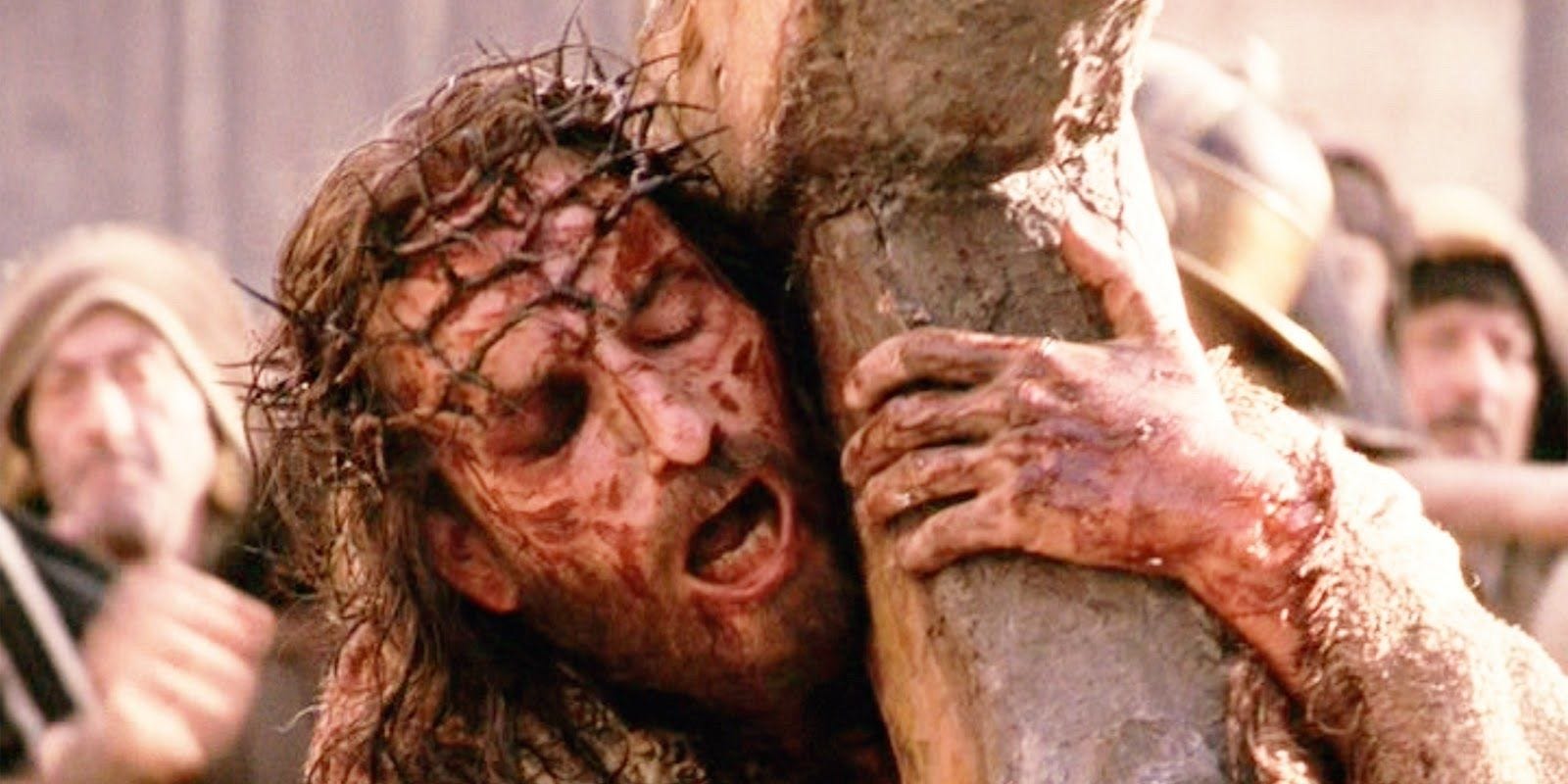
Is it for everyone? No. Is it powerful cinema made by someone who believes every frame? Absolutely.
It made $612 million on a $30 million budget.
People are starving for films that take faith seriously.
8. Silence (2016)
Martin Scorsese spent 28 years trying to make this film. You can feel every year.
Two Jesuit priests go to Japan during the persecution. They watch converts tortured. They face a choice: apostatize or watch others die.
What do you do when God is silent? When faithfulness leads to others’ suffering? When the right answer isn’t clear?
Scorsese doesn’t give you comfort. He gives you Shūsaku Endō’s novel translated into visual poetry. Andrew Garfield’s Father Rodrigues breaks. Not because he’s weak but because love demands it.
The film asks: Is betraying God for love of neighbor the most Christian thing possible?
That’s a question most biblical films won’t touch. Scorsese lived with it for three decades.
9. The Tree of Life (2011)
Terrence Malick’s meditation on Job, grace, and a 1950s Texas childhood.
This isn’t narrative cinema. It’s visual theology. The creation sequence shows the birth of the universe. Dinosaurs appear. A mother whispers about the two ways to live: nature or grace.
Brad Pitt’s father represents law. Jessica Chastain’s mother represents love. Their son (Sean Penn, wandering through modern architecture) tries to reconcile them.
You either surrender to Malick’s vision or you don’t. There’s no middle ground. But if you do, you’ll see something unprecedented: a film that wrestles with theodicy through pure image.
Why do children die? Why does evil prosper? Why anything?
Malick’s answer: because beauty exists anyway. Grace happens. Love persists.
10. The Last Temptation of Christ (1988)
Scorsese again. Based on Nikos Kazantzakis’s novel, this imagines a Christ who doesn’t want to be Christ.
Fundamentalists protested. Theaters were bombed. People died in Paris.
They should have actually watched it.
This is the most theologically interesting Christ film ever made.
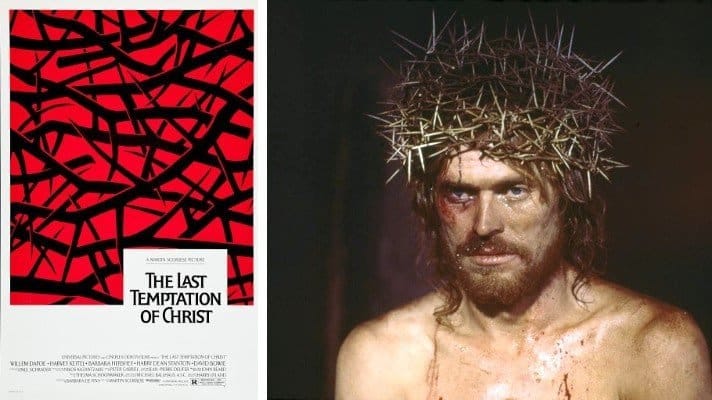
He makes crosses for Roman executions, hoping God will leave him alone. He experiences every human temptation, including the big one: a normal life.
The last temptation isn’t sex. It’s domesticity. The dream of growing old, having children, dying peacefully.
Christ rejects it.
He chooses the cross.
That sacrifice means nothing if there’s no real alternative. This film gives Christ agency. He’s not a puppet. He’s God who chose humanity and humanity who chose divinity.
The controversy proved Scorsese was onto something.
Real faith disturbs.
The Fall and the Fumbling
Something broke around 2006. Hollywood didn’t just stop making good biblical films. It stopped understanding why they mattered.
Exodus: Gods and Kings (2014) turned Moses into a schizophrenic who hallucinated God as a British child. Noah (2014) was Aronofsky’s environmental fever dream with rock monsters. Mary Magdalene (2018) and Risen (2016) came and went without a trace.
The few that tried earnest faith, like Paul, Apostle of Christ (2018), felt like afterschool specials. No artistry. No risk. Just bland piety.
Meanwhile, the broader culture spiraled into calculated offense. Every boundary pushed. Every taboo broken.
Not for artistic purposes but for marketing.
The Production Code collapsed in the 1960s. Good riddance to censorship, right? Except what replaced it wasn’t mature artistic freedom.
It was adolescent shock value.
Studios now greenlight films that lose hundreds of millions and shrug. The Marvels lost $237 million. Indiana Jones and the Dial of Destiny lost $143 million. These aren’t exceptions. They’re the rule.
Why? Because the industry forgot how to tell stories that affirm anything. Deconstruction became the only mode. Subversion the only goal. Wonder was replaced with irony. Reverence with snark.
You can’t make biblical epics in that environment. They require sincerity. They demand you believe something matters absolutely.
The Celluloid Creed
Here’s the uncomfortable truth: those ten films aren’t just about faith. They are faith.
The Bible is text. These films are experience. They make the stories tangible. They give you faces to picture when you read. They provide emotional contexts the written word can only suggest.
Ask a millennial what they imagine when they think of Moses. It’s either DreamWorks animation or Charlton Heston. The Jesus in their mind probably looks like Jim Caviezel or Robert Powell or Max von Sydow.
That’s not trivial. That’s sacramental. Icons in motion.
The early Church knew this. They painted Christ on walls. They carved saints in stone. They built cathedrals that told stories in architecture. Not because they didn’t trust the text but because humans need more than words.
Cinema does what stained glass once did. It makes the invisible visible.
The Parched Throat
We’re in a desert period.
Forty years wandering.
Waiting for someone to remember how it’s done.
But the films remain. You can watch them tonight. Let Dreyer break your heart. Let DeMille blow your mind. Let Scorsese challenge your assumptions.
These aren’t museum pieces. They’re living texts. Each viewing reveals something new.
The biblical epic will return. It has to. The stories are too powerful. The hunger is too great. Some young director will stumble onto Pasolini or Wyler and think: “We used to make films like this?”
And the cycle will begin again.
Until then, we have these ten. These monuments. These prayers in celluloid.
Watch them like you’d read scripture. With attention. With openness. With the possibility that you might see something you’ve never seen before.
The screen will go dark. The credits will roll. But something will remain.
The light.
Always the light.
“For God, who said, ‘Let light shine out of darkness,’ has shone in our hearts.” — 2 Corinthians 4:6
EDITOR’S NOTE: It seems I missed some really amazing films that should have been at least part of an honorable mentions section at the end of the article. If there is anything you think should be part of this list - mention it in the comments for others reading this article.
One honorable mention deserves your attention. The Name of the Rose (1986) stars Sean Connery as a former inquisitor sent to investigate murders at a medieval abbey. Christian Slater plays his novice, looking about fifteen years old. The film adapts Umberto Eco's novel into something dark and suffocating. Erotic. Grim. Soaked in symbolism and sin. I won't spoil the central mystery, but it revolves around people willing to murder for forbidden knowledge. Connery brings gravitas to a detective story wrapped in theology. The abbey feels like it's rotting from within. Watch it if you haven't. It understands that faith and fear often sleep in the same bed.
Great article! Have you considered "The Seventh Seal" of 1957 by Bergman. An absolute masterpiece!