



Editorial Disclaimer: This article interprets scripture literally. Every claim is backed by direct biblical quotation. I’m not adding spin or clever theology. I’m reading what Jesus said and taking him at his word.
If this offends you and you claim to be a Christian, maybe you need to reevaluate your faith. Not my faith in writing this.
Yours in rejecting it.
Most self-identified Christians would despise living under the government Jesus described. They’d call it radical. Dangerous. Unrealistic. They’d scream about handouts and government overreach. They’d build walls higher. Turn away more strangers. Demand harsher sentences and bigger defense budgets. They’d vote against every policy Christ explicitly commanded.
That’s not speculation. That’s what’s happening right now.
The question isn’t whether America is a Christian nation. The question is whether most Christians would recognize Christ’s teachings if they showed up in a policy platform. Based on voting patterns and polling data, the answer is no.
So let’s run the experiment. What would government look like during the millennial reign, when Christ actually rules? Not the fantasy version where everyone speaks English and drives pickups to megachurches. The version described in scripture. The one that makes both parties squirm.
One more thing before we dive in. This isn’t about Democrats or Republicans. Not about left versus right, liberal versus conservative. Those are human political categories. Christ’s authority is cosmic, not political. His kingdom operates on principles that don’t fit neatly into any modern ideology. If you’re trying to map this onto your preferred political party, you’re missing the point.
The Kingdom of God makes everyone uncomfortable because it demands we surrender our tribal loyalties and actually follow what Jesus said.
Sell Everything and Give It to the Poor?

Here’s where it challenges conventional economic thinking.
Jesus talked about money constantly. More than sex. More than prayer. And he wasn’t subtle about it. “It is easier for a camel to go through the eye of a needle than for a rich person to enter the kingdom of God” (Matthew 19:24).
Not “rich people need to be generous sometimes.” Not “wealth is fine if you earned it honestly” (which never happens). Straight up: being ‘rich’ puts your soul in danger.
He told one rich man, “Sell your possessions and give to the poor” (Matthew 19:21). Not ten percent. Everything. The early church took this literally. Acts 2:44-45 describes believers selling property and possessions, distributing to anyone in need. Acts 4:32 goes further. “No one claimed that any of their possessions was their own, but they shared everything they had.”
This isn’t cherry-picking verses. This is the entire thrust of Jesus’s economic teaching.
He told a parable about a rich man who went to hell for ignoring a poor man at his gate (Luke 16:19-31). Not for being cruel. Not for stealing. For doing nothing while someone suffered.
And when Jesus found people exploiting the poor through financial corruption? He didn’t debate them. He made a whip out of cords and physically drove them out of the temple (John 2:15). Flipped their tables. Scattered their coins. The same Jesus who preached turning the other cheek took time to braid a whip and beat the money changers. That’s how much he hated usury and economic exploitation. The only time in scripture where Jesus uses violence, and it’s against financial predators.
Now imagine the policy platform.
Mandatory wealth redistribution for the excessively rich. Progressive taxation that actually redistributes. A maximum income or wealth cap, because Jesus explicitly said you cannot serve both God and money (Matthew 6:24). Universal basic income, since everyone has needs. Debt jubilee every fifty years, as commanded in Leviticus 25. Student loans, medical debt, mortgages: all forgiven. “Forgive us our debts, as we also have forgiven our debtors” (Matthew 6:12).
That’s not metaphor. That’s economic policy.
Interest-free loans to the poor. Charging interest to those in need is explicitly forbidden in Exodus 22:25 and Leviticus 25:36-37. Jesus went further. “Lend to them without expecting to get anything back” (Luke 6:35).
Every modern politician shouting about Christian values while opposing progressive taxation, slashing social programs, and protecting billionaires is preaching a different gospel. Not a variation. A different religion entirely.
“But What About ‘If You Don’t Work, You Don’t Eat’?”
Someone always brings this up. 2 Thessalonians 3:10. “If anyone is not willing to work, let him not eat.” They use it to justify cutting food stamps. Opposing welfare. Letting people starve.
Context matters.
Paul wrote this to a specific church with a specific problem. Some believers in Thessalonica quit their jobs because they thought Christ was returning next week. They were sitting around waiting for the Second Coming instead of living their lives. Paul told them to get back to work. It’s a rebuke against apocalyptic laziness, not a universal declaration that the poor deserve to starve.
The same letter says “never tire of doing what is good” (2 Thessalonians 3:13). It commands the church to care for those in need. Paul himself collected money for the poor throughout his ministry. Acts 20:35 quotes Jesus: “It is more blessed to give than to receive.” The entire thrust of scripture is caring for those who cannot care for themselves.
Using one verse to justify abandoning the poor while ignoring hundreds commanding generosity isn’t interpretation. It’s distortion. If your theology lets you walk past hungry people and feel righteous about it, you’ve failed the only test Jesus said actually matters (Matthew 25:31-46).
Welcome the Stranger or Go to Hell
This one’s not complicated. Scripture is unambiguous.
“When a foreigner resides among you in your land, do not mistreat them. The foreigner residing among you must be treated as your native-born. Love them as yourself, for you were foreigners in Egypt” (Leviticus 19:33-34).
That’s Old Testament. Jesus made it a salvation issue. “I was a stranger and you invited me in” versus “I was a stranger and you did not invite me in” (Matthew 25:35-43). One group goes to heaven. The other doesn’t.
Not “I was a stranger with proper documentation.” Not “I was a stranger who spoke English.” Just: I was a stranger.
Here’s the tension. We’re not living in the millennial kingdom yet. In Christ’s reign, there are no cartels. No human trafficking. No criminal enterprises exploiting borders. When Jesus rules, these problems vanish. But we’re not there yet.
Does that mean we ignore Christ’s command until we are? No. It means we implement it as faithfully as possible in a fallen world. Vet for actual threats. Screen for legitimate security concerns. But maintain a posture of radical welcome, not fearful rejection.
The problem is how this plays out in practice. Most Christians don’t say “let’s welcome refugees while being wise about security.” They say “build the wall” and “send them back.” They use the existence of cartels and criminals to justify rejecting everyone. They let fear of the 1% override compassion for the 99%. They’ve made “illegal” the magic word that lets them ignore “stranger.”
The Bible mentions caring for foreigners more than it mentions homosexuality, abortion, or most hot-button issues combined. It’s not a side issue. It’s central. A Christian immigration policy errs dramatically on the side of welcome. It assumes good faith, not criminality. It treats asylum seekers with dignity, not detention. It keeps families together. It provides pathways to legal status. It remembers that “you were foreigners in Egypt.”
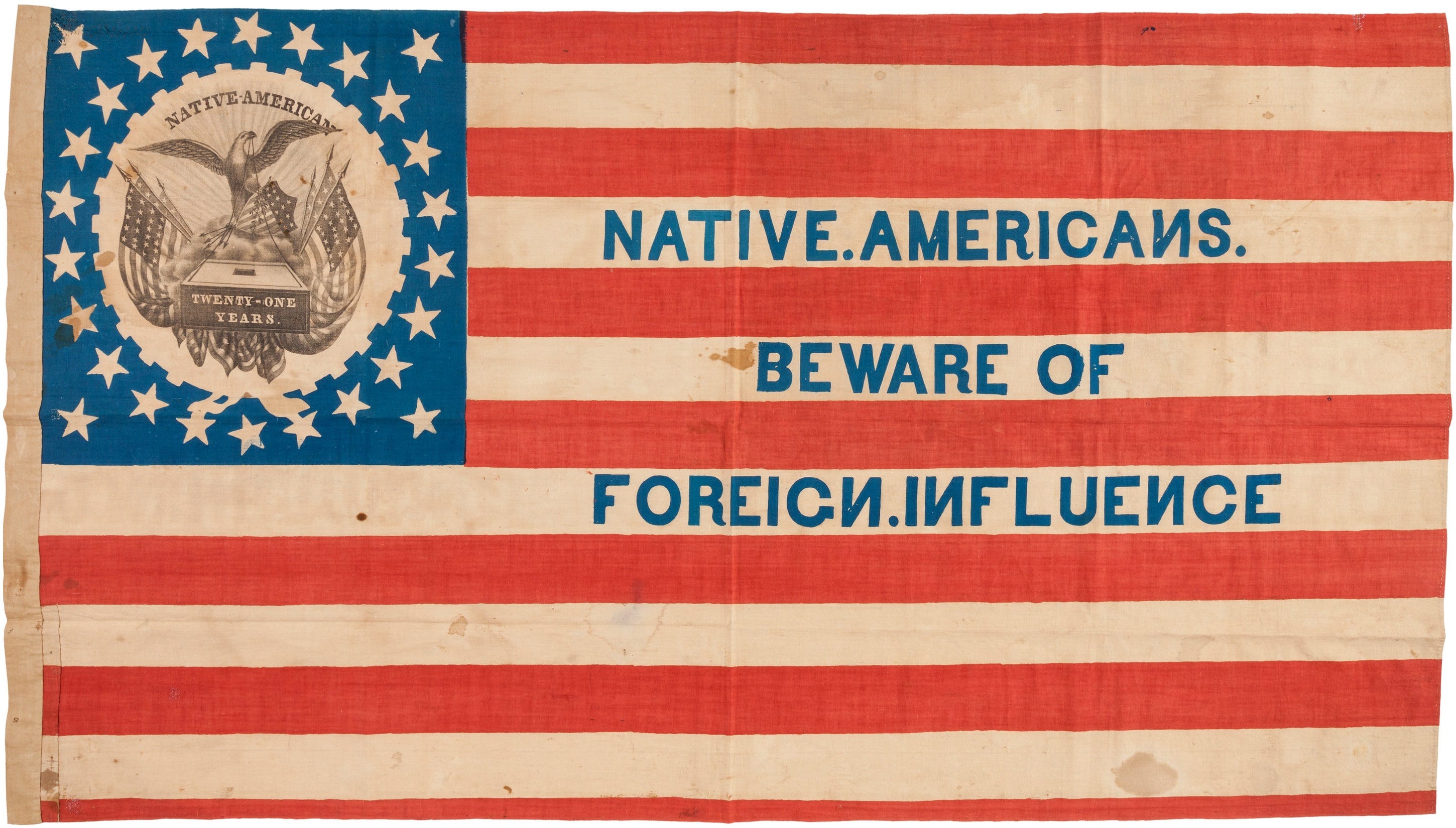
And let’s be honest about who’s making these arguments. The only people native to North America are Native Americans. Everyone else arrived later. Your ancestors were immigrants. My ancestors were immigrants. Even the Native Americans migrated here in the distant past. None of us “belong” here in any ultimate sense. We’re all foreigners claiming ownership of land that isn’t ours.
The Bible actually says this explicitly. “The land is mine and you reside in my land as foreigners and strangers” (Leviticus 25:23). We don’t own anything. We’re temporary residents. The idea that some immigrants are legitimate (ours) while others are invaders (theirs) is tribalism, not theology.
Yet Christians overwhelmingly support deportation, family separation, and hostile border policies. Politicians wrap themselves in crosses while campaigning on keeping strangers out. They quote Romans 13 about obeying government but ignore every verse about loving foreigners. They’ve turned “legal immigration” into a phrase that means “almost no immigration.” They’re not being cautious. They’re being disobedient.
Forgive Seventy-Seven Times
The criminal justice system under Christ’s reign would horrify anyone demanding tougher sentences and harsher penalties.
Start with the woman caught in adultery (John 8:7). Death penalty offense under Old Testament law. Jesus stops the execution. “Let him who is without sin cast the first stone.” Everyone leaves. No punishment. Just “Go and sin no more.”
That’s not a one-off.
“Blessed are the merciful, for they will be shown mercy” (Matthew 5:7). “Be merciful, just as your Father is merciful” (Luke 6:36). Peter asks if forgiving seven times is enough. Jesus says seventy-seven times (Matthew 18:22). That’s infinite forgiveness as policy.
Prison reform becomes prison abolition or something close. “I was in prison and you came to visit me” (Matthew 25:36). Not “I was in prison and you supported three-strikes laws.” Not “I was in prison and you built more cells.” You visited. You showed mercy. You sought restoration.
Restorative justice replaces retribution. Rehabilitation over punishment. Forgiveness over vengeance. Drug treatment over incarceration. Programs for reentry, not recidivism. It’s not soft on crime. It’s hard on the causes of crime: poverty, trauma, lack of opportunity.
But Protect the Victims
Here’s where we need to be sensible. Mercy doesn’t mean abandoning justice for victims. Christ’s entire ministry focused on protecting the vulnerable. When he saw people harming others, he intervened. When he encountered those exploiting the weak, he drove them out with a whip.

The problem with modern justice isn’t that it’s too merciful. It’s that it’s inverted. Completely backwards.
In parts of Europe right now, people serve jail time for social media posts. For saying offensive things. For hurting feelings. Meanwhile, documented cases exist of violent criminals, including rapists, receiving suspended sentences or minimal time because prosecutors want to appear culturally sensitive or progressive. That’s not mercy. That’s perversion of justice.
Biblical justice is simple. If you harm another person directly, there are consequences. Rape, assault, abuse, violence against the vulnerable. These demand justice for the victim. “Whoever causes one of these little ones who believe in me to sin, it would be better for him to have a great millstone fastened around his neck and to be drowned in the depth of the sea” (Matthew 18:6). Jesus didn’t mince words about harming the innocent.
But drug possession? Theft born of desperation? Victimless crimes? These call for restoration, not incarceration. And speech, no matter how offensive? “If your brother sins against you, go and tell him his fault, between you and him alone” (Matthew 18:15). Work it out. Forgive. Move on. Don’t throw people in cages for words.
The current system punishes the wrong things and excuses the inexcusable. Someone posts something inflammatory online and faces a year in prison. Someone violently assaults another human and walks with a suspended sentence because of political optics. That’s not biblical justice. That’s not any kind of justice.
Christ’s justice system would be radically merciful toward non-violent offenders while ensuring real protection for victims of actual harm. It would focus on restoration for those who can be restored and removal from society for those who pose genuine danger to others. It would never cage someone for speech while letting violent predators walk free.
Every Christian politician campaigning on tougher sentences, more executions, and harsher penalties is campaigning against Jesus. But every politician who excuses violence against the innocent while criminalizing speech is equally corrupt.
Heal the Sick Without Payment
Jesus healed constantly. Never asked for insurance. Never checked if they deserved it. Never told anyone their illness was their fault.
“Heal the sick, raise the dead, cleanse those who have leprosy, drive out demons. Freely you have received; freely give” (Matthew 10:8). Universal healthcare is obedience to Christ’s command.
A Christian government covers everyone. Pre-existing conditions aren’t a category because everyone gets care. Medical bankruptcy doesn’t exist. Prescription costs are controlled. Mental healthcare is fully funded. Addiction treatment is free and available.
This isn’t controversial in scripture. It’s obvious. Jesus spent more time healing than preaching. He touched lepers when everyone else fled. He prioritized the sick, the disabled, the suffering.
Yet Christians oppose universal healthcare at higher rates than the general population. They vote for politicians who gut Medicaid while quoting scripture. They’d rather protect insurance company profits than follow Christ’s example.
Turn the Other Cheek
This is where the cognitive dissonance gets loud.
“You have heard that it was said, ‘Eye for eye, and tooth for tooth.’ But I tell you, do not resist an evil person. If anyone slaps you on the right cheek, turn to them the other cheek also” (Matthew 5:38-39).
Not metaphor. Literal instruction.
“Love your enemies and pray for those who persecute you” (Matthew 5:44). “Blessed are the peacemakers” (Matthew 5:9). When soldiers come to arrest Jesus, Peter fights back. Jesus rebukes him. Then he heals the wounded soldier’s ear (Luke 22:51).
A Christian foreign policy is radically pacifist. Minimal military. No preemptive strikes. Generous foreign aid. Diplomatic solutions over force. Enemy nations aren’t threats to be destroyed but neighbors to be loved.
That’s insane to modern ears. It was insane to ancient ears too. Rome ruled through violence. Jesus preached non-violence. It cost him his life. He knew it would. He did it anyway.
Christians today support military spending, aggressive foreign policy, and bombing campaigns at rates higher than non-Christians. They’ve traded “turn the other cheek” for “peace through strength.” They’ve made patriotism a higher value than peacemaking.
Did You Feed the Hungry?
Matthew 25:31-46 describes the final judgment. Jesus separates people into two groups: heaven and hell. The criteria?
Did you feed the hungry? Give drink to the thirsty? Welcome strangers? Clothe the naked? Care for the sick? Visit prisoners?
Nothing about sexual morality. Nothing about doctrinal purity. Nothing about church attendance or prayer life or believing the right theology. Just this: did you care for the suffering?
Those who did: heaven. Those who didn’t: “Depart from me, you who are cursed, into the eternal fire” (Matthew 25:41).
This should terrify anyone voting against food stamps, healthcare expansion, refugee resettlement, and prison reform. According to Jesus, that’s voting yourself into hell.
The Politicians Who’d Crucify Him Again
Politicians campaign on Christian values while slashing programs for the poor. They quote the Bible while opposing immigration reform. They call themselves pro-life while cutting food assistance for children. They demand law and order while Jesus demanded mercy. They build wealth while Jesus commanded sharing it. They wrap themselves in the flag while Jesus said his kingdom isn’t of this world.
They’re not hypocrites because they fail to live up to Christian ideals. Everyone fails that. They’re hypocrites because they preach the opposite of what Jesus taught and call it Christianity. They’ve created a new religion that looks like nationalism, sounds like capitalism, and has nothing to do with the Sermon on the Mount.
Their followers cheer. They vote in larger numbers. They believe they’re defending Christianity while rejecting Christ’s actual words.
Jesus reserved his harshest language for this exact behavior. Matthew 23 is a sustained attack on religious leaders who “do not practice what they preach” (23:3). Who “shut the door of the kingdom of heaven in people’s faces” (23:13). Who “neglect the more important matters of the law: justice, mercy and faithfulness” (23:23).
He called them whitewashed tombs. Snakes. Vipers. These were the religious leaders. The ones who studied scripture and prayed publicly and fasted and gave to the temple.
They killed him for disrupting their comfortable arrangement with power.
The Millennial Reign Nobody’s Ready For
So what does Christ’s thousand-year reign actually look like?
Uncomfortable. Radically redistributive. Welcoming to an almost reckless degree. Merciful beyond recognition. Peaceful when violence seems necessary. Generous when scarcity seems prudent.
The rich lose their wealth. Not as punishment but as liberation from what Christ called their greatest spiritual danger. The poor receive not charity but justice. Not handouts but what was always theirs. Debt vanishes every few decades. Interest-free loans flow freely.
Borders functionally disappear. Foreigners are neighbors. Refugees are welcomed. The stranger is invited in, no questions asked.
Prisons transform or empty out. Punishment gives way to restoration. Execution becomes unthinkable. Mercy isn’t weakness. It’s law.
Healthcare is universal and free. Education is universal and free. Basic needs are met before luxury is allowed. No one suffers lack while others accumulate excess.
Military budgets shrink to almost nothing. Defense becomes actual defense, not offense. Enemies are loved, not bombed. Peacemaking becomes the highest form of patriotism.
And leadership looks like service. The greatest become the least. Power corrupts itself out of existence. Pride has no place. Humility is policy.
This terrifies most modern Christians because it’s the opposite of what they’ve been taught Christianity means. They’ve been sold a Jesus who loves America, capitalism, and strong borders. A Jesus who rewards hard work with wealth and punishes poverty as moral failure. A Jesus who demands others live righteously while tolerating their own comfort and excess.
That Jesus doesn’t exist. He never did.
What Are You Actually Worshipping?
You can’t claim Christianity while opposing what Christ taught. You can call yourself whatever you want, but words mean things. Christian means follower of Christ. If you’re following political demagogues, economic self-interest, and cultural comfort instead of Jesus’s actual commands, you’re following something else.
That’s okay. You can choose that. But don’t call it Christianity.
Don’t quote the Bible while voting against the poor. Don’t invoke Jesus while turning away strangers. Don’t claim faith while demanding vengeance. Don’t preach the gospel while hoarding wealth.
And if you’re not ready to live under the government Jesus described? If that vision horrifies you? If you’d vote against it in a heartbeat? Then ask yourself: what am I actually worshipping?
Because it isn’t Christ.
The millennial reign is coming, according to believers. Christ will rule. His policies will be law. His economics will be reality. His justice system will be in place. His immigration policy will be enforced.
Are you ready for that?
Or would you, like the Pharisees before you, find a way to crucify him all over again?
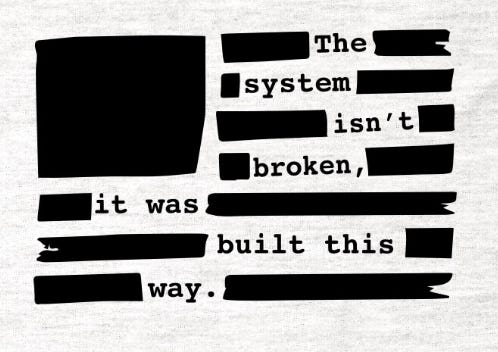
The System Is Broken by Design
Here’s the uncomfortable truth. The problems we face aren’t accidents. They’re engineered.
America has enough farmland to feed the entire globe. Technology exists right now to provide cheap, healthy food for everyone. We could solve hunger tomorrow. We don’t.
We have enough land to settle every immigrant who wants to come here. Government-owned territory sits empty while we argue about border walls. Immigration could be solved with logistics and will. It isn’t.
Healthcare is a deliberate clusterfuck. It makes pharmaceutical companies and insurance corporations trillions of dollars precisely because it’s broken. The government could fix it. They choose not to. Because that’s what the lobbyists pay them to do. Bandaid after bandaid after bandaid while the system bleeds out by design.
The courts? The criminal justice system? A profitable disaster. It ensures the rich can buy their way out while the poor rot. It criminalizes speech while excusing violence when it’s politically convenient. It’s not broken. It works exactly as intended for those who profit from it.
We’ve had the technology and resources to solve these problems since at least the 1980s. We could fix poverty, hunger, healthcare, and housing within a generation. We could make the world described in scripture a reality with the tools we already have.
We don’t. Because the people in power don’t want to.
Both sides. Not just one party. Both. The system that made them rich, that made their families rich, that made their benefactors rich for over a century, depends on keeping things broken. They want you fighting over pronouns, convenient scapegoats, and flag burning while they loot the treasury. They want you divided by party, by race, by religion, by any distinction they can exploit.
Because united, you might notice who’s actually robbing you.
Order out of chaos. Make things bad enough and people will hand over their freedom for safety. For food on the table. Even if that food is bug protein and synthetic slop. Create the crisis. Offer the solution. Consolidate power. It’s not a new playbook. It’s ancient. And it’s working.
We need real people in power. Not Ivy League legacies with trust funds. Not politicians whose family trees trace back fifty generations to British aristocracy. Not people who see public office as a stepping stone to corporate board seats. We need men and women who actually care about humanity. Who understand what it’s like to struggle. Who will govern according to justice instead of profit margins.
The devil isn’t stupid. He doesn’t just infiltrate one political party. When you want dominion, you control both sides. You create the illusion of choice while ensuring every option serves the same master. That’s not conspiracy theory. That’s how power actually works. Look at the donors. Look at the beneficiaries. Look at who profits regardless of which party wins.
We are already ruled by those who serve money and power above all else. We voted them in. We keep voting them in. Because they tell us what we want to hear while doing the opposite of what we need.
Christ’s millennial reign will overturn all of this. Every corrupt system. Every unjust structure. Every exploitative arrangement. The question is: will you help build that kingdom now, or will you keep defending the systems that crucified him?
The money changers are still in the temple.
It’s time to drive them out.
The problem is simple. The fix is not because those that hold power will not allow it.
Pathological personalities are attracted to positions of power.
Find a way to keep sociopaths out of command and control positions and human society WILL heal. The love in our hearts WILL bloom.
Until then, same old spiral. Sociopaths and narcissists running the show and programming our belief systems.
Pathological personalities has always been our problem. Call it Satan, Ego or Id, it is all the same.
If we want a Christian Republic, here are some thoughts on how to start. Candace Owens is first off the mark—she has recently torn the mask off Turning Point USA’s “pastor-class,” exposing how many of these so-called Christian leaders are not shepherds of souls but soldiers of ideology, former military figures running a political operation dressed in church clothes. Her warning is clear: a movement claiming Christ while serving donors, propaganda, and influence is not the Church. It’s the modern face of the Schofield-Bible Christian Zionism that hollowed out the Gospel and replaced it with nationalism and money-power. If Christ drove the money changers from the Temple, Owens is now pointing to who rebuilt their tables.
That’s the first step in any renewal—naming the counterfeits. Once they’re identified and rooted out, we can see where authentic Christian life still burns: in Catholic regions and small faithful enclaves not yet captured by this Zionized pseudo-Christianity that began corrupting the Church in the 1960s under Nostra Aetate. The future bulwark of a true Christian republic will look less like a conference stage and more like the Venetian or Asturian republics of old—disciplined, sacrificial, ordered toward justice under Christ the King. Only when faith is purged of these false shepherds can any government on earth begin to mirror the reign of Christ. There will be martyrs, saints, and heroes beforehand, during, and afterward. Of necessity. That's the price. The blood of her martyrs is the seed of the Church. And of Christian Kingdoms and Republics.